Men's Floor Exercise Skills List: Groups, Values & Famous Skills
Men's floor exercise skills by element group, with A-J values from the FIG 2025-2028 Code, named skills like the Nagornyy and Jarman, and D-score rules.
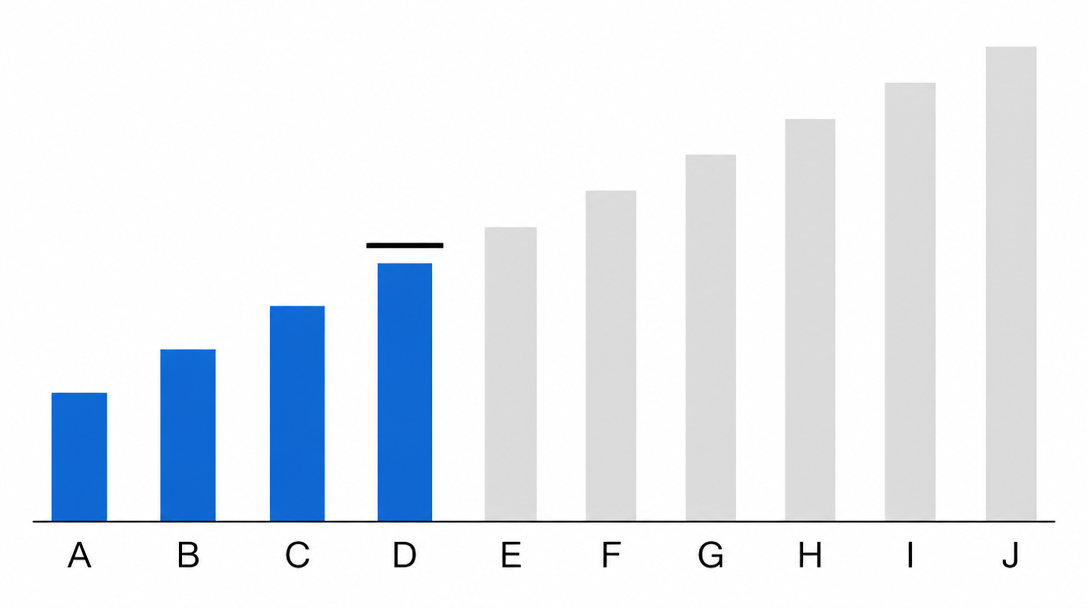
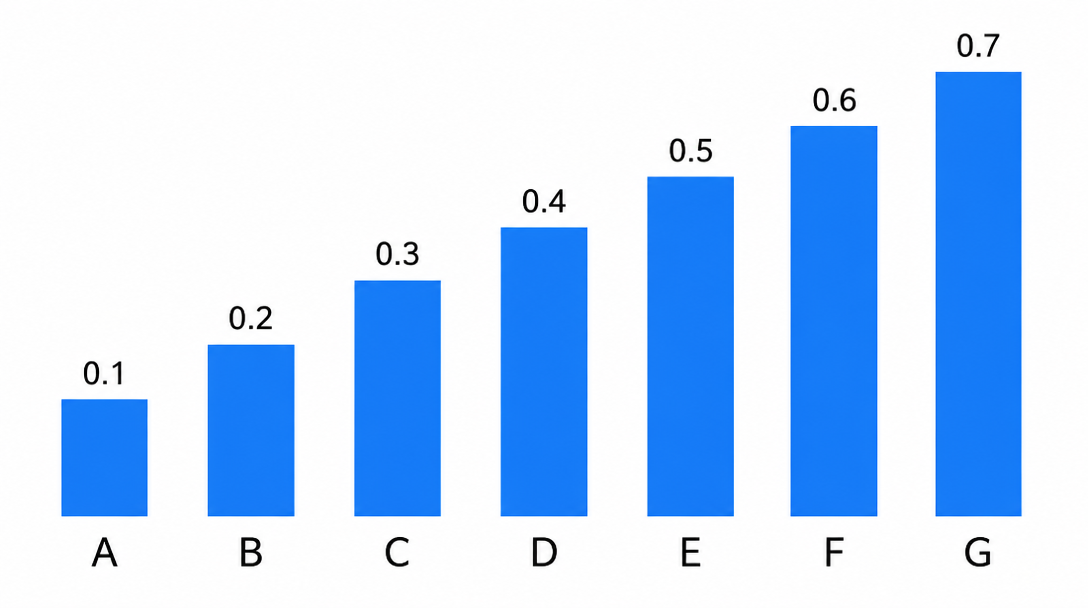
This is a guide to men's floor exercise skills, organized by the four element groups used in the FIG Code of Points. Every floor skill belongs to one of four groups — non-acrobatic elements, forward acrobatics, backward acrobatics, and single saltos with twists — and is rated from A (0.1) up to J (1.0).
All values below were checked directly against the floor difficulty tables in the FIG Men's Artistic Gymnastics Code of Points 2025–2028. You will find the key skills in each group with their difficulty, the famous named skills, and how those skills turn into a D-score.
Before the Floor Skills List: Men's Floor Rules and the Four Element Groups
What the floor exercise is
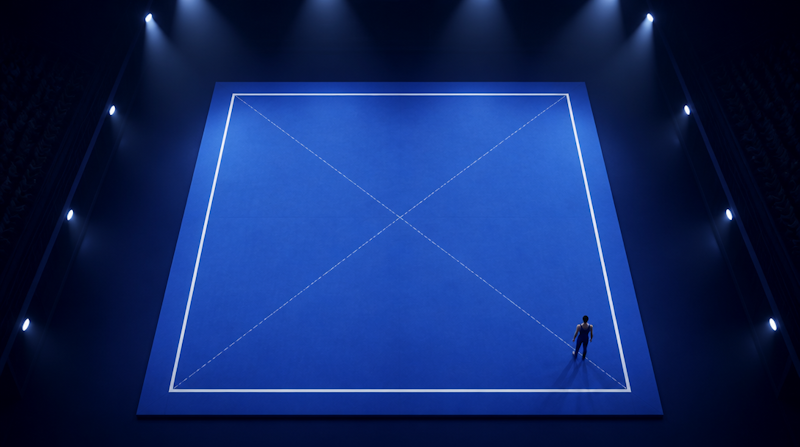
Floor exercise is performed on a 12 m × 12 m area and combines acrobatic elements with strength, balance, flexibility and handstands. Section 10 of the FIG Code of Points describes a routine "composed predominantly of acrobatic elements" that uses the majority of the floor area.
A men's routine may last no longer than 70 seconds, and there is no minimum time. Under the 2022–2024 rules the limit was 75 seconds; as Inside Gymnastics' breakdown of the new men's code explains, it was cut to 70 seconds for this cycle. The Wikipedia article on the gymnastics floor covers the dimensions, the 1 m safety border and how spring floors are built.
- The floor area is 12 m × 12 m; stepping or landing outside the boundary is deducted
- Maximum duration is 70 seconds, with signals at 60 and 70 seconds
- Using the same diagonal three times in a row costs 0.3, and so does failing to go to or from every corner
- Pauses of two seconds or longer before acrobatic elements are not allowed
If you want to see what D-score a set of floor skills adds up to, Gymnastics AI — the D-score calculator app does it for you. It follows the FIG 2025–2028 Code and includes more than 790 skills across all six men's apparatus.
Floor skills are divided into four groups
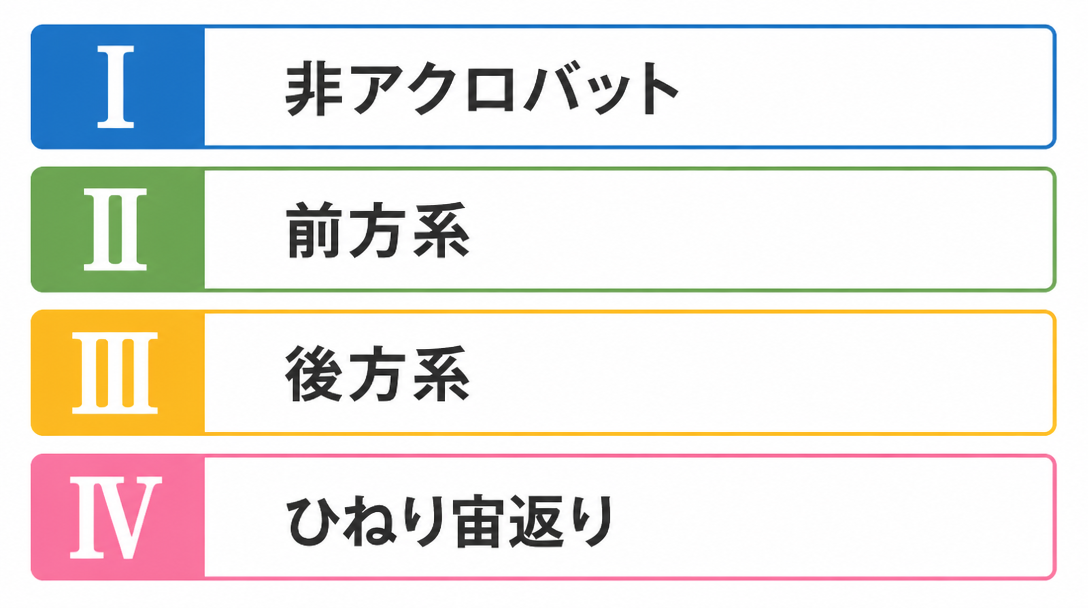
The Code sorts floor skills into four Element Groups (EG). The other apparatus have Groups I–III plus a dismount group, but floor has no dismount group — all four are element groups.
Group | Content | Typical skills |
|---|---|---|
I | Non-acrobatic (strength, handstands, circles, balance) | Handstand, Manna, flair, butterfly |
II | Forward acrobatics | Front salto, double front, Zapata |
III | Backward acrobatics (including Arabians) | Double back, Tsukahara, Liukin, Shirai 3 |
IV | Single saltos with one or more twists | Front layout triple twist (Shirai 2), back layout quad twist |
Every Arabian element — a jump backward with a half turn into a forward-rotating salto — counts as Group III (backward). For example, an Arabian double front with a half turn has the same D value as a double back with a full twist.
Mandatory content in every routine
On top of the group structure, floor has several special requirements.
- Include at least one skill from each of the four groups (otherwise you lose that group bonus)
- Include a multiple salto; for seniors, the final element must be one
- The final element cannot come from Group I and must land with feet together
- Show a one-leg balance element (I.61 or I.62); it may sit outside the eight counting skills
- Only one strength element and only one circle/flair/Russian element can count for difficulty
Group I: Non-Acrobatic Floor Skills (Strength, Circles, Balance)
Handstands and strength elements
Group I is built around handstands and strength holds. A basic handstand (2 s) is an A. The Manna — a V-sit with legs above horizontal held on the hands — is a C, and holding a Manna for 2 seconds before pressing to handstand raises the value to D.
The Code states that "in principle only acrobatic elements can be awarded more than a D value." However hard a Group I skill looks, D is effectively its ceiling.
Flairs, circles and Russians
Pommel-horse-style circles performed on the floor are also Group I. A single circle or flair is an A; circles or flair to handstand is a B; and continuing from the handstand back into a flair or circle is the Gogoladze, a C.
Only one circle, flair or Russian element can count for difficulty per routine. You can perform more, but only one earns value.
Butterflies and balances
The butterfly is an A, the butterfly with a full twist (Tong Fei) is a B, and a butterfly with a double twist is a C. A standing scale is only an A, but as noted above, a one-leg balance is mandatory.
Skill (Group I) | Difficulty | Value |
|---|---|---|
Handstand (2 s) | A | 0.1 |
Standing scale (2 s) | A | 0.1 |
Butterfly | A | 0.1 |
V-sit (2 s) | B | 0.2 |
Butterfly with full twist (Tong Fei) | B | 0.2 |
Manna (2 s) | C | 0.3 |
Planche or swallow (2 s) | C | 0.3 |
Flair/circle to handstand, continue to flair/circle (Gogoladze) | C | 0.3 |
Manna (2 s) and press to handstand (2 s) | D | 0.4 |
Group II: Forward Floor Skills List
Front saltos and double fronts
Group II covers forward-rotating skills. A front tuck (or pike) is an A and a front layout is a B. Adding a second rotation jumps the value: a double front tuck is a D and a double front pike is an E.
The forward group is much smaller than the backward group. Everything rated F or higher is a double front with a twist.
Named forward skills
Several forward skills carry the name of the gymnast who first performed them. The Zapata — a double front tuck with 1½ twists — is an F, and the Zapata 2, the same skill in a pike or layout position, is a G. To learn how skills get their names, see how gymnastics skills are named after gymnasts.
Skill (Group II) | Difficulty | Value |
|---|---|---|
Front handspring or flyspring | A | 0.1 |
Front salto tucked or piked | A | 0.1 |
Front salto layout | B | 0.2 |
Handspring into a front salto (Morandi) | D | 0.4 |
Double front tucked | D | 0.4 |
Jump forward with ½ turn to double back tucked (Deferr) | D | 0.4 |
Double front piked | E | 0.5 |
Double front tucked with full twist | F | 0.6 |
Double front tucked with 1½ twists (Zapata) | F | 0.6 |
Double front piked or layout with 1½ twists (Zapata 2) | G | 0.7 |
Forward skills versus Arabians
The Code's difficulty tables list far fewer forward skills than backward ones. Note that Arabian skills, even though they rotate forward, count as Group III (backward), not Group II. To fulfil the Group II requirement, a gymnast needs a true forward skill such as a front salto or a Zapata rather than an Arabian.
Group III: Backward Floor Skills List and the Hardest Skills
Back saltos and double backs
Group III contains backward-rotating skills and is the largest group on floor. A back tuck is an A, a back layout a B, a double back tuck a C, a double back pike a D, and a double layout an E.
A double back with a full twist in the first salto is called the Tsukahara and is rated D. Adding twists raises the value: a double back tuck with two twists is an E.
Twisting double layouts
The double layout gains value with each extra twist: full twist F, double twist G, 2½ twists H, triple twist I (the Shirai 3), and 3½ twists J (the Jarman).
The Shirai 3 is named after Japan's Kenzo Shirai. Guinness World Records lists him with six named elements in the Code — three on floor and three on vault. The Jarman was first performed by Great Britain's Jake Jarman at the 2023 Paris World Challenge Cup.
Triple backs: the Liukin and the Nagornyy
The skills with the most rotations on floor are triple backs. The tucked version, the Liukin, is an I, and the piked version, the Nagornyy, is a J. Together with the Jarman, the Nagornyy is the highest-rated skill in men's gymnastics.
The Liukin is named after Valeri Liukin, who performed the first triple back at the 1987 European Championships. The Nagornyy is named after Russia's Nikita Nagornyy, who debuted the triple back pike at the 2021 European Championships. You can look up each skill in our floor skills database.
Skill (Group III) | Difficulty | Value |
|---|---|---|
Back salto tucked or piked | A | 0.1 |
Back salto layout | B | 0.2 |
Double back tucked | C | 0.3 |
Double back piked | D | 0.4 |
Double back with full twist in the first salto (Tsukahara) | D | 0.4 |
Arabian double front tucked | D | 0.4 |
Double layout | E | 0.5 |
Double back tucked with double twist | E | 0.5 |
Double layout with full twist | F | 0.6 |
Double back tucked with triple twist (Ri Jong Song) | G | 0.7 |
Double layout with double twist | G | 0.7 |
Double layout with 2½ twists | H | 0.8 |
Double back with 3½ twists (Minami) | H | 0.8 |
Double layout with triple twist (Shirai 3) | I | 0.9 |
Triple back tucked (Liukin) | I | 0.9 |
Double layout with 3½ twists (Jarman) | J | 1.0 |
Triple back piked (Nagornyy) | J | 1.0 |
Group IV: Twisting Single Saltos on Floor
Forward twisting saltos
Group IV contains single saltos with one or more twists. A front tuck full is a B, a front layout full a C, a front double twist a D, and a front 2½ twist an E.
The front layout triple twist is the Shirai 2 (F), and the front 3½ twist is the Goshima (G). Forward twists are valued higher than backward twists with the same number of turns.
Backward twisting saltos
A back layout full is a B; 1½ and double twists are C; 2½ and triple twists are D; the 3½ twist, the González, is an E; and the quadruple twist, the Shirai/Nguyen, is an F.
Skill (Group IV) | Difficulty | Value |
|---|---|---|
Front tuck with full twist | B | 0.2 |
Back layout with full twist | B | 0.2 |
Front layout with full twist | C | 0.3 |
Back layout with 1½ or double twist | C | 0.3 |
Front layout with double twist | D | 0.4 |
Back layout with 2½ or triple twist | D | 0.4 |
Front layout with 2½ twists | E | 0.5 |
Back layout with 3½ twists (González) | E | 0.5 |
Front layout with triple twist (Shirai 2) | F | 0.6 |
Back layout with quadruple twist (Shirai/Nguyen) | F | 0.6 |
Front layout with 3½ twists (Goshima) | G | 0.7 |
What changed for twisting saltos
According to Inside Gymnastics, the triple twist was the most common floor dismount of the previous cycle. Since 2025 the final element must be a multiple salto, so a single twisting salto can no longer end the routine. Directly connecting two twisting single saltos also earns no connection bonus.
How Floor Skills Become a D-Score
The eight highest-valued skills count
The floor D-score adds the difficulty of the eight highest-valued skills, the element group bonuses and connection value. No more than four skills from the same group can count. The Japan Gymnastics Association's men's technical bulletin No. 32 also notes that the number of counting skills dropped from ten to eight.
For a step-by-step calculation see how to calculate a floor exercise D-score, and for the full A–J value table and the top skills on every apparatus see the men's gymnastics difficulty table.
Element group bonuses and connection value
Each of the four group requirements adds points when it is fulfilled:
- Fulfilled with a D or higher skill: 0.5
- Fulfilled with an A, B or C skill: 0.3
- Group I: 0.5 with a skill of any value
Floor awards connection value (CV) for saltos linked directly: D or higher + B or C earns +0.1, and D or higher + D or higher earns +0.2. No CV is given for counter-rotating combinations (for example, a double back into a front salto) or for linked twisting single saltos.
To check which skills count among your eight and how many group points and connections you earn, try Gymnastics AI. Pick the skills in order and it calculates difficulty, group bonuses, connection value and the stick bonus automatically.
The final element and the stick bonus
Sticking the landing of a final element rated C or higher earns a 0.1 bonus (Code of Points, Article 7.2.9). Because the final element on floor must be a multiple salto, sticking it can decide close scores. For landing deductions, read landing technique and deductions in gymnastics.
Old Values vs. Current Values: Check the Code Edition
Skills that were upgraded after being named
Floor values are reviewed with every new Code, and many websites still show older values. Three well-known examples:
Skill | Value when named/reported | 2025–2028 Code |
|---|---|---|
Nagornyy (triple back piked) | I (named in 2021) | J |
Jarman (double layout with 3½ twists) | I (named in 2023) | J |
Shirai 3 (double layout with triple twist) | I |
For Kenzo Shirai's career and skills, see his Wikipedia biography.
Always check which edition you are reading
- The authoritative floor table is Section 10 of the FIG MAG Code of Points 2025–2028
- National and junior competitions may apply their own rules for the number of counting skills and group bonuses
- The same skill name can carry different values depending on body position (tuck, pike, layout) and the number of twists
Summary
- Men's floor skills fall into four groups: non-acrobatic (I), forward (II), backward (III) and twisting single saltos (IV)
- Values run from A (0.1) to J (1.0); the only J skills are the Nagornyy (triple back pike) and the Jarman (double layout with 3½ twists)
- Group I skills top out at D in principle, and only one strength element and one circle/flair element can count
- The D-score is the top eight skills (max four per group) + group bonuses + connection value + stick bonus
- Since 2025 routines are capped at 70 seconds and must end with a multiple salto
If you want to test the D-score of your own floor routine, give Gymnastics AI a try. It runs on iOS and Android and is free to use.