How Gymnastics Skills Get Named After Gymnasts: FIG Rules
How do gymnastics skills get named? The FIG Code of Points naming rules, the approval process, Japanese eponyms like the Tsukahara and Shirai, and D-scores.

Many gymnastics skills are named after gymnasts: the Tsukahara, the Shirai, the Tkatchev, the Kovacs. If you have ever wondered how a gymnastics skill gets named after the person who invented it, the answer is written into the rulebook of the International Gymnastics Federation (FIG).
This guide walks through the naming rules in the FIG Men's Artistic Gymnastics Code of Points 2025–2028: which competitions count, the minimum difficulty, and what happens after the competition. It then lists the best-known skills named after Japanese gymnasts by apparatus, and explains how a skill's name relates to its difficulty value and the D-score.
What Are Gymnastics Skill Names? Descriptive Names vs. Eponyms
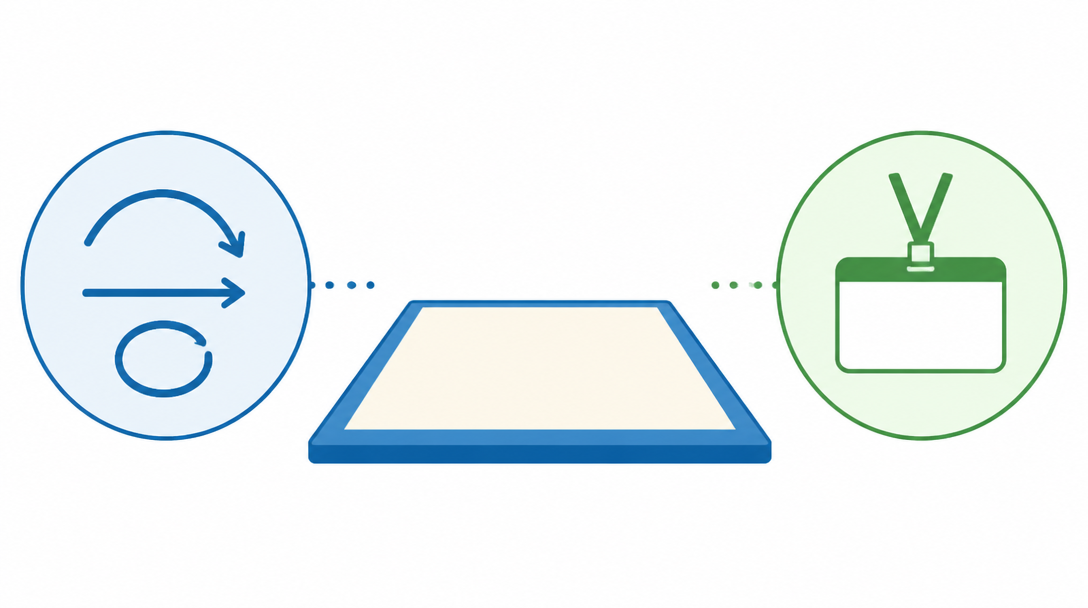
Two kinds of skill names: descriptions and eponyms
Every gymnastics skill has a descriptive name, and some also carry a person's name. The descriptive name spells out the movement: direction of the salto, body position, number of twists. The eponym is the surname of the gymnast who first performed the skill successfully at an official international competition.
- Descriptive name: the technical wording used for every element in the Code of Points difficulty tables, such as "Salto bwd. str. with 2/1 t."
- Eponym: a gymnast's name printed next to that description in the table. Commentators, coaches and athletes use it as a shortcut
For example, the backward layout with four twists on floor is written as "Salto bwd. str. with 4/1 t." in the Code of Points, and the cell is labelled "Shirai / Nguyen".
Why are gymnastics skills named after gymnasts?
Naming a skill is a way of honouring the athlete who pushed the sport forward. As Gymnastics Now explains, new elements that reach a set difficulty threshold become eligible to carry their creator's name, giving that gymnast permanent recognition in the Code of Points.
There is also a practical reason. Gymnastics skills combine somersaults, body shapes, twists and grips, so descriptive names get long quickly. Saying "Minami" is far faster than "double back tuck with three and a half twists", and coaches, judges and athletes all know exactly what it means.
Skill names are a shared international language
Eponyms work across languages. A Japanese gymnast can say "Tsukahara" at a competition anywhere in the world and every judge will picture the same vault. National federations keep track of their own names as part of their history: USA Gymnastics lists the skills named after U.S. athletes that remain in the current FIG Code of Points.
Knowing skill names also makes routines much easier to read. If you want to check the difficulty and composition of a men's routine quickly, Gymnastics AI — the D-Score calculator app follows the FIG 2025–2028 Code of Points and includes a database of more than 790 elements.
How a Gymnastics Skill Gets Named: 5 Rules in the FIG Code of Points
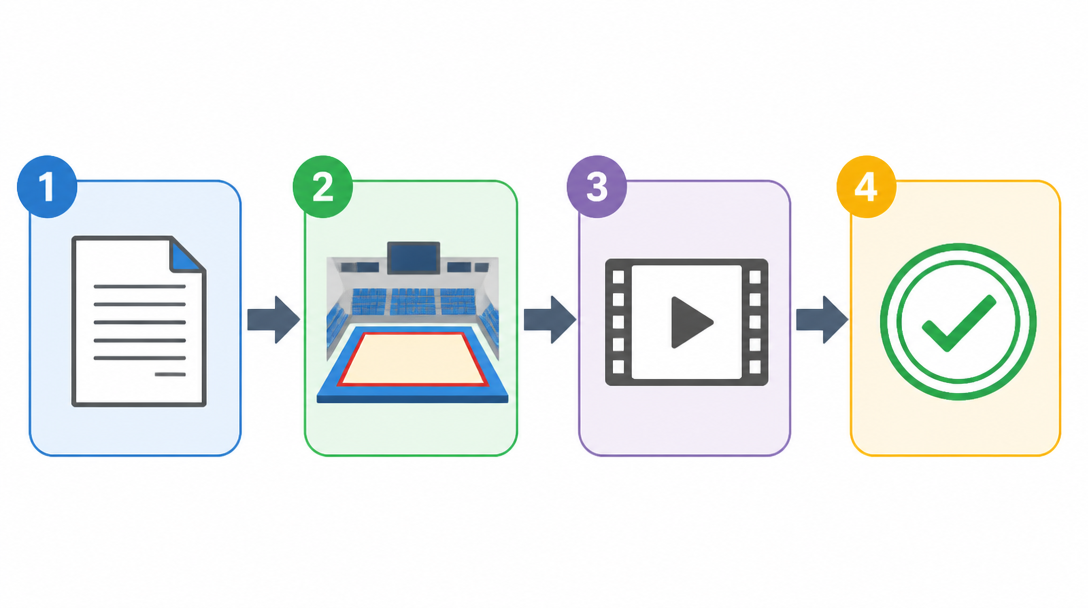
Article 5.8 of the Code of Points
For men's artistic gymnastics, the naming rules sit in Article 5.8, "MAG Naming of New Elements", of the FIG MAG Code of Points 2025–2028. The table below summarises the article.
Condition | What the Code of Points says (summary) | What it means |
|---|---|---|
1. Competition | Performed internationally for the first time at an official FIG Group 1, 2 or 3 competition | Not limited to the Worlds and the Olympics |
2. Difficulty | C value or higher | New A- and B-value elements are not named |
3. Success | Performed for value without a fall | A fall rules the attempt out |
4. Confirmation | Value and name confirmed only after a Technical Committee (TC) analysis | The provisional value at the meet is not final |
5. Simultaneous debut | If more than one gymnast performs the same new element at the same competition, it is named after all of them | That is why some skills carry two names, such as "Shirai / Nguyen" |
From request to official name: the process
Getting a skill named involves steps both before and after the competition. Putting Article 2.2 and Article 5.8 together, the process looks like this:
- Before the competition: the gymnast or coach submits a written request to the Superior Jury President, at least 24 hours before podium training, to assess the difficulty of the new element (Article 2.2)
- At the competition: the gymnast performs the element for value without a fall and receives a provisional evaluation
- After the competition: the gymnast's federation sends a video of the element to the FIG TC President as soon as possible. The competition's Technical Delegate also submits the official video, any drawing from the coach and the details of the provisional evaluation (Article 5.8)
- Confirmation: the Technical Committee analyses the performance and confirms the value and name, and the element is added to the difficulty tables
In other words, a skill is not named the moment it is landed. It goes through a request, a successful performance and a video review before it becomes official.
A common myth: "only the Worlds and the Olympics count"
You will often read that a skill can only be named at the World Championships or the Olympic Games. Under the current men's Code of Points, the requirement is an official FIG Group 1, 2 or 3 competition. The Wikipedia article on the Code of Points also lists FIG World Cups alongside the Worlds and the Olympics.
Real examples confirm it. Kazuki Minami's floor skill, the Minami, was first performed at the 2023 Doha World Cup. The men's skills named in 2025 also came from the Doha World Cup and the Asian Championships.
Gymnastics Skills Named After Japanese Gymnasts, by Apparatus
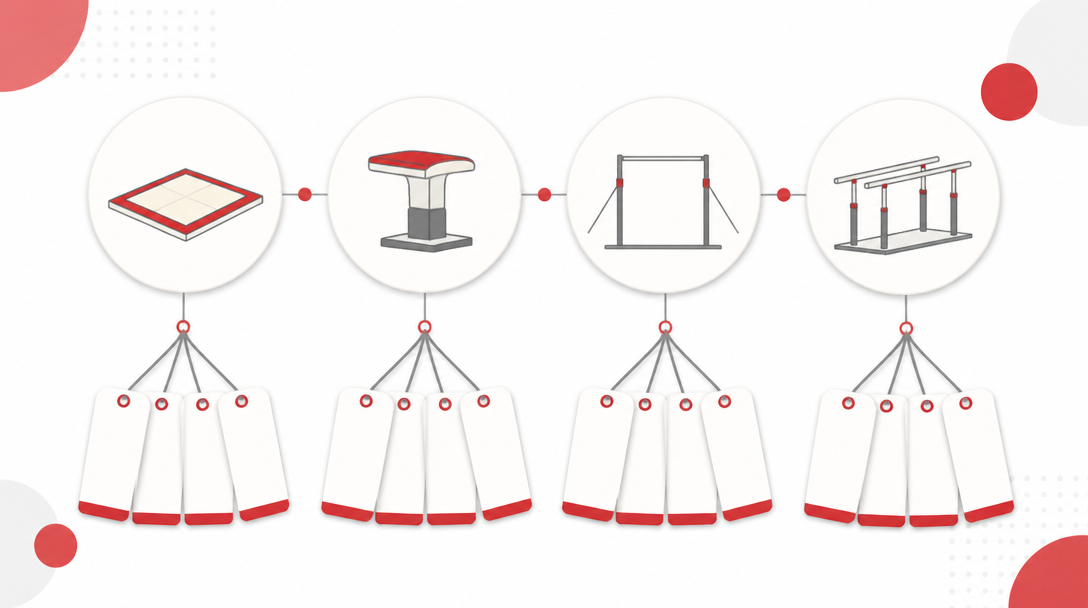
Floor exercise: the Shirai and the Minami
The most famous Japanese name on floor is Shirai. Number Web reported in 2013 that Kenzo Shirai, then a 17-year-old high-school student, landed a backward layout with four twists on floor and a Yurchenko with three twists on vault at the 2013 World Championships, and both were named after him.
According to Wikipedia, Shirai has six eponymous skills across floor and vault. The floor elements you can find in the current Code of Points are:
Skill name | Code of Points description | In plain English |
|---|---|---|
Shirai (Shirai / Nguyen) | Salto bwd. str. with 4/1 t. | Backward layout with four twists |
Shirai 2 | Salto fwd. str. with 3/1 t. | Forward layout with three twists |
Shirai 3 | Double salto bwd. str. with 3/1 t. | Double layout with three twists |
Minami | Double salto bwd. tucked with 7/2 t. | Double back tuck with three and a half twists |
The Minami belongs to Kazuki Minami and was one of the new elements approved by the FIG in November 2023. Gymnastics Now reported its value at the time as H (0.8).
Vault: the Tsukahara, Kasamatsu, Shirai and Yonekura
Vault is where Japanese names are most common. Unlike the other apparatus, each vault has its own fixed difficulty score. Here are the main Japanese-named vaults and their values in the current Code of Points:
Skill name | Code of Points description | Value (2025–2028) |
|---|---|---|
Tsukahara | Tsuk. tucked | 1.8 |
Kasamatsu | Tsuk. tucked 1/1 t. | 2.4 |
Shirai (Shirai, KIM Hee Hoon) | Yur. str. 3/1 t. | 5.2 |
Shirai 2 | Yurchenko straight 7/2 t. | 5.6 |
Yonekura | Tsuk. str. 7/2 t. | 5.6 |
The Tsukahara is named after Mitsuo Tsukahara, who won five Olympic gold medals between 1968 and 1976. It describes a round-off onto the table followed by a backward salto, and the name has become a whole family of vaults: Group III in the Code of Points covers "handspring sideways and Tsukahara vaults with or without simple twists, and all double salto bwd." The Code also states that vaults named after Shigeru Kasamatsu have the same value as the equivalent Tsukahara vaults.
The Yonekura belongs to Hidenobu Yonekura, who first performed it at the 2019 World Cup in Melbourne; it was added to the Code of Points the same year. For a full breakdown of vault families, see our guide to vault difficulty: Yurchenko vs. Tsukahara.
High bar and parallel bars: the Tsukahara, Morisue and Miyachi
Tsukahara's name also lives on in high bar. According to Wikipedia, the men's Code of Points credits him with premiering the full-twisting double back (often called the "moonsault") on floor and high bar, and his name still appears in the current high bar dismount table.
- Miyachi (high bar): written as "Kovacs straight with 2/1 turn" in the Code of Points, a double-twisting layout Kovacs named after Hidetaka Miyachi
- Morisue (parallel bars): named after Shinji Morisue, the 1984 Los Angeles Olympic high bar champion
- Tsukahara (high bar dismount): double back tuck with a full twist, the same movement he first performed on floor
For more eponyms on high bar, read our guide to high bar release moves: Tkatchev, Kovacs and Rybalko.
Skill Names and Difficulty: Does a Named Skill Raise Your D-Score?
Difficulty values run from A (0.1) to J (1.0)
A name alone does not add points. What counts is the skill's difficulty value. Article 7.1 of the Code of Points sets the values for floor, pommel horse, rings, parallel bars and high bar:
Difficulty | A | B | C | D | E | F | G | H | I | J |
|---|---|---|---|---|---|---|---|---|---|---|
Value | 0.1 | 0.2 | 0.3 | 0.4 | 0.5 | 0.6 | 0.7 | 0.8 | 0.9 | 1.0 |
Because only new elements valued C or higher can be named, named skills tend to be difficult ones. Still, the name tells you who did it first; the value is decided by the movement itself.
The name stays, but the value can change
The Code of Points is rewritten every Olympic cycle, and element values are sometimes revised. The Yonekura is a good example: Wikipedia lists its value at the time it was named as 6.0, while the 2025–2028 Code of Points values it at 5.6. The name survived the update; the score did not.
So when you look up a skill, knowing its name is not enough. Check its value in the current Code of Points. If you want to see how a real routine's D-score changes, Gymnastics AI lets you pick elements and line them up, then calculates difficulty values, element group values and connection bonuses automatically.
Only eight elements count toward the D-score
Even a routine full of named skills has a capped count. Under the 2025–2028 Code of Points, every apparatus except vault counts eight elements including the dismount: the dismount plus the best seven other elements, with a maximum of four from the same element group.
- Counting elements: the dismount plus the seven highest-value other elements (eight in total)
- No more than four elements from the same element group
- Element group requirement values and other bonuses are added on top
For the basics, see our explainer on the Code of Points, D-score and E-score.
How to Look Up Gymnastics Skill Names: Code of Points Tables and Skill Databases
Use the Code of Points difficulty tables
The primary source is the Code of Points published on the FIG rules page. The difficulty tables are organised by apparatus and element group, and each element has a Code Identification Number. Named elements show the gymnast's name under the description.
- Open the section for the apparatus (floor, pommel horse, rings, vault, parallel bars or high bar)
- Choose the element group (EG I to IV)
- Read the name under the description and the difficulty column (A to J)
Three things to watch when searching by name
- Numbered names: when one gymnast has several skills, they are numbered, as in Shirai 2 and Shirai 3. Leaving out the number points to a different skill
- Shared names: some skills list more than one gymnast, such as "Shirai / Nguyen" or "Shirai, KIM Hee Hoon"
- Same name, different apparatus: "Tsukahara" means a vault family on vault and a dismount on high bar. Always check the apparatus too
Use a skill database or an app
The Code of Points is a long PDF, so a searchable gymnastics skills database is often faster: you can search by skill name, apparatus or difficulty. For an overview of signature skills on each apparatus, see our men's gymnastics skills list.
Recent New Skills and Naming Trends Since 2023
Men's new elements approved in 2023
According to Gymnastics Now (November 18, 2023), the FIG approved nine new elements in 2023. Five were in men's gymnastics:
Skill name | Gymnast (country) | Apparatus | Value when approved |
|---|---|---|---|
Minami | Kazuki Minami (JPN) | Floor | H |
Jarman | Jake Jarman (GBR) | Floor | I |
Reid | Michael Reid (JAM) | Pommel horse | E |
Zou 2 | Zou Jingyuan (CHN) | Rings | E |
Valverde | Andres Valverde (CRC) | High bar | E |
Men's skills named in 2025
Gymnastics Now's 2025 round-up lists five skills named that year across men's and women's gymnastics. Three were men's elements:
- James Hall (GBR, parallel bars): E value, performed at the 2025 Doha World Cup
- Jesse Moore (AUS, pommel horse): G value, performed at the 2025 Doha World Cup
- Mahdi Olfati (IRI, vault): 5.6, performed at the 2025 Asian Championships
The trend: World Cups and continental championships produce names too
Recent examples show that many new skills now debut at World Cups and continental championships. Those events give gymnasts more chances to compete than the Worlds or the Olympics, and they are a realistic place to try for a name. The new skills are also spread across every apparatus: floor, pommel horse, rings, vault, parallel bars and high bar.
Because values are confirmed only after Technical Committee analysis and may be revised, the safest source for the latest names is the FIG's own announcements and the current edition of the Code of Points.
Summary
- Gymnastics skills have descriptive names, and some also carry the name of the gymnast who first performed them
- In men's gymnastics, a new element valued C or higher must be performed without a fall for the first time at an FIG Group 1–3 competition, then confirmed by the Technical Committee (Article 5.8)
- If several gymnasts debut the same element at the same competition, all of them are named (for example, Shirai / Nguyen)
- Japanese eponyms include the Shirai and Minami on floor, the Tsukahara, Kasamatsu and Yonekura on vault, and the Miyachi on high bar
- A name does not add points, and values can change between cycles, so always check the current Code of Points
Once you know the names, routines become much easier to read. To simulate the D-score of your own routine, try Gymnastics AI. It is free on iOS and Android.