Limiter vs Clipper: The Final Stage of Your Mastering Chain
Limiter vs clipper at the final mastering stage: how each controls peaks, why a clipper goes before a limiter, and how to set true peak and LUFS for streaming.
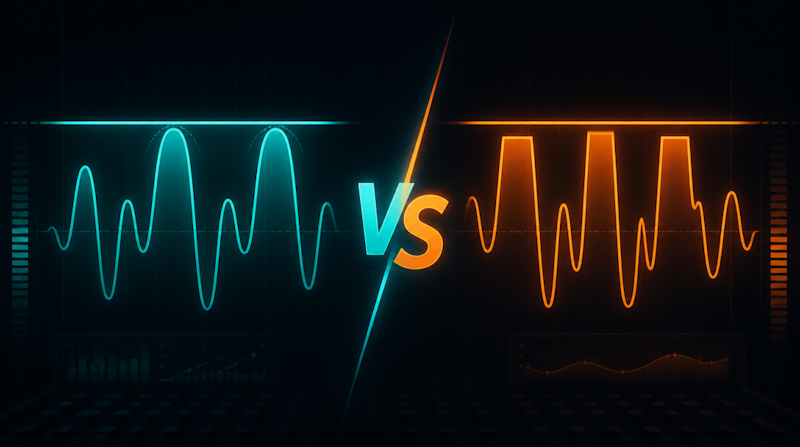
The difference between a limiter and a clipper is one of the first real questions you hit when trying to make a master louder. Both control peaks, but the way they do it — and what they do to your sound — is fundamentally different. This guide explains limiter vs clipper from the perspecti
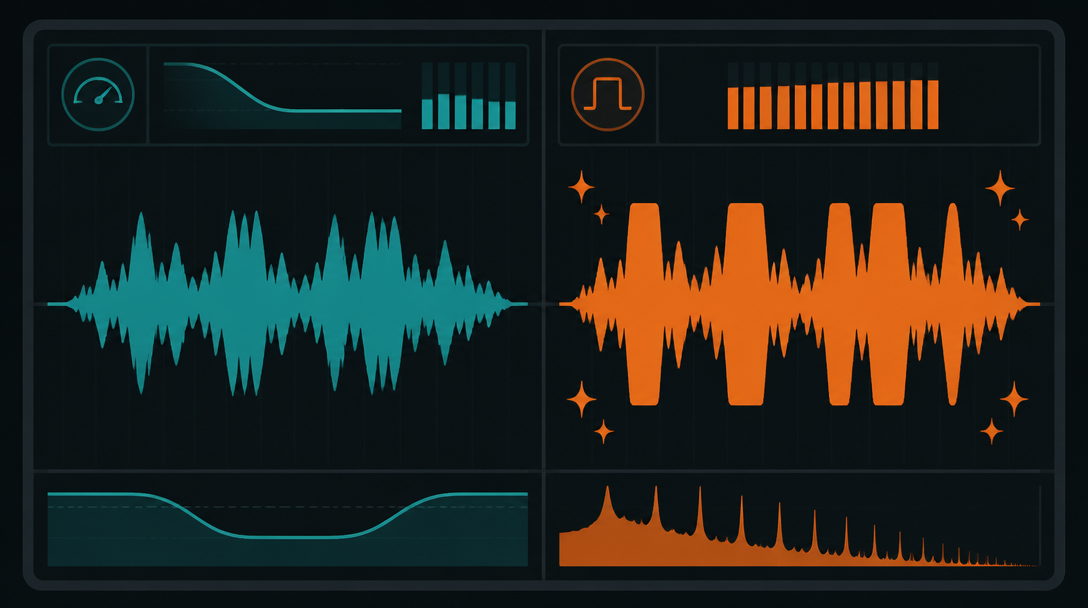
ve of the final stage of your mastering chain, including how to use each, and why the order matters.
If your track refuses to get louder without turning muddy, or sounds quiet after upload, the culprit is usually a poorly designed final stage. Understand the mechanics and you can push louder and cleaner at the same time.
Limiter vs Clipper: Getting the Basics Straight
Both a limiter and a clipper aim to keep signal below a set ceiling, but they achieve it in opposite ways.
What a Limiter Does: Compressing Peaks
A limiter is essentially a compressor with a very high ratio (often ∞:1). It reduces gain dynamically over attack and release times so the signal never exceeds the ceiling, largely preserving the waveform shape. As Mastering.com explains, a limiter uses lookahead to prevent overshoots without abrupt cutting.
Because it modulates gain over time, pushing a limiter too hard causes pumping and softened transients. Treat it as the final safeguard that raises overall level.
What a Clipper Does: Chopping the Waveform
A clipper instantly flattens the top of any waveform that crosses the threshold. Rather than reducing gain over time, it cuts the overshoot immediately, so there are no timing artifacts like pumping. Anything below the threshold passes through unchanged.
In exchange, chopping the corners of the waveform generates harmonics. " target="_blank" rel="noopener">Mastering.com
notes that clippers add odd and even harmonics that can be pleasing in small doses but harsh if overused — a saturation-like coloration that adds density when used well.