How to Get on Spotify Playlists: Pitching & Release Radar Guide
How to get on Spotify playlists the legit way: pitch unreleased songs 7 days early in Spotify for Artists, use Release Radar, and avoid paid stream services.
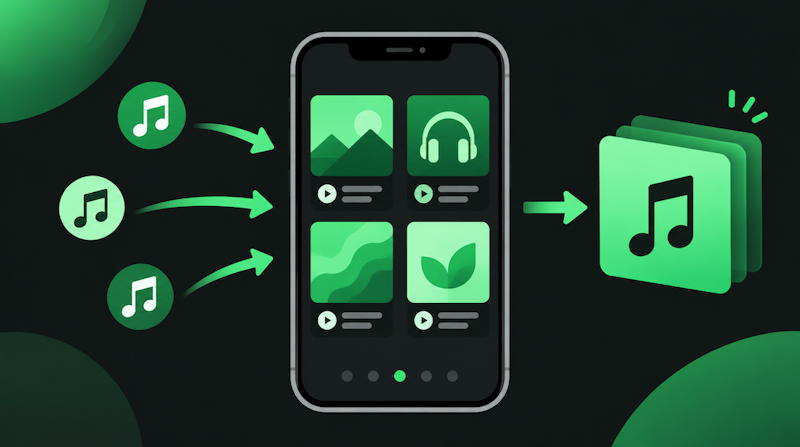
There are really only two legitimate ways to get on Spotify playlists. Before release, you can pitch an unreleased song to Spotify's editorial team through Spotify for Artists. After release, you can earn your way into algorithmic playlists by getting real listeners to play, save, and come back to your music. The shortcut many artists are offered, paying someone to guarantee streams or placements, is against Spotify's terms. This guide walks through the three types of Spotify playlists, how pitching works and when the deadline is, what Release Radar does for you even if editors pass, which tactics to avoid, and a simple release timeline. Everything here is based on Spotify's own help center, the Spotify for Artists blog, and official Spotify announcements.
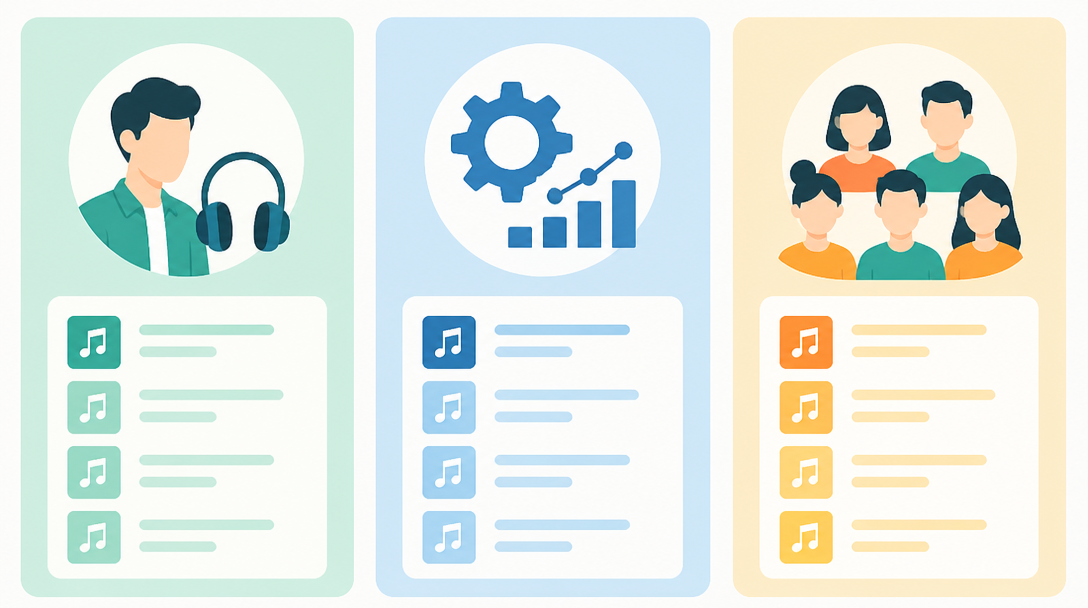
The Three Types of Spotify Playlists and How Each One Works
Editorial playlists
Editorial playlists are curated by Spotify's music editors. In its explainer on how recommendations work on Spotify, the company states plainly that it recommends music in two ways: editorial curation by editors with deep content knowledge and cultural expertise, and algorithmic personalization tailored to each listener. Editorial playlists are the first kind.
The only official way for an artist to put music in front of those editors is the pitching tool inside Spotify for Artists. In the Spotify for Artists blog post Behind the Playlists: Your Questions Answered by Our Playlist Editors (July 2020), the editors explain that Spotify for Artists is where all of them go to look for new music. Emailing or DMing an editor is not a pitch.
Algorithmic (personalized) playlists
Playlists such as Discover Weekly and Release Radar are different for every listener. Instead of an editor, a recommendation system picks the songs based on signals like listening history, skips, and saves. That means a song can land in these playlists regardless of what happened with your pitch, as long as listeners respond to it after release.
Playlists made by listeners and independent curators
Millions of playlists are created by ordinary users and independent curators. Spotify doesn't control how those are built, so the rules depend on the person running them. The ones to be careful about are services that promise placement in exchange for money. As covered below, Spotify treats those as a violation of its terms.
Playlist type | Who picks the songs | What the artist can do |
|---|---|---|
Editorial | Spotify's editors | Pitch an unreleased song in Spotify for Artists |
Algorithmic | Recommendation system (per listener) | Grow followers and release songs people keep playing |
Listener / curator | Users and independent curators | Introduce your music to the curator; avoid paid placement offers |
Before You Can Get on Playlists: Distribution and Spotify for Artists
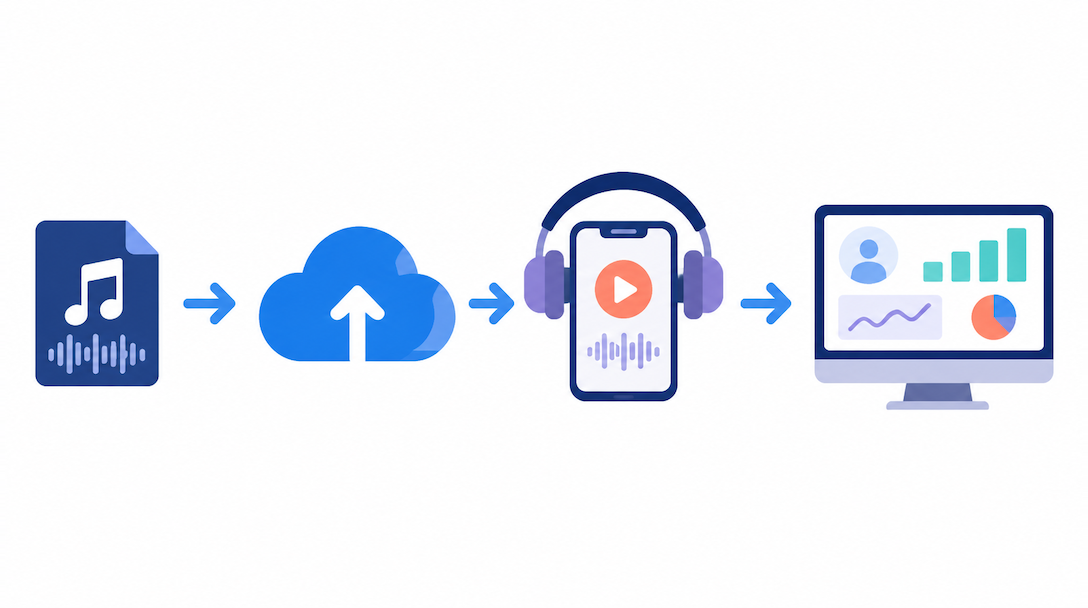
Deliver your music to Spotify through a distributor
Independent artists usually get their music onto Spotify through a distributor such as DistroKid or TuneCore. If you are still choosing one, our DistroKid vs TuneCore comparison breaks down pricing, payouts, and features. For an example of a catalog distributed this way, you can browse Daito's releases on TuneCore Japan, which are delivered to Spotify and other stores.
Finish the audio itself before you upload. Streaming services normalize playback volume, so pushing the master as loud as possible is not automatically an advantage. Our guide to mastering basics and loudness standards for streaming covers the final checks before release.
Get access to Spotify for Artists
Spotify for Artists is the dashboard you use to pitch. According to Spotify's help article on getting access, there are three main routes:
- Through your distributor: requesting access via one of Spotify's recommended distributors gives you access automatically, and it is the fastest option
- Directly at artists.spotify.com: submit a request with links to your website or social profiles; requests are reviewed manually and can take several days
- By invitation: if your artist page already has a team, ask an admin to invite you
If you want access before your very first release, Spotify also explains that you can contact support with your artist link and the UPC/EAN of the upcoming release.
Leave plenty of time before your release date
You can only pitch songs that haven't been released yet, and it takes time for a release delivered by your distributor to show up as "upcoming" in Spotify for Artists. Don't set a release date that is only a few days away. In a 2020 guest post on Hypebot, a TuneCore team member recommended uploading at least three to four weeks ahead of release, and longer if you can, so editors have more time to listen.
Your First Step to Getting on Spotify Playlists: How to Pitch
Which songs you can pitch
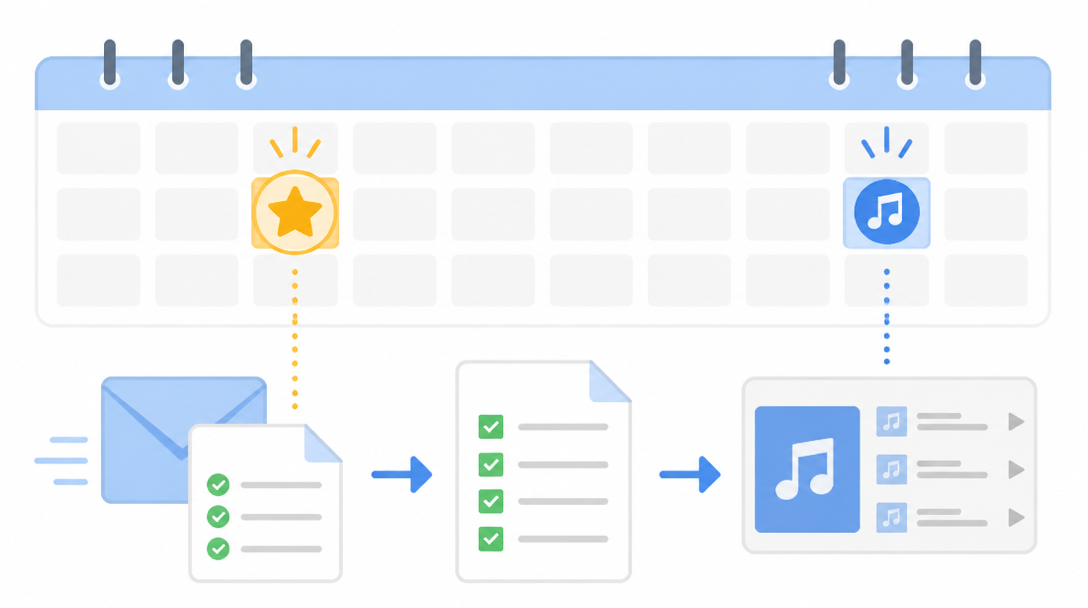
Spotify's help article Pitching music to Spotify playlist editors lists the rules:
- The song must be unreleased (not yet publicly available)
- Compilations and songs where you are only a featured artist are not eligible
- You must pitch at least 7 days before the release date
- You can pitch one song at a time; your next pitch opens up after the current release goes live
- Once a song is live, it can no longer be pitched
- Pitching does not guarantee placement
How to submit a pitch
- Log in at artists.spotify.com
- Go to Music, then Upcoming
- Choose the song you want to pitch, fill in the form, and submit it
You can edit pitch details until release day, but the help article warns that editors may not review your changes. Treat the first submission as the final one and make it complete.
What to put in the form
The form asks about the song's genre, mood, instrumentation, and where you're based, along with a written description. In the Behind the Playlists post, editors say the answers about genre and mood are incredibly helpful in surfacing music to them. They also ask artists to cover the who, what, why, when, where, and how of the song, and to mention press plans, music videos, release plans, and social links.
- Pick genre and mood accurately: don't tag a song with a genre it doesn't belong to just to stand out
- Never leave the description blank: TuneCore's guest post notes the field allows up to 500 characters and recommends telling the honest story behind the song rather than writing like a publicist
- Include what happens after release: shows, a music video, interviews, or other plans you've already confirmed
The same editors also say that follower counts and monthly listeners don't factor into their decisions. Even if you're just starting out, every release is worth pitching.
What Your Pitch Still Gets You If Editors Pass: Release Radar
What Release Radar is
According to Spotify's help article on Release Radar, it is a playlist of new releases that updates every Friday. Listeners get new music from artists they follow, artists they listen to often, and other artists Spotify thinks they'll like.
Pitch 7 days early to reach your followers' Release Radar
This is the part many artists overlook. Even if your song doesn't make an editorial playlist, a pitch submitted at least 7 days before release means that song goes into your followers' Release Radar. If you don't pitch, Spotify decides which track from your release to use. Pitching lets you choose the one song you most want your followers to hear, which matters most when you release an EP or album.
To check whether your song was added, open the song's stats in Spotify for Artists and look at the Playlists tab.
Release Radar limits and pinning to "This Is"
Release Radar has a few limits worth knowing:
- Each listener gets at most one song per artist per week
- Songs a listener has already played won't be added for that listener
- Only main and featured artists are included; remixers are not
- Acoustic, karaoke, and live versions are usually excluded
Songs pitched at least 7 days in advance can also be pinned to your "This Is" playlist if you have one. The help article explains that pin requests open roughly three days after listeners can hear the new music, and a song stays pinned for up to 28 days after release.
How Algorithmic Playlists Pick Songs: Discover Weekly and Recommendations
The signals Spotify's algorithms use
In its recommendations explainer, Spotify lists the kinds of information its algorithms rely on:
- Taste profile: listening history, skips, searches, and saved content
- Listener information: who you follow, your device, language, and location (if you opt in)
- Content characteristics: things like genre and release date
- How other listeners behave: how people interact with similar content
In practice, the songs most likely to travel through algorithmic playlists are the ones people finish, save, and replay. A long intro that makes listeners skip in the first seconds is likely to work against you here too.
Where Discover Weekly fits in
Discover Weekly launched in 2015 and delivers 30 personalized tracks every Monday. According to Spotify's 10th-anniversary announcement (June 2025), the playlist has passed 100 billion tracks streamed, and 77% of discoveries on it come from emerging artists. For artists without a big following, it is one of the most realistic doors in.
Discovery Mode is only an option for eligible songs
Spotify also offers Discovery Mode, an official tool connected to recommendations. Per Spotify's Discovery Mode help article, songs you select carry a 30% fee on recording royalties from plays in Discovery Mode features. In return, they become more likely to be recommended. Spotify's recommendations page is explicit that this increases the likelihood but does not guarantee it.
Eligibility is limited. The artist team needs at least 25,000 monthly listeners and three or more qualifying tracks, and each track must have been live for 30+ days and delivered by a supported distributor, among other conditions. As of November 2026, the tool is still in beta with limited availability. For artists early in their careers, pitching and building followers come first.
What Not to Do: Buying Streams and Artificial Streaming
Paying for guaranteed streams or placements breaks Spotify's terms
Spotify's help article on artificial streaming and paid third-party services says that third-party services promising streams or playlist placement in exchange for money violate Spotify's terms. Any plays that don't reflect genuine listener intent, such as those generated by bots or scripts, count as artificial streaming. In the Behind the Playlists post, editors describe paid playlist placement as a streaming manipulation service.
What happens when artificial streams are detected
- Royalties tied to the artificial streams are withheld, and public stream counts are corrected
- Songs can be removed from playlists, and in repeated or severe cases removed from Spotify entirely
- Labels and distributors are charged per track when flagrant artificial streaming is detected
- Your distributor may suspend your account or take your releases down
Sometimes your music ends up on a suspicious playlist without you doing anything. Spotify's guidance is to report it and work with your distributor if content is wrongly removed.
Spam filtering and the 1,000-stream threshold
In a September 2025 announcement, Spotify said it had removed more than 75 million spammy tracks in the previous 12 months. It also introduced a music spam filter that identifies tactics such as mass uploads, duplicates, and SEO hacks, and stops recommending the tracks involved. Stuffing a famous artist's name into your song title is more likely to get you filtered out of recommendations than onto playlists.
Separately, under a policy announced in November 2023, since April 2024 a track must reach at least 1,000 streams in the previous 12 months to generate recorded royalties. As Music Business Worldwide explains, there is also an undisclosed minimum number of unique listeners, designed to stop a handful of accounts from replaying a track to cross the line. Inflating numbers with a small circle of listeners doesn't pay off financially either. For the rights side of releasing music, see our guide to music copyright basics.
Your Release Timeline: A Checklist for Getting on Spotify Playlists
At least four weeks before release
- Finish mixing and mastering, and export streaming-ready files
- Lock in the cover art, song title, credits, and other metadata
- Upload to your distributor and set the release date (three to four weeks out or more)
- Make sure you have access to Spotify for Artists
At least one week before release
- Pitch the song as soon as it appears under Upcoming in Spotify for Artists (the deadline is 7 days before release)
- Choose genre, mood, instruments, and location accurately, and write the story behind the song plus your release plans
- Announce the release date on social media or your mailing list and ask people to follow you on Spotify
After release
- Check the Playlists tab in Spotify for Artists for Release Radar and editorial placements
- If eligible, request a pin on your "This Is" playlist (available about three days after release)
- Watch saves and streams over time and use what you learn to plan your next song and release cadence
When | What to do | Source |
|---|---|---|
4+ weeks before | Upload to your distributor and set the release date | TuneCore recommendation (3 to 4+ weeks) |
By 7 days before | Pitch in Spotify for Artists | Spotify help center (7-day pitch makes the song eligible for Release Radar) |
Release week (Friday update) | Song appears in followers' Release Radar | Release Radar updates every Friday |
About 3 days after release | Request a "This Is" pin | Spotify help center (up to 28 days) |
Summary
- Spotify has three kinds of playlists, editorial, algorithmic, and listener-made, and each one picks songs differently
- The only official route to editorial playlists is a pitch in Spotify for Artists: one unreleased song at a time, at least 7 days before release
- Even if editors pass, a song pitched 7 days early goes into your followers' Release Radar, which updates every Friday
- Algorithmic playlists run on signals like listening history, skips, and saves, so songs people replay and a growing follower base are what matter
- Services that promise streams or placements for money break Spotify's terms and can cost you royalties or get your music removed
If you're planning your first release step by step, take a look at Daito's releases on TuneCore Japan for one example of how a distributed catalog is presented.