How to Make Rhythmic Gymnastics Music: Editing After Song Choice
How to make rhythmic gymnastics competition music: structure, cut and time your track, match it to each apparatus, and know when to hire a pro editor.
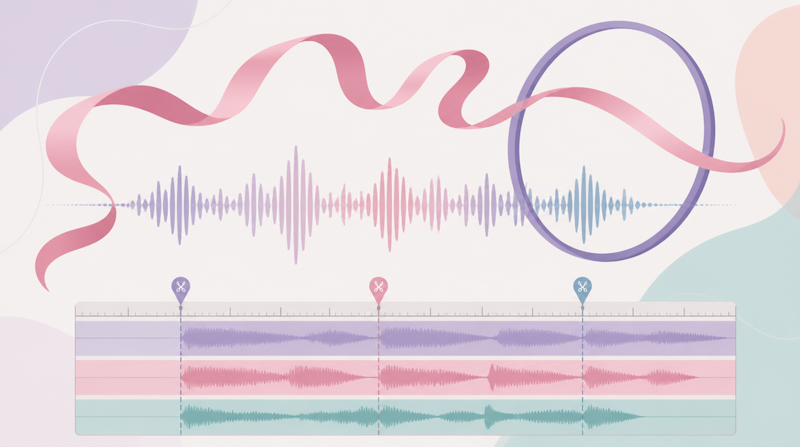
Making rhythmic gymnastics music is really about what you do after you pick a song. Choosing a track is only the starting point: to turn it into competition music, you have to structure it to the routine, cut it phrase by phrase to the exact time limit, and match it to the apparatus and the choreography. This guide walks through making an RG mus
ic track step by step, from the rules that shape the edit to structure, cutting, apparatus matching, mastering, and when to hire a pro. It builds on the official Japan RG regulations and focuses on the craft of producing the track.
The Big Picture: How RG Music Is Made
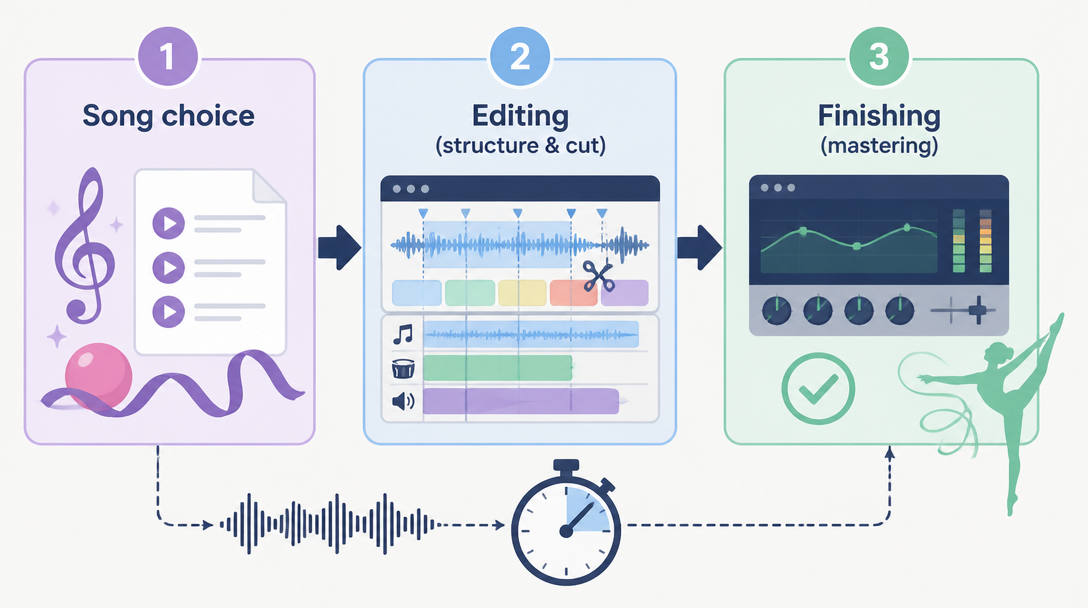
Making an RG track breaks down into three stages: song choice, editing (structure and cutting), and finishing (audio quality and export). Most problems come from stopping at song choice and neglecting the edit.
Song choice, editing, finishing
Production is not linear; you move back and forth with the choreography. As competition-music specialists note, you should complete the music before the choreography whenever possible, so you are not forced to re-cut later and break the structure.
- Song choice: pick music that fits the theme, apparatus and gymnast (rules and selection covered separately)
- Editing: structure to the time limit and cut/join phrase by phrase
- Fi
nishing: balance volume and quality, export so it carries in the arena
For song selection and the music rules themselves, see our rhythmic gymnastics music rules & selection guide. This article is the next step: the production and editing that come after.
"Choosing" and "producing" are different jobs
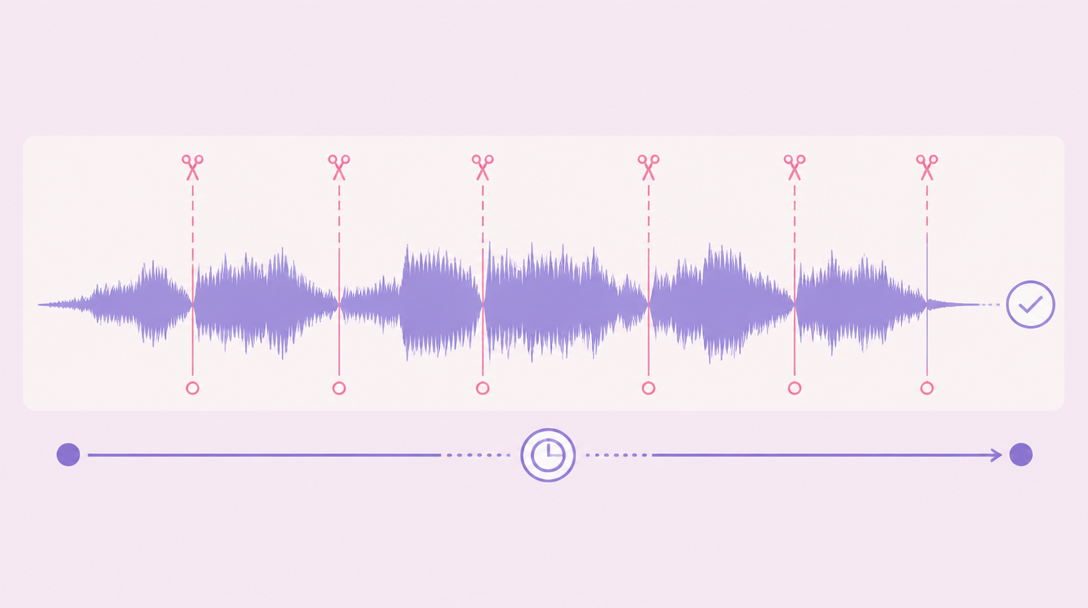
A great song is not a finished track. Commercial and stock music is longer than the routine and its peaks do not line up with the performance. Competition music must fit the exact time and re-shape the song's development to the routine's arc.
Decide these before you edit
Before cutting, write down the theme, apparatus, the gymnast's level and personality, and the intended structure (difficulties, apparatus exchanges, highlight moments). That becomes your edit blueprint. Working with someone who understands both the Code of Points and music production raises the result. You can arrange custom competition music production from a former-athlete-and-artist perspective, so the design looks ahead to the finished cut from the start.
The Rules That Shape the Edit
You cannot build the track freely; it has to fit the time and music regulations. Cover the essentials before editing. For detailed deductions see the rules & selection guide; here are the points that drive production.
h3 id="h-time">Routine time (individual and group)