How to Make Gymnastics Floor Music: A Complete Guide
How to make women's gymnastics floor music: FIG 90-second and voice rules, song choice, structure, editing, copyright, and clean submission for competition.
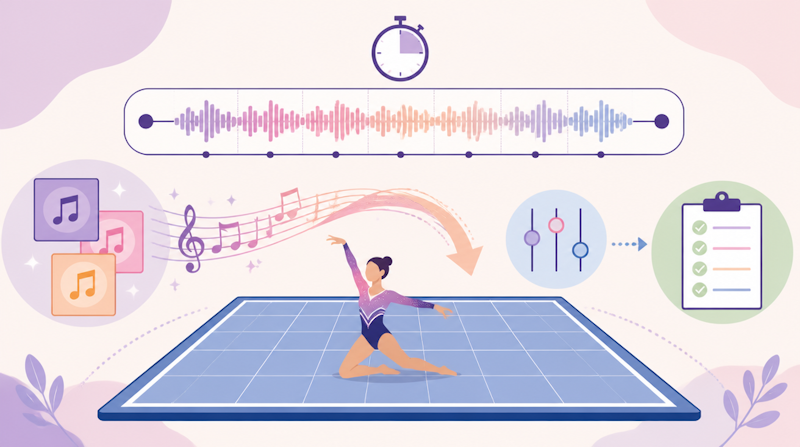
A women's floor routine only comes together when a 90-second piece of music and the gymnast's movements act as one. No matter how good the tumbling is, artistry scores stall if the song choice, structure, and editing don't line up. This guide walks throu
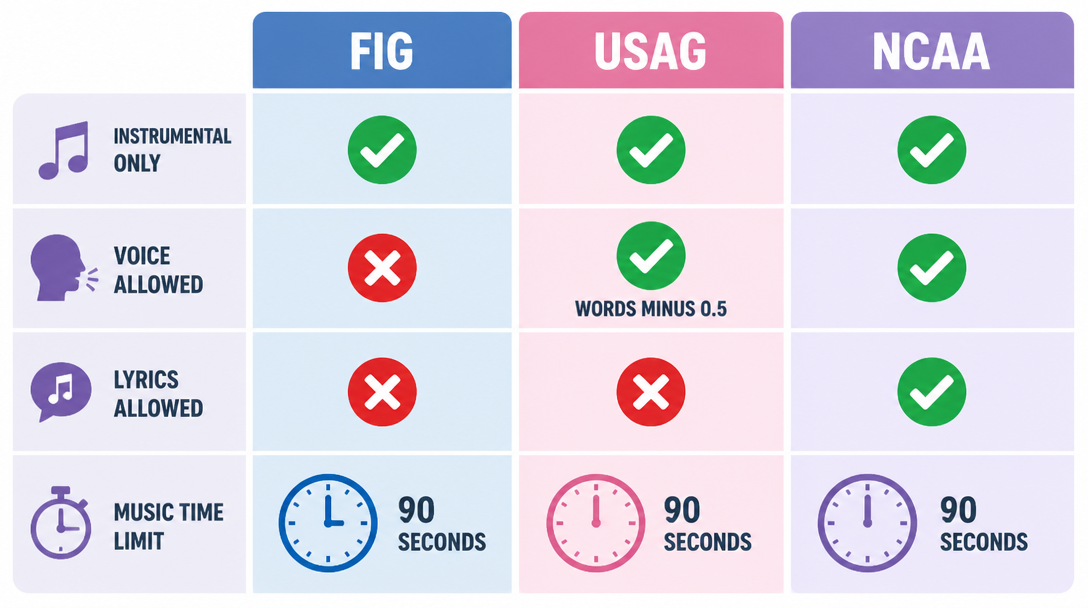
gh how to make women's gymnastics floor music in five stages: checking the rules, choosing a song, building the structure, editing, and clearing copyright before submission.
What Is Competition Floor Music? The Big Picture
Of the four women's events (floor, beam, vault, uneven bars), only floor uses music, as the Japan Gymnastics Association also notes. Floor music is the accompaniment prepared for the 90-second routine, and it only becomes usable once song choice, structure, editing, and rights are all handled.
Why Floor Music Drives the Score
A floor score combines the D-score (difficulty) and E-score (execution), and music feeds directly into the artistry portion of the E-score. The better the music and choreography match — with peaks that align with the tumbling passes — the stronger the impression. Awkward transitions or a weak ending, by contrast, invite artistry deductions (2026 floor music requirements & deductions).
The Five Steps of Making Floor Music
- Check the rule
s: the time limit (90 seconds) and whether voice/lyrics are allowed
- Choose a song that suits the level, age, and performance type
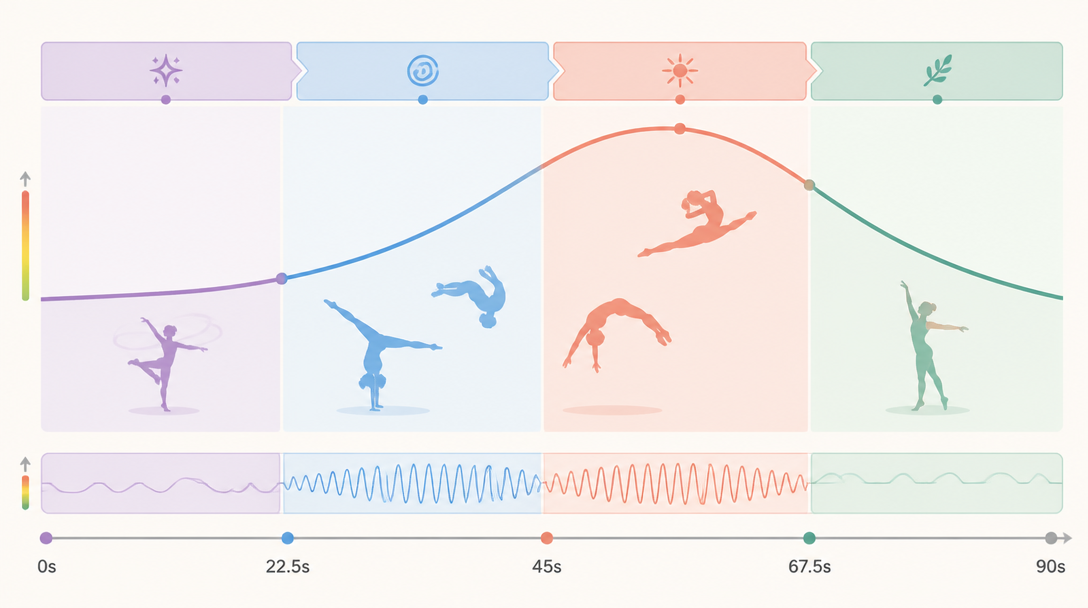
- Build the structure: a 90-second blueprint with a clear peak
- Edit: join tracks and refine tempo and the ending
- Clear rights and submit: check copyright and prepare the right format
DIY or Hire a Pro?
You can edit floor music yourself or commission a specialist. A common split is for the athlete to bring the song idea and rough structure while a pro handles editing and rule-aware adjustments. If you want to talk through song choice, structure, and sound design with a former gymnast and artist, you can ask at custom competition floor music (/music).
Step 1: Learn the Rules (90 Seconds, Lyrics, Voice)
The first step is checking the rules. Time limits and voice policies vary by federation and level — and there was a major change in 2026.
FIG Basics (90 Seconds, 12m Floor, Deductions)
Under the FIG Code of Points, floor is performed on a 12m × 12m spring floor, and senior (elite) music runs to a maximum of 90 seconds. Exceeding the limit brings a -0.10 neutral deduction, and performing without music brings -1.00 (FIG 2025-2028 women's floor rules).
Item | FIG senior standard | If violated |
|---|---|---|
Floor size | 12m × 12m | Out-of-bounds deductions |
Music length | Max 90 seconds | -0.10 for overtime |
Music required | Yes | -1.00 if none |
The August 2026 Change: FIG Bans Human and Synthesized Voice
Previously, wordless vocals were allowed under FIG rules and only songs with words
were banned. But from August 1, 2026, FIG no longer allows any human or synthesized voice — words, sounds, chanting, and the like — with a 1.00 deduction taken by the Chief Judge for music that includes vocals (floor music regulation update). As of this article (September 2026) the new rule is already in force, so instrumental-only tracks are the safe choice under FIG.
How About the US? USAG and NCAA Differences
Voice and lyric policies differ sharply by body. USAG rescinded a proposed voice ban and still allows human voice, though music with words or speech draws a Chief Judge deduction, now reduced from 1.00 to 0.50 (USAG 2026-2027 rule changes). NCAA has traditionally been lenient on lyrics but now scrutinizes thematic consistency more strictly. The lyric question is also covered in our FIG vs. NCAA article.
- FIG (international, from Aug 2026): no human/synth voice (-1.00). Instrumental is safe
- USAG (US): voice allowed; words draw a -0.50 deduction
- NCAA (US college): lyrics allowed, but theme consistency is stricter
How It Works in Japan
Japanese artistic gymnastics follows FIG rules, so if you have higher-level or FIG-compliant meets in mind, keeping everything instrumental avoids being caught out by rule changes or category differences. Copyright for commercial songs is covered in Step 5.
Step 2: Choosing a Song
Once the rules are clear, move to song selection — the most personal step, matched to the athlete's level, age, and performance type.
By Age and Level
Younger gymnasts need easy-to-follow tempos; older gymnasts can use richer, more dramatic arcs. Pick music whose development fits the athlete's ability to interpret it.
By Type (Power, Expressive, Cute)
Choose in line with the athlete's strengths: powerful, lyrical/expressive, or bright and cute. A song that clashes with the athlete's style makes the performance feel disjointed.
Common Song-Choice Mistakes
- No possible peak: monotonous tracks make 90 seconds drag
- Voice/lyric risk: go instrumental for FIG compliance
- Extreme tempo: too fast or slow is hard to match to tumbling and dance
- Style mismatch: the song's mood conflicts with the routine
Step 3: Structure (A 90-Second Blueprint)
With a song chosen, design where the peak goes within 90 seconds. Structure is the skeleton; nailing it makes editing far smoother.
Build a Peak With a Clear Arc
Design the 90 seconds as intro (hook) → development → peak → close so judges and audience can follow it. A classic move is to open with a standout dance element and launch the second tumbling pass at the music's emotional or energetic peak (floor music timeline).
Shift Tempo Between Tumbling and Dance
Nudge the tempo up for tumbling passes to raise excitement, and ease it down for expressive dance. Switching mood and tempo is a core principle of floor music.
Structure That Respects the Code
Structure must satisfy both musical feel and rule-aware placement of movement. Placing accents to match run-ups and landings stabilizes both execution and artistry. To have editing and original composition handled with the Code in mind, you can commission custom competition floor music (/music).
Step 4: Editing (Transitions, Tempo, Endings)
With a blueprint ready, start editing. Most routines combine several tracks into one 90-second piece, and this is where quality is won or lost.
Joining Multiple Tracks
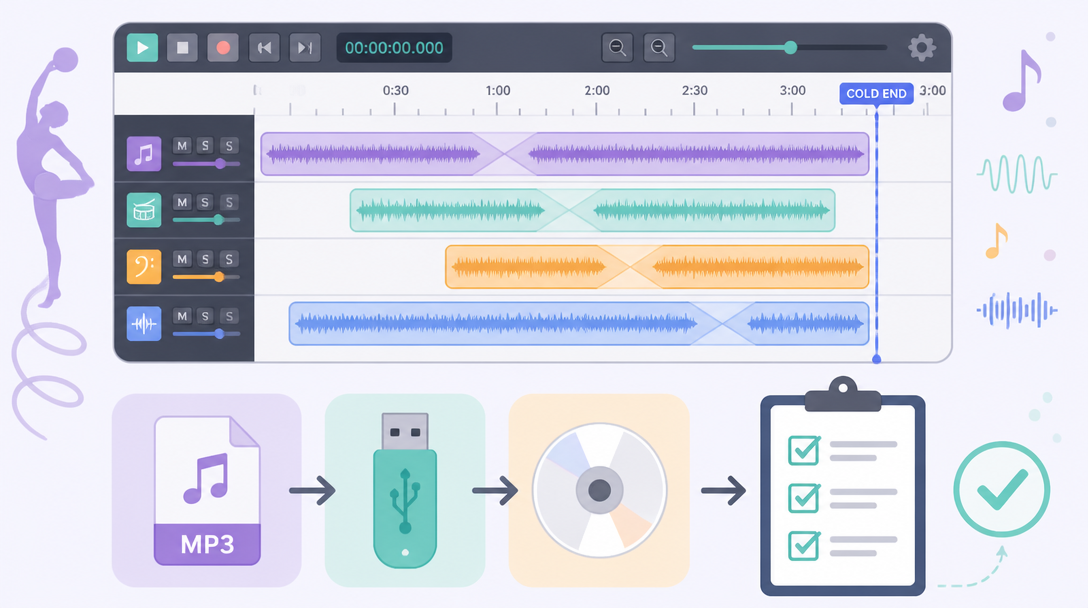
Few songs fill 90 seconds alone, so editors combine tracks or remix them. Matching beat and key at the seams keeps things natural; ignoring them creates jarring joins. Short tracks can be looped seamlessly at the chorus.
Avoid Unnatural Cuts
Abrupt cuts and sudden volume jumps, like poor audio quality, can trigger artistry deductions (roughly -0.05 to -0.10) (deductions for audio and endings). Use fades and crossfades so transitions sound smooth.
Endings (Cold End / Stinger)
Floor looks sharpest when the final pose lands exactly with the music. A "cold end" that stops cleanly, or a strong "stinger" accent, lets you punctuate the last landing. A vague fade-out weakens the finish.
Step 5: Copyright and Finishing / Submission
Finally, handle rights and finishing. Even great music is unusable if it fails on copyright or format.
Copyright Basics (Commercial vs. Original)
When editing commercial songs, playing music at an event and distributing recordings are treated differently. Guidance from Japan's copyright body (JASRAC) notes that playback at non-profit events and recording/streaming require different procedures. Posting competition video online may require clearance, so an original track is one way to avoid trouble.
Audio Quality and File Format
Submit music in a stable format such as a high-bitrate MP3, with instant cueing and a clean ending (high-bitrate MP3 recommendation). Because venues differ (CD, USB, or file upload), always check the organizer's requirements.
Pre-Submission Checklist
- Is playback within 90 seconds (or your level's limit)?
- For FIG, is it free of voice/lyrics?
- Are transitions and the ending clean (no clipping or sudden volume shifts)?
- Does it meet the required format (MP3, etc.) and medium (CD/USB/file)?
- Have you prepared a backup copy?
DIY vs. Hiring a Pro
With the five steps in mind, decide how much to do yourself and what to delegate.
Aspect | DIY fits | Pro fits |
|---|---|---|
Editing skill | Comfortable with a DAW | No editing experience/time |
Rules | You know 90s and voice rules | Want Code-aware adjustment |
Music type | Simple commercial edits | Original composition, cleared rights |
Finish | Just need something usable | Want peaks and endings polished |
If you hire a pro, prepare your song idea, performance type, level, and deadline. For editing or original composition that respects the Code, reach out via custom competition floor music (/music).
Summary
- Making women's floor music has five steps: rules → song → structure → editing → rights/submission
- FIG caps floor music at 90 seconds (-0.10 over, -1.00 for no music). From August 2026, human/synth voice is banned (-1.00)
- USAG allows voice (-0.50 for words) and NCAA allows lyrics, so always check your category's rules
- Design a clear arc and switch tempo between tumbling and dance
- Match beat and key for smooth joins, and finish with a cold end or stinger
- Mind copyright with commercial songs; use high-bitrate MP3 and check submission specs
To discuss Code-aware editing or original floor music, use custom competition floor music (/music).