Rhythmic Gymnastics Music by Apparatus: Hoop, Ball, Clubs, Ribbon
Choosing rhythmic gymnastics music for each apparatus—hoop, ball, clubs and ribbon—based on their character, artistry scoring, timing rules and editing tips.
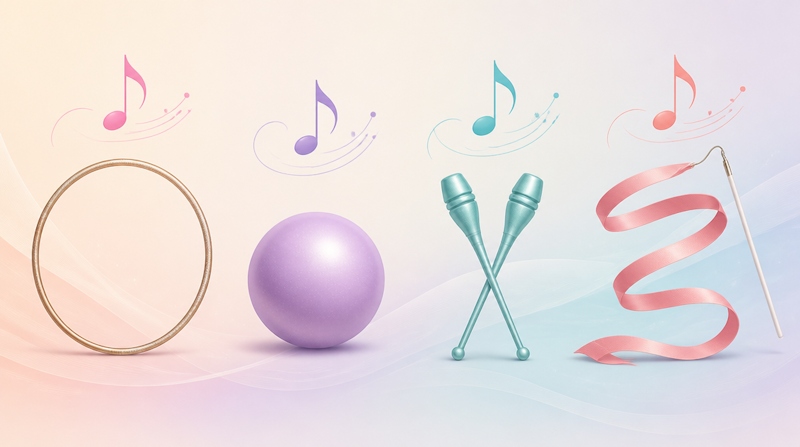
Choosing rhythmic gymnastics music by apparatus starts with understanding the character of each apparatus—hoop, ball, clubs, and ribbon. The same gymnast needs different movement qualities, and different music, depending on the apparatus in her hands. This
guide explains how to select music for each apparatus based on its characteristics and on the Artistry (A) score, which rewards harmony between music and movement. It also covers the shared music rules—routine timing and the use of lyrics—plus practical tips for editing.
Apparatus and Music: The Four Individual Apparatus
Before matching music to apparatus, it helps to know which apparatus senior individuals use and what each does best.
The four senior individual apparatus
In individual competition, senior gymnasts use hoop, ball, clubs, and ribbon. Rope has largely been phased out of senior competition and now appears mainly in some junior categories (JOC). According to Wikipedia, the hoop, rope, and ball were the first official apparatus, with ribbon added in 1971 and clubs in 1973.
Apparatus | Key specs | Movement character |
|---|---|---|
Hoop | 800–900 mm inner dia., min 300 g | Rolls, passes through, rotations, throws |
Ball | 180–200 mm dia., min 400 g | Rolls, body waves, catches |
Clubs | 400–500 mm, min 150 g (pair) | Mills, small circles, asymmetry |
Ribbon | 6 m long, 4–6 cm wide, min 35 g | Spirals, snakes, large arcs |
Specifications are from the Japan Rhythmic Gymnastics Federation.
Why music changes by apparatus
Each apparatus favours certain movements, and those movements shine with different musical characters. SportMusic explains that the musical character be
st suited to each apparatus differs, so matching the two is the starting point of music selection.
Get help from a former athlete and artist
Selecting and arranging music to fit each apparatus is more precise with someone who understands both the code of points and music production. Competition music production handles everything from song selection to editing and original composition.
Before You Choose: Music Rules and Scoring
Some rules apply to every apparatus. For the full picture of scoring and music rules, see our guide to rhythmic scoring and the music rules guide.
Routine time: 1:15–1:30
Individual routines must run 1 minute 15 seconds to 1 minute 30 seconds, with a 0.05 deduction per second over or under (JOC). Editing must fit a complete arc within this window.
Lyrics and prohibited sounds
According to Wikipedia, the restriction on music with lyrics was dropped from the 2022–2024 code of points, so vocal music is now allowed. A
lways confirm current category-specific rules in the official code.
Artistry rewards music–movement harmony
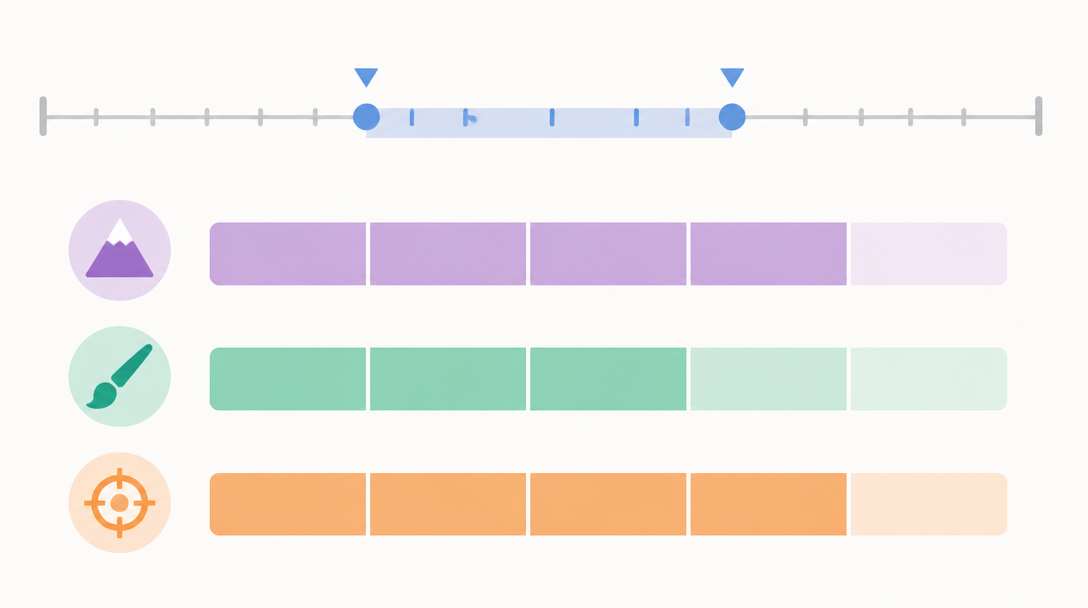
The score is Difficulty + Artistry + Execution (Japan RG Federation). Artistry evaluates the harmony of music and movement and the unity of the composition, so your music choice directly affects this score.
Hoop: The Most Versatile
Characteristics
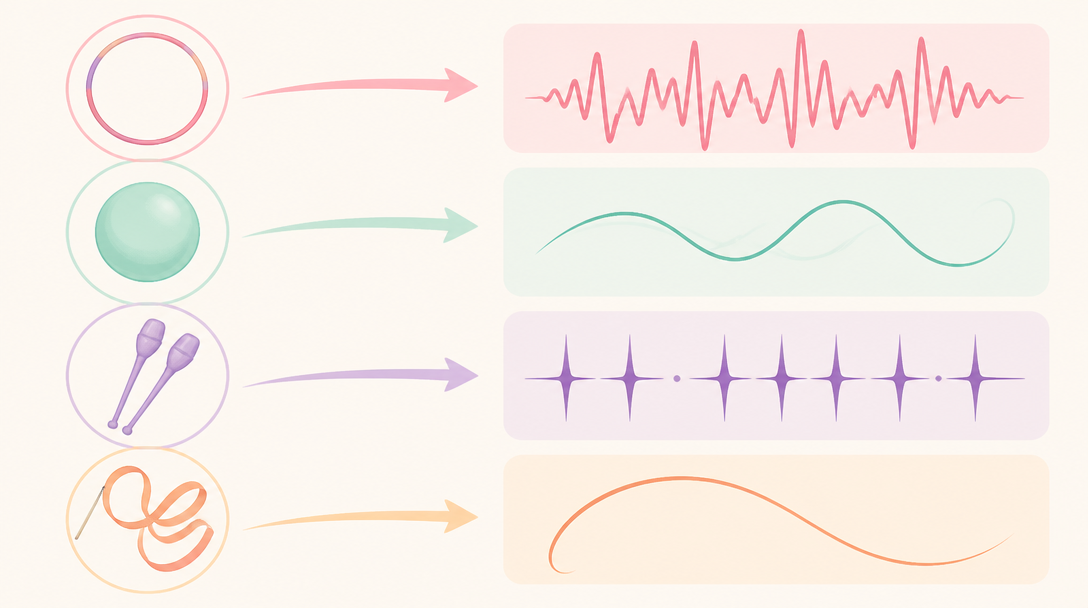
The hoop (800–900 mm) allows rolls, passes-through, rotations, and throws, spanning dynamic and delicate work.
Musical direction
SportMusic notes the hoop adapts to classical, modern orchestral, jazz, world, cinematic, and contemporary music, and should reflect the gymnast's personality rather than the apparatus.
Selection tips
- Pick music with contrast between calm and dynamic sections
- Let the music express the gymnast's character
- Build a developing structure so it never feels flat
Ball: Lyrical and Flowing
Characteristics
Per Wikipedia, the ball is not gripped; rolls along the body, body waves, and catches dominate, and keeping it balanced without holding is the core difficulty.
Musical direction
SportMusic says the ball thrives on expressive melodies, rich harmonies, and emotional warmth, with flowing lines supporting rolls, balances, and smooth transitions.
Selection tips
- Favour legato, singing melodies
- Emotional ballads or lyrical orchestral pieces work well
- Slow music with a clear pulse helps younger gymnasts move
Clubs: Rhythmic and Precise
Characteristics
Clubs (400–500 mm, a pair) feature mills, small circles, and asymmetric handling, demanding rhythm and precision.
Musical direction
SportMusic recommends music with a clear pulse, rhythmic accents, energetic phrasing, and dynamic contrast, which reinforces the precision and speed clubs require.
Selection tips
- Choose steady tempos with an audible beat
- Latin, jazz, and lively orchestral styles fit well
- Align club accents with musical accents
Ribbon: Elegance and Flow
Characteristics
Per Wikipedia, the 6 m ribbon (4–6 cm wide) requires continuous motion—spirals, snakes, boomerangs—and is sensitive to air currents, so unbroken flow matters.
Musical direction
SportMusic suggests flowing melodies, sustained phrases, expressive orchestration, and gradual development; energetic pieces work if they keep their flow.
Selection tips
- Choose long, connected phrases matching the ribbon's lines
- A build toward a climax reads well
- Even fast music should never lose its flow
Practical Tips for Success
Once the direction is set, the music must be shaped into a routine. See also how to make competition music.
Tempo and structure
Fit an intro, development, highlight, and close into 75–90 seconds, aligning musical peaks with your biggest elements and throws.
Editing to fit 1:30
Most music is cut to length; rough joins hurt the music–movement harmony of the Artistry score. Competition music production can handle code-aware editing and original composition within the time limit.
Common questions
- Different music per apparatus? Not required, but variety makes each routine stand out.
- Same track on multiple apparatus? Rules vary by year and category—check the official code.
- Commercial tracks? Allowed (lyrics included), but copyright handling differs by event and country.
Summary
- Senior individuals use hoop, ball, clubs, and ribbon; each favours different movements
- Hoop = versatile/personal, ball = lyrical/flowing, clubs = rhythmic, ribbon = flowing and elegant
- Routines run 1:15–1:30; lyrics allowed (dropped 2022–2024); animal sounds and gunshots prohibited
- Music choice directly affects the Artistry score
- Editing a complete arc into the time limit decides the finish
To discuss apparatus-specific selection, editing, or original composition, visit our competition music page.