Russia Returns to the Gymnastics Euros After Five Years
Russia returns to the European Championships after five years. A D-score look at the Zagreb comeback, the visa drama, and the men's field before Rotterdam.
Note: This article reflects information as of August 12, 2026.
Russia is coming back to the European Gymnastics Championships for the first time in five years. In August 2026, Russian and Belarusian gymnasts will compete as neutral athletes at the European Championships in Zagreb, Croatia. The return of a powerhouse that has been effectively shut out of international competition since 2022 is an event that shakes up the balance of power in men's gymnastics. This article first lays out how the comeback came about and the confusion surrounding the visa question, and then analyzes the impact on the men's competition from the perspective of the D-score (difficulty value).
Russia Returns to the Euros After Five Years
Russia's return to the European Championships is not merely a question of one country's entry. The thorny problem of exclusion and reinstatement that international gymnastics has carried since 2022 is finally being tested on an actual competition stage.
The Road Back from the 2022 Ban
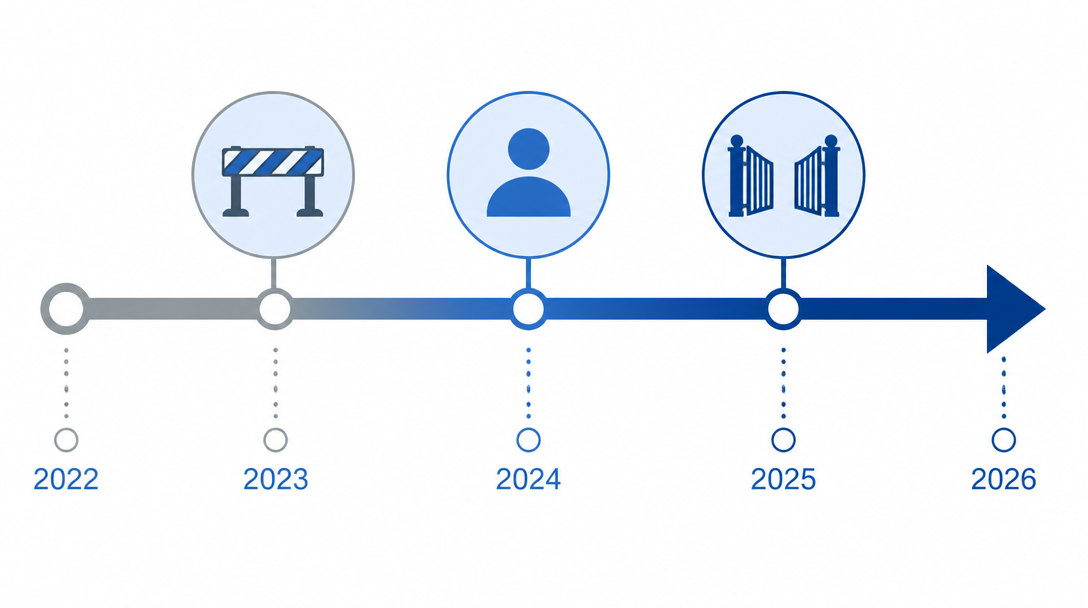
Russian and Belarusian athletes were barred from international competition by the International Gymnastics Federation (FIG, World Gymnastics) following the invasion of Ukraine in February 2022. From late 2024, they were gradually allowed to compete on an individual basis as Authorised Individual Neutral (AIN) athletes, without flags or anthems, and a handful of Russian gymnasts had returned as neutral athletes at the 2025 World Championships.
The flow changed decisively in May 2026. According to reporting by Gymnastics Now, the FIG Executive Committee announced on May 18, 2026 that it would lift, "with immediate effect, all restrictions applied to Russian and Belarusian athletes since February 2022." In principle, this made normal participation with flags and anthems possible again (Forbes; the European Gymnastics decision). The measure applies not only to artistic gymnastics but to every FIG-governed discipline, including rhythmic gymnastics, trampoline, acrobatic, and aerobic gymnastics.
The Zagreb Championships: Dates and Scale
The 2026 European Championships will be held at Arena Zagreb in the Croatian capital. The women compete from August 13–16 and the men from August 19–23, with the men's event marking the 37th edition. It is the first time in history that Croatia has hosted the European gymnastics championships, and more than 600 athletes from over 40 countries are expected to gather. The introduction of prize money for the first time at a European Championships is also drawing attention. The broader outlook for the Zagreb championships is also covered in our preview of the 2026 European men's championships.
If you want to follow the routines and difficulty of the Russian gymnasts, the Gymnastics AI — D-Score calculation app is a useful tool. Built to comply with the FIG 2025–2028 Code of Points and loaded with a database of more than 790 skills, it lets you rearrange a reported routine yourself and estimate its D-score.
Visa Trouble Right Before the Championships
Even though the return was decided, confusion continued right up to the eve of the competition. According to Gymnastics Now, the Croatian government did not issue visas to nine members of the roughly 65-strong Russian delegation. The stated reason was reportedly that "the purpose and conditions of the stay were not deemed legitimate."
After coordination between the Russian Foreign Ministry, European Gymnastics, and the Croatian side, some athletes — including reigning world all-around champion Angelina Melnikova — were ultimately granted visas, but the denial for 2021 European all-around champion Viktoria Listunova was not reversed. TASS reported that the Russian Gymnastics Federation pushed back, calling the move "an effective means of excluding its leading athletes." The Gymternet likewise reported in detail on how the visa issue cast a shadow over the first return in five years.
What is worth keeping in mind here is that "restoring eligibility" and "actually being able to stand in the arena" are two different things. Even when the FIG lifts its sanctions, the gatekeeping of the host country's immigration screening remains. The European Championships in this first year of the comeback become the first test case of how far an institutional return actually functions on the ground.
What Is a "Neutral Athlete"? The FIG Decision and the Host Country's Conditions

To understand this comeback correctly, you need to grasp that "the FIG's decision" and "the host country's conditions" are separate things. The gap between the two lies at the root of the confusion.
FIG Lifted the Sanctions, but the Host Country Demanded Neutrality
As noted above, the FIG fully lifted its sanctions in May 2026 and permitted participation with flags and anthems. The host country, Croatia, however, imposed a condition for the Zagreb championships held on its own soil: Russian and Belarusian athletes would be treated as "neutral athletes," without flags, anthems, or national symbols. In other words, even though there were no restrictions under FIG rules, the host country's judgment made it a de facto neutral participation.
This tug-of-war between "the federation's policy" and "the host country's political judgment" is a pattern that has repeated across international sport in recent years, not only in gymnastics. An instability remains: who may compete, and under which flag, can change from one event to the next.
A Compromise of Competing Without Flag or Anthem
Participation as a neutral athlete has the following characteristics.
- It does not involve the display of a national flag, anthem, or country name (no national symbolism on uniforms or at medal ceremonies)
- Individual competitive results are recorded, but the treatment of team medals and national rankings depends on the regulations of each event
- Entrants are subject to individual eligibility decisions, including the host country's visa screening
Even though they have returned, the situation facing the athletes differs from the Olympics or past World Championships. Before performance even enters the picture, the uncertainty of "whether they can compete at all" makes preparation difficult for athletes and coaches alike.
The Meaning of the Visa Issue That Surfaced on the Women's Side
The visa problem reported by name this time concerned mainly the women's athletes. However, it was a decision affecting the entire delegation of roughly 65 people, so it also had an impact on the men's preparation. The fact that the neutral framework itself creates a structure in which the roster is hard to finalize until the day of competition is a shared challenge for men and women alike.
Impact on the Men's Balance of Power: Reading Russia's Return Through the D-Score
From here, the main topic — the impact on the men's competition — is analyzed through the lens of the D-score (difficulty value). Russian men's gymnastics has long produced athletes of the "overpower them with the D-score" type, even before the exclusion. Their return carries more significance than simply adding more entrants.
The Historic Strengths of the Russian Men
From the late 2010s through the Tokyo Olympic cycle, the Russian men contested the very top of the world. Artur Dalaloyan won the all-around at the 2018 World Championships, and Nikita Nagornyy became all-around world champion at the 2019 Stuttgart World Championships. In the team event, too, Russia claimed gold at the 2019 World Championships. Their strong apparatus are vault, floor, and high bar — all events where it is relatively easy to pile up a high D-score.
In particular, chains of release moves on high bar, high-difficulty tumbling on floor, and high-value vaults are typical weapons for maximizing the D-score. The way element groups and difficulty work on each apparatus is laid out in our list of D-difficulty skills and a map of their acquisition difficulty, so please use it as a companion reference.
The Rise of a New Generation
Even during the period of exclusion, a new generation was developing inside Russia. Daniil Marinov was reported to have beaten Dalaloyan to win the all-around at the 2024 BRICS Games, and at domestic competitions the young Arseniy Dukhno is said to have recorded high all-around scores at the senior level. Are the veterans still at their peak, or will a new generation take center stage? The first-year European Championships become a touchstone for forecasting this generational shift.
That said, exactly who actually competes in Zagreb remains fluid until the day itself, owing to the visa issue and the circumstances of the neutral framework. This article does not assert the participation of any specific athlete; instead, based on reported information, it limits itself to reading "which events could become threats." A five-year blank is by no means small. How the effects of time away from real competition show up — the particular tension of international events, and keeping up with ever-updating scoring rules — is also worth watching. Conversely, for the younger generation it will be the first chance to show on the international stage the domestic results they built up under sanctions.
Where the D-Score Composition Becomes a Threat
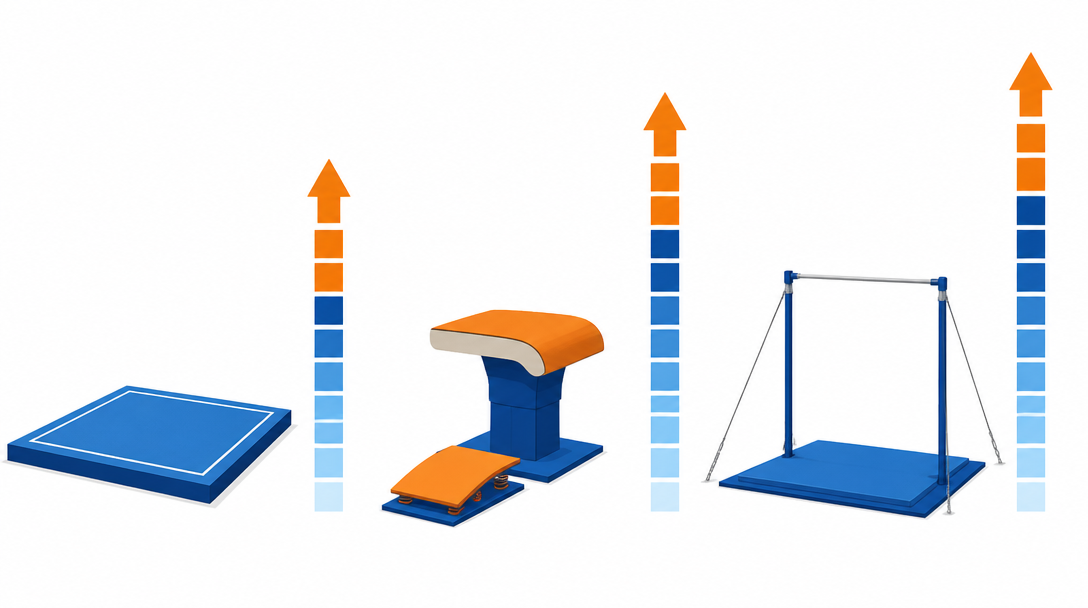
Of the six men's apparatus, the three where Russian gymnasts have traditionally shown their presence through the D-score are the following.
Apparatus | Traditional Russian strength | What drives the D-score |
|---|---|---|
Floor | Chains of high-difficulty tumbling | Stacking D-level and higher saltos plus twists, and connection bonuses |
Vault | Execution of high-value vaults | The event's nature, where even a single vault can earn a high D-score |
High bar | Combinations of release moves | Bonus from connecting release moves and fulfilling element groups |
The team event is contested in a format where three athletes perform on each apparatus and all of their scores are added together (there is no score you can drop). That is exactly why the depth of a squad that can produce a consistently high D-score comes into play. If Russia recovers its depth, the very formula for the team standings changes. For those who want to test how the D-score moves with an actual routine composition, rearranging skills in Gymnastics AI makes it easy to see. It automatically calculates difficulty points, group bonuses, connection bonuses, and dismount bonuses.
From Zagreb to Rotterdam: Setting the Stage for the World Championships
The European Championships are an important competition in their own right, and at the same time a prelude to the autumn World Championships. The real impact of Russia's return is likely to surface in Rotterdam.
What the European Championships Mean as a Qualifier
The 2026 World Championships will be held from October 17–25 at Ahoy in Rotterdam, the Netherlands. According to the Wikipedia overview of the event, the men's team final is on October 20, in a format where the top eight teams from qualification advance to the team final. The results of the European Championships become material for gauging the European nations' athlete selection and readiness heading into the World Championships.
Since Russia has restored its eligibility without restriction under FIG rules, whether it can take part in the World Championships becomes the next focal point. Whether the host nation, the Netherlands, imposes conditions similar to Zagreb's, or allows normal participation, remains a matter left to the judgment of each event.
The Impact on the Japanese Team
For Japan, Russia's return is a factor that intensifies the competition on both the team and all-around fronts another notch. Japan takes a structure built around all-around strength, with Daiki Hashimoto and Shinnosuke Oka at its core, to contest the team event. We explain this in detail in our piece on the composition and D-score outlook of Japan's 2026 World Championships men's team.
The United States, meanwhile, approaches with a structure that incorporates specialists. As we also touched on in the decision of the 2026 U.S. national team, because the team event uses a format where all three athletes' scores are added, where you place your high-D-score athletes sways the standings. If a "D-score type" powerhouse like Russia returns here, the fight for the podium becomes even harder to read.
The Shape of the Autumn World Championships
The men's team event in Rotterdam will take shape depending not only on China, Japan, and the United States, but also on the movements of the European contingent and Russia. The political uncertainty of who competes under which flag, and the competitive reality of who can stack up how much D-score. These two things are tested at the same time at the autumn 2026 World Championships.
For gymnastics fans, how the Russian men shape up in Zagreb becomes, in itself, a clue for forecasting Rotterdam. On which apparatus will they present how much D-score, and will the veterans or the new generation form the backbone? The men's European Championships (August 19–23) carry a level of attention that goes beyond a mere European title race. Watching while following the numbers should make the meaning of the comeback appear in fuller dimension.
Summary
Russia's return to the European Championships is an event with major significance on both the competitive and political fronts. Let us organize the key points.
- On May 18, 2026, the FIG lifted all sanctions on Russia and Belarus with immediate effect, in principle making normal participation possible
- Owing to the host country Croatia's conditions, participation at the Zagreb championships is as "neutral athletes" (no flag or anthem)
- Just before the event, 9 of the 65-member delegation were denied visas, and some, including Listunova, are not expected to be able to compete (this surfaced on the women's side)
- The men have D-score-type strengths on floor, vault, and high bar, and if their depth grows, the math of the team standings changes
- The European Championships are a prelude to the Rotterdam World Championships in October, adding a new variable to the fight with Japan, China, and the United States
If you want to easily simulate how the D-score changes with a men's routine composition, please try Gymnastics AI. It complies with the FIG 2025–2028 Code of Points, works on iOS and Android, and is free to use.