Japan's Men's Team for 2026 Worlds: Roster and D-Score Outlook
Japan is the first nation to name a full men's team for the 2026 Worlds in Rotterdam. A breakdown of the roster and its team D-score strategy for the final.

*This article reflects information as of July 8, 2026.
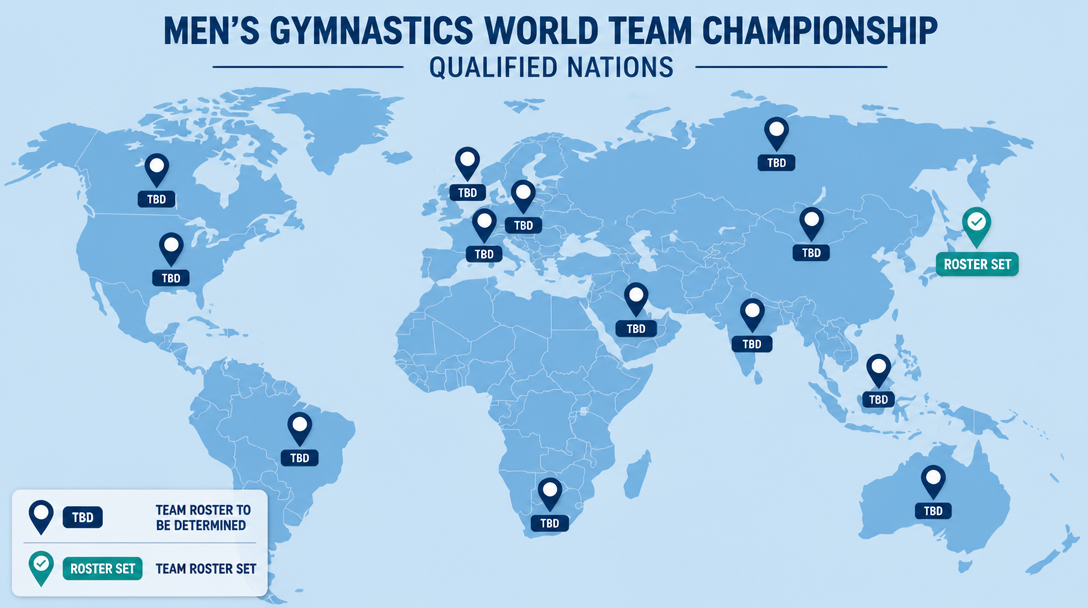
Japan has become the first nation to confirm a complete five-man team for the 2026 World Artistic Gymnastics Championships, held October 17-25 in Rotterdam. The squad pairs the star duo of Daiki Hashimoto and Shinnosuke Oka with newcomer Shohei Kawakami, floor specialist Ryosuke Doi, and horizontal bar specialist Fusuke Maeda. This article analyzes how that roster functions in terms of team D-score, viewed through the lens of the FIG Code of Points.
Japan Locks In Its Men's Team First
The Rotterdam stage
The 2026 Worlds take place at Rotterdam Ahoy from October 17 to 25, with the men's team final scheduled for October 20 and the top eight qualifiers advancing to that final. As the first Worlds of the Los Angeles 2028 cycle, it is a pivotal test of each nation's new lineup.
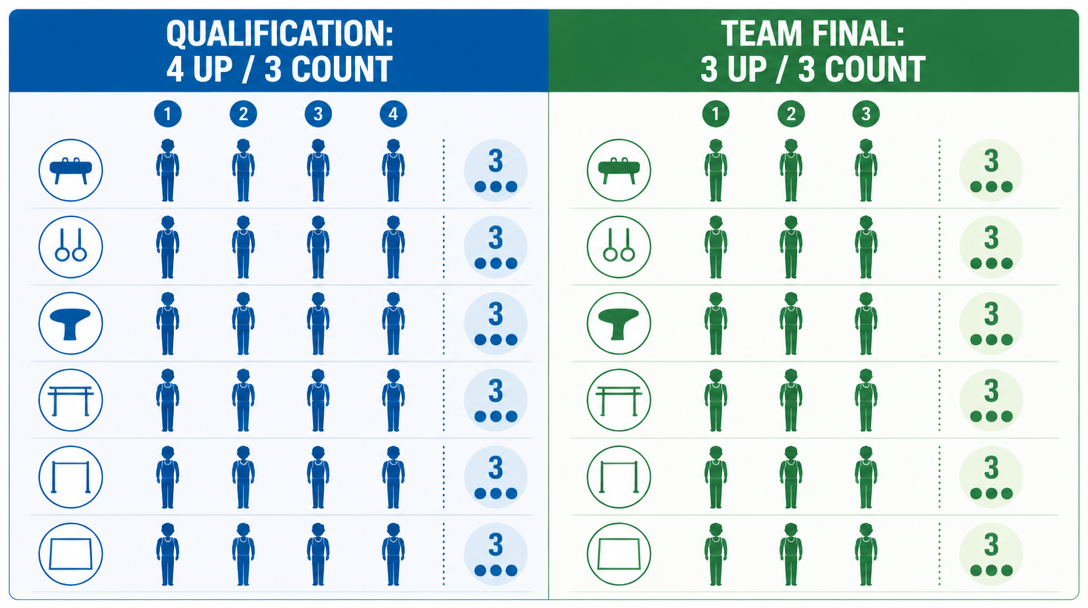
A men's team consists of five gymnasts. In qualification, four compete per apparatus and the top three scores count; in the team final, three compete and all three scores count. In this unforgiving 3-up-3-count format, a single mistake goes straight onto the scoreboard, so fielding gymnasts who combine high difficulty with reliable execution on every apparatus is decisive.
If you want to check routine construction and difficulty values yourself, Gymnastics AI — the D-Score calculator app is a handy tool. Built on the FIG 2025-2028 Code of Points with a database of over 790 skills, it lets you build and compare the routines these athletes might attempt.
The only fully announced men's team
According to Gymnastics Now's list of confirmed 2026 Worlds competitors, Japan was the only nation with all five men's team members named as of early July. China, the USA, and South Korea have secured team berths but have not finalized individual names. Japan's structured domestic selection - the NHK Cup, All-Japan All-Around, and All-Japan Apparatus Championships - allowed it to settle its roster early.
The Five Selected Gymnasts
Daiki Hashimoto: chasing a fourth straight all-around title
Hashimoto anchors the team. The Tokyo 2020 Olympic all-around champion won his third consecutive world all-around title in 2025 with 85.131 points - a feat achieved only once before, by Kohei Uchimura (six straight, 2009-2015). In 2026 he also captured his sixth consecutive All-Japan all-around title. In Rotterdam he aims for an unprecedented fourth straight world all-around crown, and as a genuine all-arounder he can be deployed on all six apparatus.
Shinnosuke Oka: an Olympic champion seeking a first Worlds podium
The other headliner is Oka, the Paris 2024 Olympic all-around gold medalist. Despite Olympic glory, he placed fifth in the 2025 world all-around (81.797), so a first world all-around medal is his target. Strong on parallel bars and vault, he forms a two-man scoring core alongside Hashimoto.
Kawakami, Doi and Maeda: a rising star and two specialists
The remaining three spots carry distinct roles.
- Shohei Kawakami: first Worlds selection, having placed third at the 2026 NHK Cup - a versatile all-arounder and future team leader.
- Ryosuke Doi: a floor exercise specialist who lifts the team's D-score on that apparatus.
- Fusuke Maeda: a horizontal bar specialist whose release-heavy, high-difficulty routine is a key scoring weapon in the team final.
Two headliners, a rising all-arounder, and two specialists is a design built for the 3-up-3-count team final: cover every apparatus with all-arounders, then insert specialists on floor and high bar to maximize the sum of each apparatus's top three.
Team D-Score Strategy: Optimizing 3-Up-3-Count
What the D-score is
A gymnastics score combines the D-score (difficulty value) and the E-score (execution). The D-score, which has no ceiling, adds up skill values, element group requirements, connection bonuses, and dismount bonuses. The E-score starts from 10 and deducts for execution errors. You can review the fundamentals in our guide to the basics of the Code of Points.
Because the team total on each apparatus is the sum of the best three D-plus-E scores, depth matters: the more quality gymnasts a team can field per apparatus, the stronger it is. Japan's two specialists exist precisely to raise the quality of the third scorer on floor and high bar.
To experiment with how routine construction changes the D-score, try Gymnastics AI, which auto-calculates difficulty, group bonuses, connection value, and dismount bonuses as you arrange skills.
How strategy shifts between qualification and the final
Phase | Format | Scores counted | Key factor |
|---|---|---|---|
Team qualification | 4 up per apparatus | Top 3 | Insurance against falls |
Team final | 3 up per apparatus | All 3 | Difficulty plus reliability |
All-around final | 1 gymnast, 6 apparatus | Full total | All-around depth |
Specialists reliably raise the third score on their event but cannot help elsewhere, so the breadth of Hashimoto, Oka, and Kawakami across the other apparatus is the precondition for using specialists at all.
Apparatus-by-Apparatus: Strengths and Weaknesses
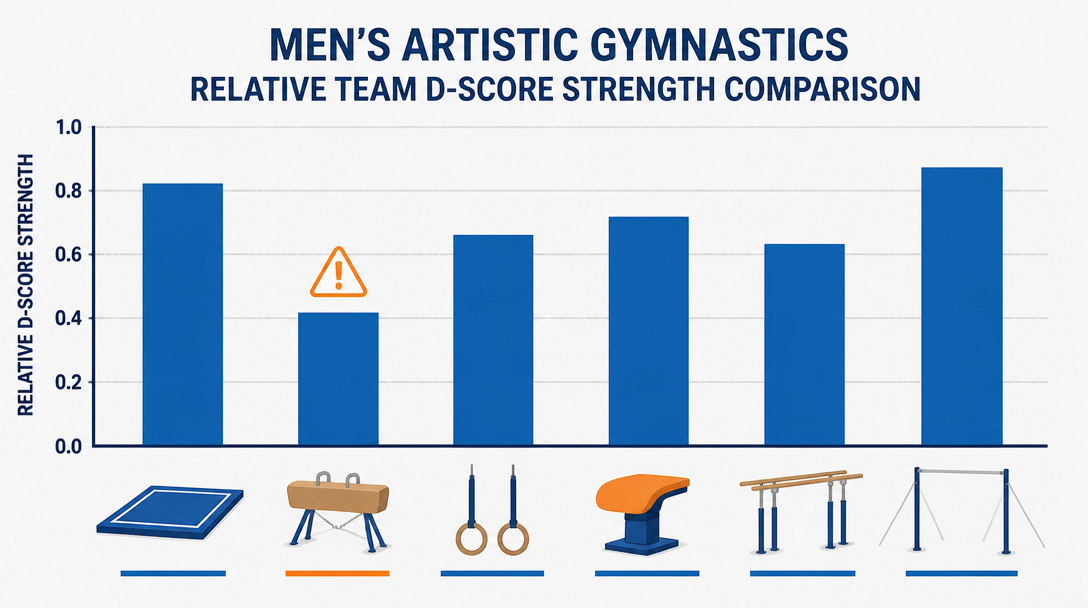
Strengths: high bar, floor, parallel bars
Japan's traditional strengths show on high bar, floor, and parallel bars. On high bar, specialist Maeda plus a release-heavy Hashimoto stack up big D-scores; see our breakdown of the Tkatchev, Kovacs, and Rybalko releases. On floor, Doi and Hashimoto build value with high-difficulty twisting. The specific demands of each men's event are covered in our guide to the six men's apparatus.
The weak spot: pommel horse reliability
Pommel horse is the sport's most error-prone event. Here, reliability outweighs raw difficulty in the team final, and securing three clean scores is Japan's biggest question mark in a gold-medal bid.
Comparing the rivals
China pushes Japan on difficulty and the USA on pommel horse and parallel bars. For context, even Russia - barred from international competition - retains high-difficulty routines domestically: Arsenii Dukhno won the 2026 Russian all-around with 84.065. The D-score race among eligible nations will decide the team medals.
The Outlook in Rotterdam
Hashimoto's fourth straight all-around
The headline storyline is whether Hashimoto can win a fourth straight world all-around title, moving into sole second place in history behind Uchimura. Trace the event's history in our article on the history of the World Championships and Japan's teams.
Team medal and youth experience
In the team event, how far debutant Kawakami can deliver on the big stage is pivotal. Japan's regional standing was analyzed in our piece on the 2026 Asian Championships and Japan's D-scores. Primary information is available at the FIG official site and in the Worlds historical records.
Summary
- The 2026 Worlds run October 17-25 in Rotterdam, with the men's team final on October 20; Japan was the first to lock in a full men's team.
- The roster pairs Hashimoto and Oka with debutant Kawakami, floor specialist Doi, and high bar specialist Maeda.
- In the 3-up-3-count team final, the quality of the third scorer per apparatus is key, and the two specialists lift floor and high bar D-scores.
- Strengths are high bar, floor, and parallel bars; the weakness is pommel horse reliability, and the D-score race with China and the USA will decide the medals.
- Hashimoto's bid for a fourth straight all-around title and Japan's team gold are the biggest storylines.
To simulate routine D-scores yourself, give Gymnastics AI a try - free on iOS and Android, it lets you build these athletes' routines and feel how D-score and E-score interact.