Women's Floor Routine: Structuring Choreography to Music
In women's artistic gymnastics, floor is the only event set to music. Learn to sync skills and poses to musical accents and build a 90-second FIG routine.
In women's artistic gymnastics, the floor exercise is the only event performed to music, which means how you sync skills, leaps and finishing poses to musical accents shapes the entire routine. Building a strong floor routine is not just about "pl
aying a good song" — it is about designing movement and music as one piece. This guide explains how to structure a 90-second routine under the FIG Code of Points and how to match choreography to music, from composition to song selection and editing.
Why Music and Composition Are Inseparable in Women's Floor
Before working on choreography and music, it helps to understand why music matters to the score. Floor is the only one of the four women's events set to music, and the match between movement and music is itself judged.
The Only Event Scored with Music
Men's six events and the women's vault, uneven bars and beam have no music. The USA Gymnastics event guide describes floor as blending dance and tumbling to music. As the EBSCO research starter notes, women's floor routines are set to music, last no longer than 90 seconds, and require at least two acrobatic series and one dance series. Music is not background — it is the skeleton of the routine.
The Three Building Blocks
A women's floor routine is built from three elements.
- Tumbling (acrobatics): passes of connected saltos that form the highlights.
- Dance elements: leaps, jumps and turns performed to the music.
- Poses and connecting choreography: the still moments and transitions timed to musical accents.
Composition is the work of placing these three elements inside 90 seconds so they align with the way the music develops.
Get Help from a Former Gymnast and Artist
Creating floor music demands both scoring knowledge and music pro
duction skill. Few creators can handle selection, editing and original composition while understanding the rules. If you want a track designed around your composition, competition floor-music production is available from someone who is both a former gymnast and a music artist — starting from the image of the routine you want to build.
A 90-Second Structure Template
The first step in composition is planning how to use 90 seconds. As reference material on floor exercise notes, women must perform within 90 seconds and overtime is penalized.
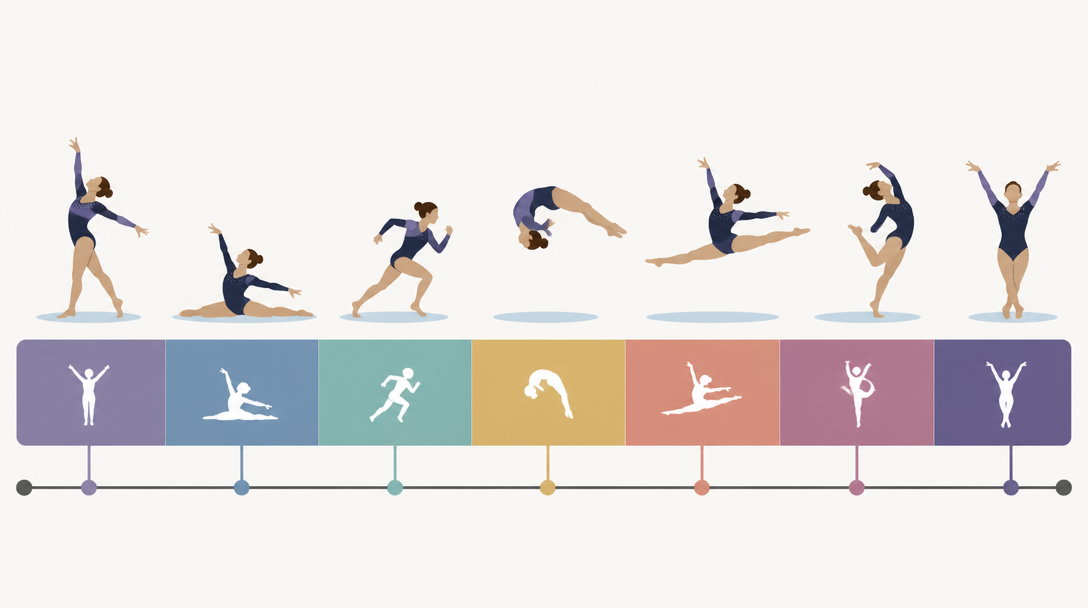
Seven Phases of Timing
Dividing the routine into phases makes composition easier. Based on the floor music timeline from GymnastGem, here is a rough distribution.
Phase | Time | Purpose |
|---|---|---|
Opening pose | 0:00–0:05 | Strong still pose on the first beat |
Intro flourish | 0:05–0:12 | Quick stylish choreography |
Lead-in to pass #1 | 0:12–0:25 | Smooth entry to first tumbling |
Dance passage | 0:25–0:35 | Leaps and turns, a breather |
Centerpiece + pass #2 | 0:35–1:05 | Peak dance moment plus tumbling |
Final crescendo | 1:05–1:25 | Last pass into pose setup |
Finishing pose | 1:25–1:30 | Freeze on the final beat |
These are guidelines that shift with the
gymnast's level. The key is to avoid dead time and to align the peaks of the routine with the peaks of the music.
Placing the Tumbling Passes
GymnastGem suggests the number of passes varies by level.
- Developmental to intermediate: two well-spaced passes.
- Advanced: three passes.
- Elite / international: three or more passes with high-level choreography between them.
Because passes are exhausting, spread them across the routine and use dance and poses to recover in between. Edit the music so it builds before a pass and hits an accent on the landing.
Where to Put Dance and Turns
Placing leaps and turns in the transitions between passes gives the routine contrast. Timing turns to tempo changes or new musical phrases makes the "on the music" impression much stronger.
Syncing Skills and Poses to Musical Accents
The biggest difference-maker is timing skills and finishing poses to musical accents. Done well, the same composition looks a level more polished.
What a Musical Accent Is
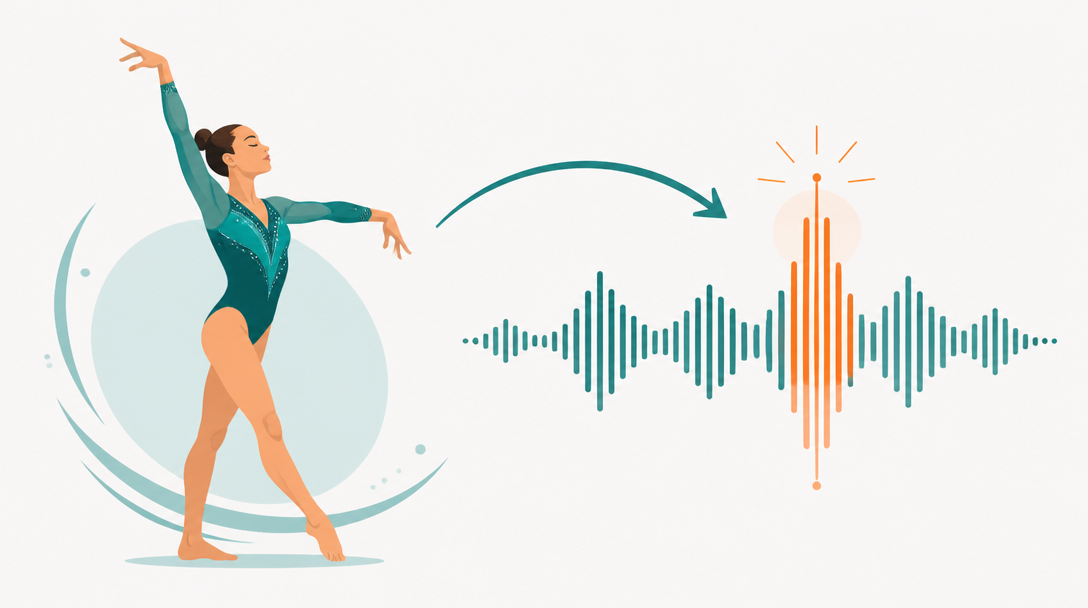
An accent is an emphasized beat or sound — a drum hit, a cymbal, a brass stab, a melodic peak. Landing a pose, ending a turn or peaking a leap on that accent makes movement and music "hit at the same instant." According to the GymnastGem women's floor guide, the 2025–2028 Code expects movement to match the phrasing, style and emotional range of the music, and a weak connection is penalized.
Landing Poses on the Music
Poses create the "still" moments of a routine. The opening pose, the end of a dance passage and the final pose look best frozen on a musical accent or a clear break in the track. Building a little space or resonance into those moments during editing makes them easier to hit.
If you want selection, editing and 90-second structure designed around the rules, competition floor-music production and editing can place accents to match your poses and highlights, or compose original music around your composition.
Tumbling Entries, Landings and Sound
When the music swells as you run into a pass and hits an accent on the landing, the power of the skill doubles. The final pass is the climax, so edit it to line up with the biggest moment of the track — the chorus or final crescendo.
Building an Exciting Musical Arc
An arc with a beginning, middle and end is what makes a crowd react. Contrast and a clear climax are more memorable than a flat, constant energy.
Think in Three Acts
GymnastGem recommends a three-act structure.
- Setup: establish style, mood and tempo.
- Rising action: energy builds; tumbling takes center stage.
- Climax and resolution: the high point, then a decisive close.
Intro and the First Pose
GymnastGem suggests leaving about 0.5 seconds of quiet at the start so you can begin without rushing. Remember the clock starts on your first intentional movement, not when the music begins — a long intro wastes precious seconds. Keep the intro short and striking.
The Finish — No Fade-Outs
Avoid ending on a fade-out. GymnastGem recommends ending on a clear beat paired with your final pose. A defined ending makes the finishing pose pop and tightens the whole routine.
Song Selection by Gymnast Type
Choose music to match the gymnast's character and style. A delicate ballad does not suit a power tumbler, and a flat up-tempo track wastes an expressive gymnast.
Comparing Genres
Genre | Strong image | Watch out for |
|---|---|---|
Classical | Elegance and expression | Can feel flat without a built-in climax |
Pop (instrumental) | Familiarity and clap-alongs | Mind the lyrics rule (below) |
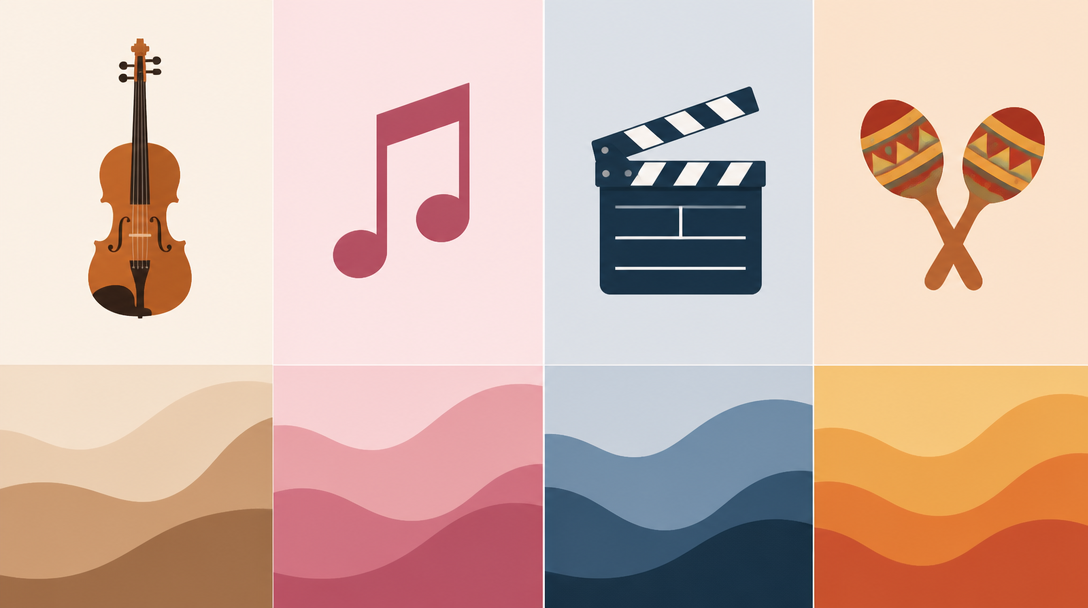
Film / game music | Drama and world-building | Famous tracks carry fixed images |
Latin / folk | Rhythm and crowd energy | Too fast and the movement can't keep up |
Matching the Gymnast's Character
Sorting gymnasts into "power," "expressive" and "cute" types helps. Age matters too: younger gymnasts suit clear, upbeat tracks, while teens can carry more dramatic, expressive music.
Are Lyrics Allowed? FIG vs. NCAA
A common misunderstanding is whether songs with lyrics are allowed. Under FIG and Japanese competition, tracks with words are not permitted — instrumental music is the rule. In US collegiate gymnastics (NCAA), lyrics are allowed, and this difference causes confusion. See Can Women's Floor Music Have Lyrics? FIG vs. NCAA for details. For domestic competition, always prepare an instrumental track.
Editing Tips and Mistakes to Avoid
Once the music is chosen, edit it to 90 seconds. Care here decides how well movement and music align.
Common Editing Mistakes
- Splicing songs in different keys or tempos without smoothing the seams.
- An abrupt cut where one song jumps to another.
- A flat arc with no build across the 90 seconds.
- Ignoring intro and ending length, causing overtime or a weak finish.
If you use multiple songs, match keys and tempos and connect them with crossfades and deliberate spacing.
Adjusting Tempo and Length
A track rarely fits 90 seconds as-is. Cut long songs to the parts you need and adjust tempo where it does not match — but large tempo changes can hurt the sound, so balance movement fit against the track's appeal. Decide which part goes in which phase before editing.
Submission Format and Audio Quality
Always check the required file format, volume and length for your competition (rules vary by event and year, so confirm the latest guidelines). Audio that is too quiet or distorted hurts the routine on the arena system, so mind volume and mastering.
Summary
Designing choreography and music together — from scoring knowledge to musical structure — transforms the impression of a floor routine.
- Floor is the only women's event with music; design movement and sound as one piece.
- Split 90 seconds into seven phases and balance tumbling, dance and poses.
- Syncing skills and poses to musical accents raises the quality a level.
- Build a three-act climax and end on a clear beat, never a fade-out.
- Choose music by gymnast type; use instrumental tracks for domestic competition.
- When splicing songs, match keys and tempos for a seamless edit.
If you want help with selection, editing and 90-second structure, consider competition floor-music production — rules-aware editing and original composition from a former gymnast and music artist.