The Twisties in Gymnastics: Why Athletes Lose Air Awareness
The twisties make gymnasts lose air awareness during twisting skills. Learn the causes, the brain science, safety risks, and how to respond step by step.
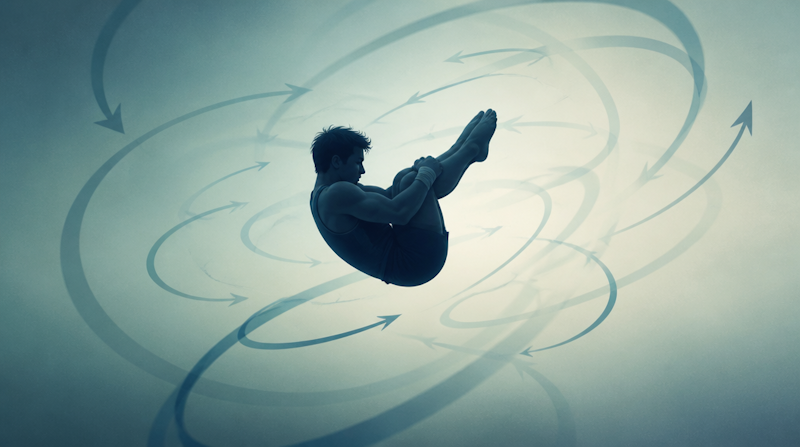
The twisties in gymnastics describe a sudden loss of spatial awareness in the air during twisting and somersaulting skills. It is not a sign of weak nerves or simple nervousness. Experts increasingly understand it as a genuine problem of motor control, where
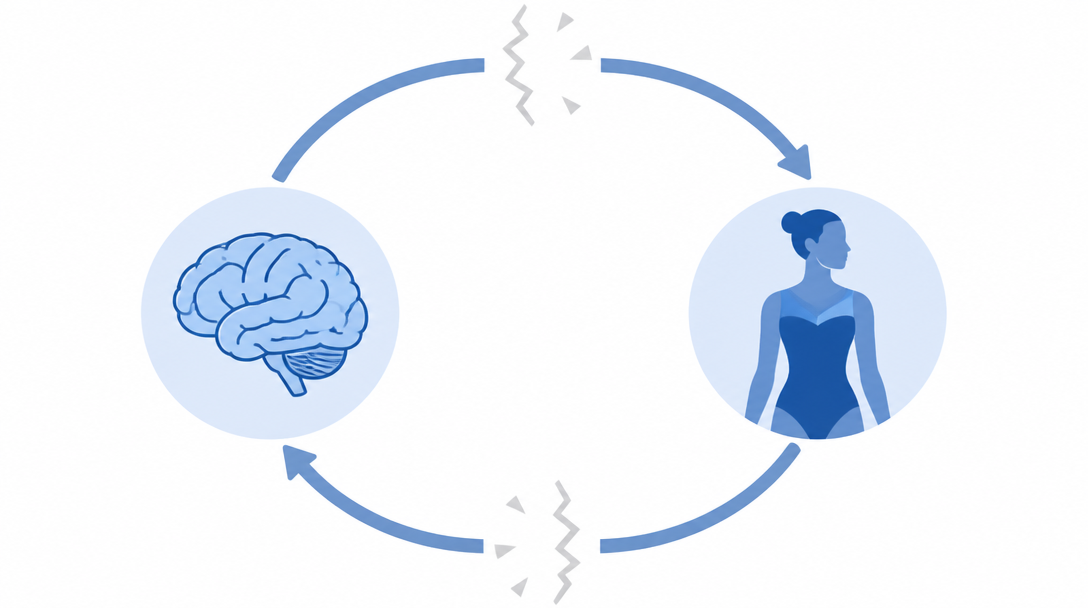
the brain and body briefly stop communicating efficiently. This article explains what causes the twisties, the brain science behind them, why they are dangerous, and how gymnasts, coaches and parents can respond step by step.
What Are the Twisties in Gymnastics?
The "twisties" is a term for the state in which a gymnast, usually during twisting skills, temporarily loses awareness of where their body is in space. According to sports psychologist Dr. Matthew Sacco of Cleveland Clinic, there is a disruption in the feedback loop so that "the brain and body are no longer communicating efficiently."
Twisties, the Yips and Target Panic
This phenomenon is not unique to gymnastics. As Jonathan Rhodes, a psychology lecturer at the University of Plymouth, explains, the yips in golf and cricket, target panic in archery, and the twisties in gymnastics and diving are all manifestations of the same underlying psychological mechanism. Seeing the twisties as part of the same family as the yips makes the condition easier to understand.
How It Differs From Simply Being "Sc ared"
Unlike ordinary fear or a temporary slump, the twisties are marked by knowing exactly how to do a skill while the body refuses to follow. It is a breakdown in the automatic execution of a well-learned movement rather than a lack of ability or effort.
How Gymnasts Describe It
Gymnast Simone Biles described the sensation as being "lost in the air," and during the Tokyo Games she attempted a 2.5 twist but completed only 1.5, as reported by ABC News. Fellow gymnast Laurie Hernandez described a "stutter step" in the brain that is enough to throw off the whole skill, per NBC.
Why Air Awareness Breaks Down: The Brain and Body
The idea that the twisties happen because an athlete is "mentally weak" does not match expert opinion. The real background lies in how a highly automated movement collapses, and in a disruption of how several sensory systems work together.
Automatic Movement Disrupted by Explicit Monitoring
Jonathan Rhodes explains that the main cause is a sh
ift in attentional focus: attention moves from executing a well-rehearsed skill to the potential consequences of failure. When conscious attention is pulled onto steps that are normally automatic, the smooth flow is interrupted. This is known in research as "explicit monitoring" or self-focus, and the resulting somatic anxiety, such as raised heart rate and muscle tension, further degrades performance.
Vestibular, Visual and Kinesthetic Integration
Dr. William Sands (PhD, FACSM), a gymnastics sports scientist, argues that the twisties are fundamentally a problem of spatial orientation, not a mental-health failing. Combining twisting rotation with the inversion of a somersault makes it hard to integrate three systems: the vestibular apparatus, vision, and kinesthesis (awareness of body position). Sands notes that athletes who can identify twist direction while upright sometimes cannot when suddenly inverted, and that this disorientation can persist from minutes to months.
Anxiety Interferes With Motor Control
Excessive self-monitoring triggers physical anxiety responses that feed back into further disruption. Research into the exact neurology remains limited, and no single cause has been established. The key point is that this is rooted in how the brain and nervous system operate, not in laziness or a lack of grit.
Common Triggers of the Twisties
Dr. Sacco stresses there is "no single answer" that triggers the condition, but points to several typical factors that often combine.
Pressure and Perfectionism
High-stakes expectations and unattainable personal standards create heavy psychological load. As Cleveland Clinic notes, perfectionism can itself become a mental obstacle, and pressure can be self-imposed or come from coaches and spectators.
Fixating on Mistakes
Over-analyzing small errors, especially by repeatedly reviewing video, can intensify anxiety. Anticipating failure produces muscle tension, which in turn invites more failure, forming a conditioned cycle of anxiety.
Under-Preparation and Rising Difficulty
Sands suggests much athlete anxiety stems from inadequate preparation rather than pure psychology, and urges coaches to investigate the problem thoroughly instead of assuming laziness. Harder twisting skills place greater demands on spatial orientation. The table below summarizes the main factors.
Category | Examples | Underlying mechanism |
|---|---|---|
Psychological | Pressure, perfectionism, loss of confidence | Attention shifts to outcomes and automatic movement breaks down |
Neuro-sensory | Disrupted vestibular, visual and kinesthetic integration | Twisting plus inversion makes orientation hard to judge |
Physical/technical | Under-preparation, sudden difficulty increases, fatigue | Not enough margin to execute the skill |
Environmental | Rumination, too much video review, expectations | Anxiety intensifies and a vicious cycle sets in |
Why the Twisties Are Dangerous
The most important principle is never to try to power through the twisties. Continuing high-difficulty skills without air awareness can lead directly to serious injury.
Falling on a Hard Competition Surface
According to NBC's reporting, the twisties can in some cases lead to serious injury or even paralysis. If a gymnast cannot tell which way their body is facing in the air, the risk of landing on the head or neck rises sharply. Biles herself repeatedly warned that people do not realize how dangerous it is.
Withdrawing for Safety
At the Tokyo Games held in 2021, Biles withdrew from the team final and the all-around because of the twisties, explaining that she got so lost in the air that her safety and the team medal were at risk. She still competed in the balance beam final, winning bronze, then stepped away from competition to recover and later won multiple medals at the 2024 Paris Games. Her case shows that prioritizing safety and returning to competition are not mutually exclusive.
How to Respond and Recover
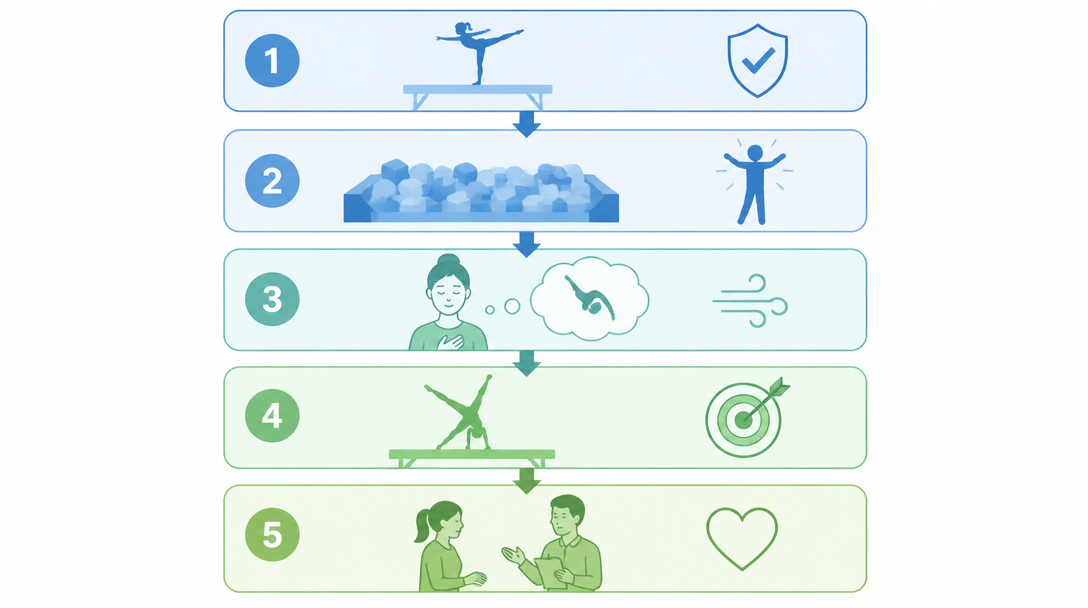
Experts broadly agree: do not force the original skill, return to basics and rebuild step by step, and work with professionals rather than struggling alone. There is no single cure, but several approaches are well established.
Return to Basics, Step by Step
Dr. Sacco lists breaking skills down into their components and rebuilding confidence from the basics as a first step. Gradually increasing load from a low-pressure starting point mirrors a step-by-step exposure approach. Dropping the difficulty a level and rebuilding from reliable movements is the safe path.
Training Environment and Imagery
Foam-pit training that removes the fear of landing, and visualization of successful routines, are considered helpful. Rhodes also recommends planning performance scenarios in advance through multi-sensory imagery.
Breathing and Refocusing Attention
Relaxation methods such as box breathing help shift the nervous system from a sympathetic to a parasympathetic state. Redirecting attention from internal body mechanics to an external target (an "external focus") is another useful strategy. The basic recovery steps are:
- Put safety first and lower the difficulty (do not force the original skill)
- Practice in fear-reducing settings such as a foam pit or with spotting
- Use success imagery and breathing to refocus
- Shift attention from internal mechanics to an external target
- Consult a sports psychologist or specialist if it does not improve
CBT, ACT and Professional Support
For persistent cases, cognitive behavioral therapy (CBT) to reshape thought patterns, and Acceptance and Commitment Therapy (ACT) that adopts an accepting stance ("the symptoms may appear, but I will continue anyway"), are considered effective. Because the causes span psychology, neurology and the body, coordinated support from multiple specialists tends to work best. For mental-training basics, see our article on mental training for athletes.
How Coaches and Parents Can Help
With the twisties, the people around the athlete strongly influence how easily they recover. Building a safe environment where the gymnast can rebuild without being pushed is essential.
Do Not Blame or Assume Laziness
As Sands stresses, this is a neuro-sensory problem of spatial orientation, not an excuse for laziness or a lack of training. Coaches should investigate the cause carefully and avoid blaming the athlete. Cleveland Clinic notes that as high-profile athletes have spoken openly, understanding has improved and it has become easier to seek help.
Allow Rest and Mental Health
Recovery may require time away from competition, and adequate rest and sleep are the foundation. See our articles on sleep and recovery and athlete mental health and burnout for related guidance.
Return Gradually
When returning, rebuild difficulty one level at a time rather than jumping straight back to the hardest skills. Twisting release moves place high demands on spatial orientation, so reviewing routine composition helps. For men's events, you can plan a manageable routine for each stage of the comeback while checking difficulty with the D-score calculator app (Gymnastics AI). For understanding technical risk, difficulty explainers such as our article on high-bar release moves are also useful.
Summary
The twisties in gymnastics are a problem of motor control, not mental weakness. Key points:
- The twisties are a loss of spatial awareness in the air during twisting skills, in the same family as the yips and target panic.
- Causes include attention shifting to outcomes (disrupting automatic movement) and a breakdown in vestibular, visual and kinesthetic integration; there is no single cause.
- Continuing high-difficulty skills while disoriented can cause serious injury, so safety must come first.
- Responses include a step-by-step return to basics, a supportive training environment, breathing and attention refocusing, CBT and ACT, and professional support.
- Coaches and parents should avoid blaming the athlete, allow rest and mental-health care, and support a gradual return.
The twisties can happen to anyone, and with correct understanding and appropriate support, athletes can work through them. Moving slowly, prioritizing safety, and progressing step by step is the fastest route to recovery.