How to Create Vocal Harmonies: A Guide to Chorus Arrangement
Learn how to create vocal harmonies: choosing third and sixth intervals, staying in the diatonic scale, plus doubling and mixing backing vocals in your DAW.

Learning how to create vocal harmonies transforms a flat melody into a rich, emotional performance. Vocal harmony is the practice of layering consonant notes above or below a lead melody, and as the English Wikipedia entry puts it, it is "a style o
f vocal music in which consonant notes are sung simultaneously with a main melody." This guide covers interval choices centered on thirds and sixths, staying in the diatonic scale, and practical chorus arrangement and mixing in your DAW.
What Vocal Harmony Actually Is
Harmony vs. Unison
Vocal harmony means singing different pitches at the same time as the lead so they ring out as a chord. Unison (doubling), by contrast, stacks the same pitch to add thickness only. They serve different roles: harmony adds color, while doubling adds width and stability. Most professional mixes use both together.
Why Harmonies Enrich a Song
When voices sound consonant notes at once, extra overtones add depth and dimension. That is why harmonies appear across folk, rock ballads, R&B and gospel. Stackin
g harmonies in the chorus dramatically changes the perceived energy for the listener. Pairing this with a solid grasp of chord progressions makes your harmony choices far easier to justify.
Upper vs. Lower Harmony
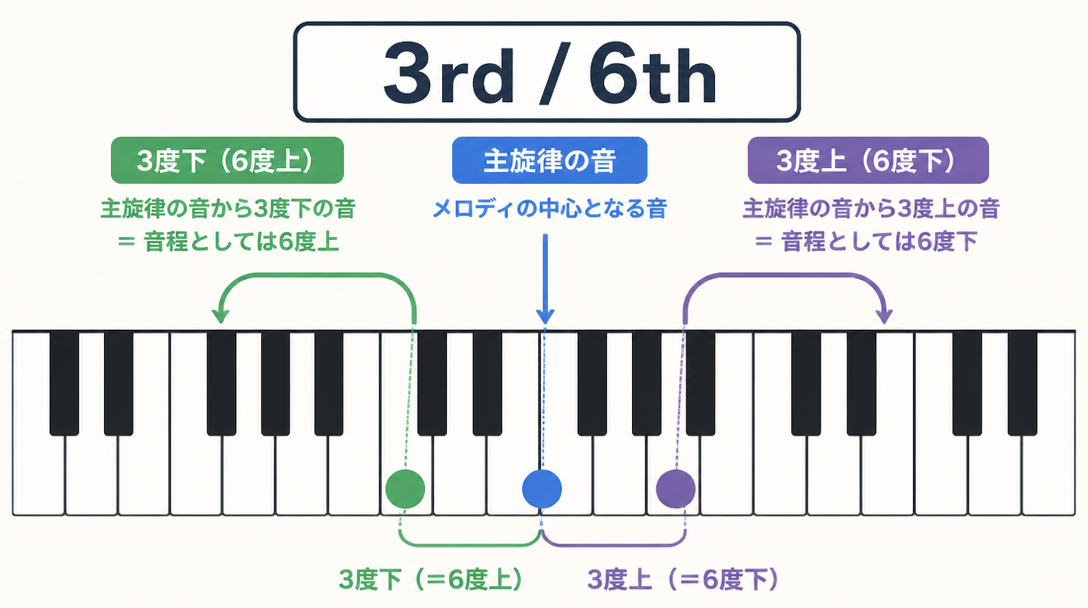
A note above the lead is an "upper harmony"; a note below is a "lower harmony." Upper harmonies emphasize overtones and brightness, while lower harmonies add weight and calm. Simply choosing a direction already steers the emotional impression.
Thirds and Sixths: Choosing Your Intervals
The Third as the Default
The third is the fundamental harmony interval: skip one scale degree above or below the melody note. In C major, a "C" gets an "E" a third above. As one music theory reference explains, thirds and sixths "ring out most beautifully," so they belong at the center of your harmony writing. Most pop and rock choruses are built on thirds.
Sixths, Fourths and Fifths
The sixth is a close relative of the third, sweet and lush. Fourths and fifths tend to blend so completely they lose presence, so
keep thirds and sixths primary. Where a third or sixth clashes with the underlying chord, a fourth or fifth can resolve the dissonance. SoundQuest's harmony theory classifies intervals as "second = muddy," "third = soft and colorful," and "fourth = hard and clear," recommending you switch based on context.
Interval Character Reference
Interval | Character | Best use |
|---|---|---|
2nd | Muddy, tense | Brief passing only |
3rd | Soft, colorful | Default harmony |
4th | Hard, clear | Fixing clashes |
5th | Powerful, hollow | Rock, power moments |
6th | Sweet, nostalgic | Lower-harmony lead |
Octave | Powerful reinforcement | Unison-style thickening |
Staying in the Diatonic Scale
A Step-by-Step Method
The single best way to avoid wrong notes is to use only notes from the same diatonic scale as the melody.
- Confirm the key and scale (e.g. C major: C D E F G A B)
- Write out each melody note
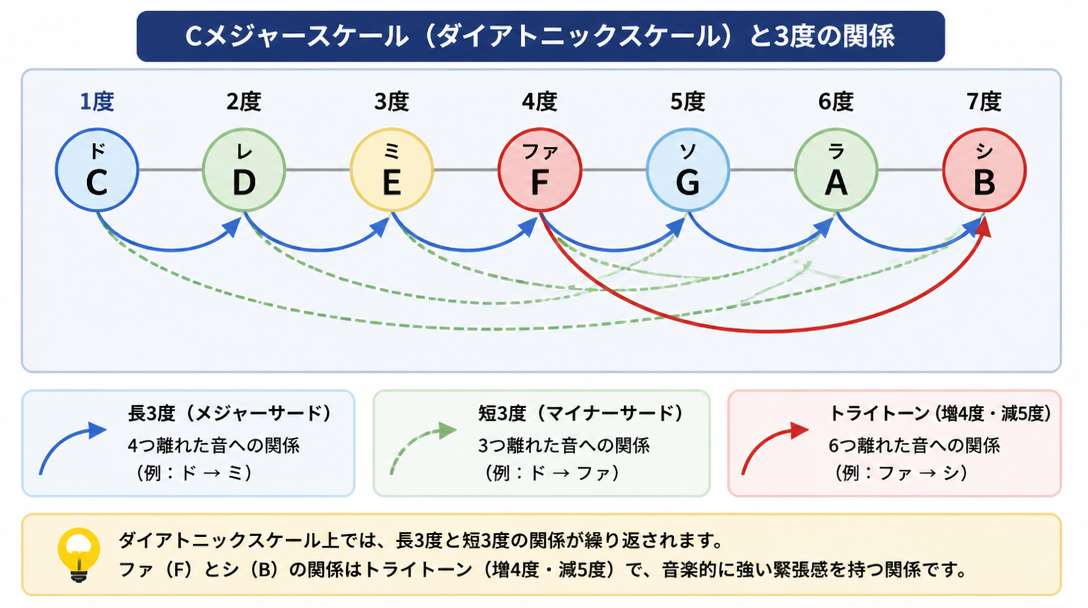
- Pick the note a third above or below within the scale
- Play the harmony against the chords and check it fits
- Swap only the clashing notes to a fourth or sixth
For a melody of "C - D - E," the upper harmony becomes "E - F - G" and the lower "A - B - C," moving in parallel with the scale.
Avoiding the Tritone
In C major, the "F" and "B" pair forms a tritone, a very dissonant interval that can appear when you stack thirds mechanically. SoundQuest recommends substituting a normal fourth or fifth at those spots. Use your ears and fix only the notes that clash.
Aligning With Chord Tones
Harmony's first job is to reinforce the melodic contour, but aligning it with chord tones adds stability. Over a C major chord (C E G) with the melody on "C," placing the harmony on "E" or "G" blends cleanly into the chord.
Chorus Arrangement: Layering and Doubling
Doubling for Thickness
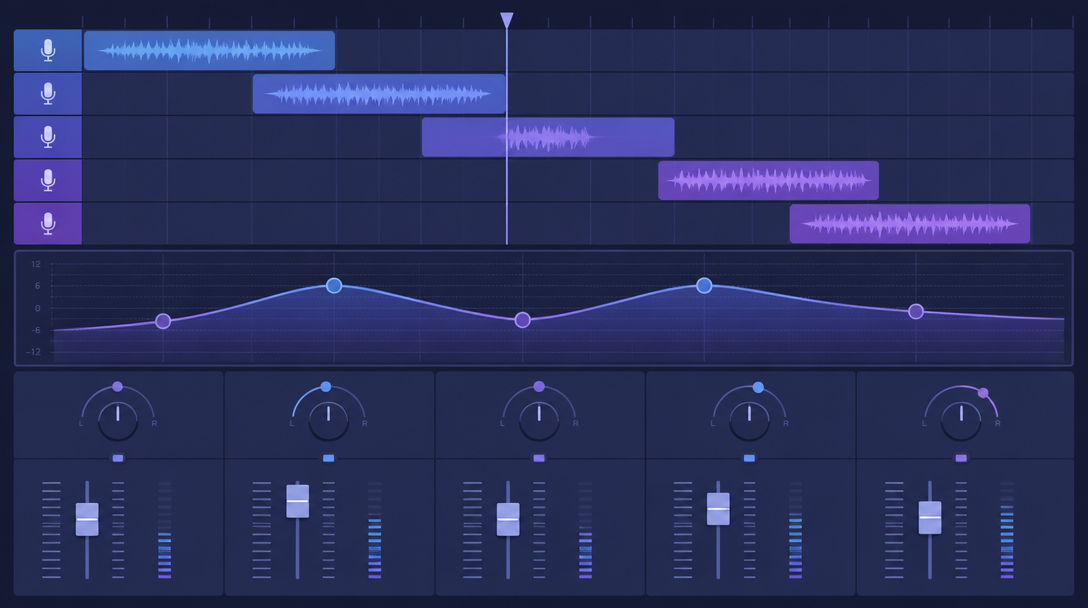
Recording the same harmony part two or more times and panning them slightly left and right instantly thickens and widens the sound. LANDR's vocal layering guide describes recording "three or more passes for ultimate thickening" in pop. Remember: harmony adds color, doubles add thickness.
Octave Stacking for Power
Doubling the lead an octave above or below adds power without changing the harmony. It is ideal for reinforcing lower voices or opening up a chorus, and useful when pairing singers of different ranges.
Designing Around Song Sections
Great arrangements vary harmony density by section. Audient's vocal arrangement tutorial suggests treating backing vocals "like an orchestra's string section," stacking them like a wall at the climax while keeping them subtle elsewhere.
- Verse: lead-focused, maybe one light double
- Pre-chorus: add a lower third to build anticipation
- Chorus: stack upper, lower and octave, spread wide
- Interlude/Outro: pad-like "oohs/aahs" for atmosphere
Recording and Programming Harmonies in Your DAW
A Practical Workflow
- Record the lead and tune/time it
- Confirm key and scale, then design harmonies on the piano roll
- Record or program upper and lower harmonies on separate tracks
- Add one more take of each part for doubling
- Balance with level, pan and EQ
For microphone and room technique, see the home vocal recording guide.
Generating Harmonies With Plugins
Vocal plugins like iZotope Nectar include a Harmony module that generates musically correct harmonies once you set the song key. Load it on a duplicated track, set the key, and audition. Always check the result by ear and fix anything unnatural.
Pitch and Timing Editing
Stacked vocals expose tiny pitch and timing errors as mud, so harmonies demand tighter tuning than the lead. See the vocal tuning guide for Auto-Tune vs. Melodyne. Aligning consonant onsets across takes creates cohesion.
Mixing Backing Vocals So They Sit Right
Level and Panning
Keep backing vocals low in level but present. Panning harmonies away from center opens space. iZotope's backing vocal guide recommends varying stereo width by section: narrower in verses, wider in choruses.
Carving Space With EQ
Because backing vocals share the lead's timbre, they clash without EQ. iZotope demonstrates a high-pass around 350 Hz to remove low-end mud and let the chorus breathe. Shape the harmonies to avoid the lead's core band. For fundamentals, see the mixing basics guide.
Compression and Reverb
Compress backing vocals a touch harder so they stay even and audible; start with a medium attack and fast release. Push harmonies back with reverb or delay so the lead stays up front. See the reverb and delay guide, and iZotope's vocal mixing steps for de-essing and wet balance.
Common Mistakes and Fixes
Why Harmonies Float or Muddy
The usual culprits are out-of-scale notes, slight pitch drift, and excessive level. Recheck scale and chords first, then tuning, then level and EQ.
Parallel Fifths and Octaves
Classical harmony forbids parallel fifths and octaves, but popular music—especially rock—uses them intentionally for power. Judge by intent, not by rote rules; what matters is reinforcing the melodic contour.
Conclusion
- Thirds are the default, sixths the runner-up; use fourths and fifths to fix clashes or add power
- Stay in the diatonic scale and swap only clashing notes like the tritone
- Harmony adds color, doubling adds thickness; vary density by section
- Mix low-but-present, and separate parts with panning, EQ and compression
- Use plugin harmonizers, but always finish by checking with your ears