2026 FIG Apparatus World Cup: Men's Six Champions by D-Score
The 2026 FIG Apparatus World Cup crowned its six men's champions. A former gymnast breaks down each winner's key skills and D-Score before the Rotterdam Worlds.
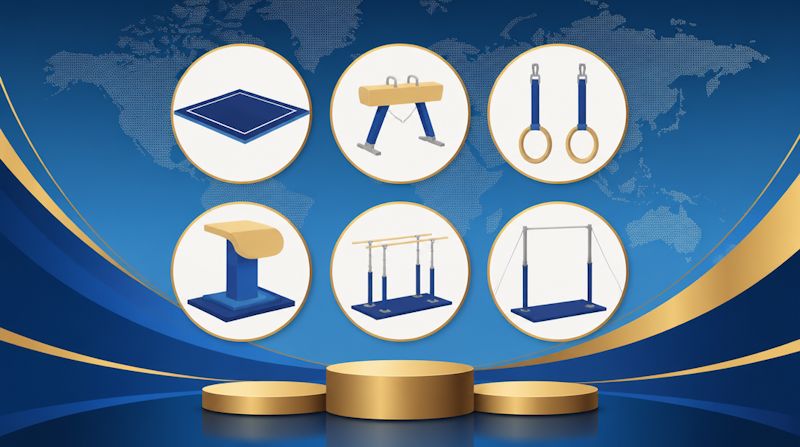
Note: This article reflects information as of September 2, 2026, written from the perspective of a former artistic gymnast and D-Score app developer. The 2026 FIG Apparatus World Cup series has concluded, and the men's champions for all six events are set. Notably, the winners are not all-around stars from the powerhouse nations, but specialists who have honed a single apparatus. This piece breaks down each champion's signature skills and D-Score (difficulty value) to preview the apparatus finals at October's Rotterdam World Championships.
What the 2026 Apparatus World Cup Series Is
The Format and Points System
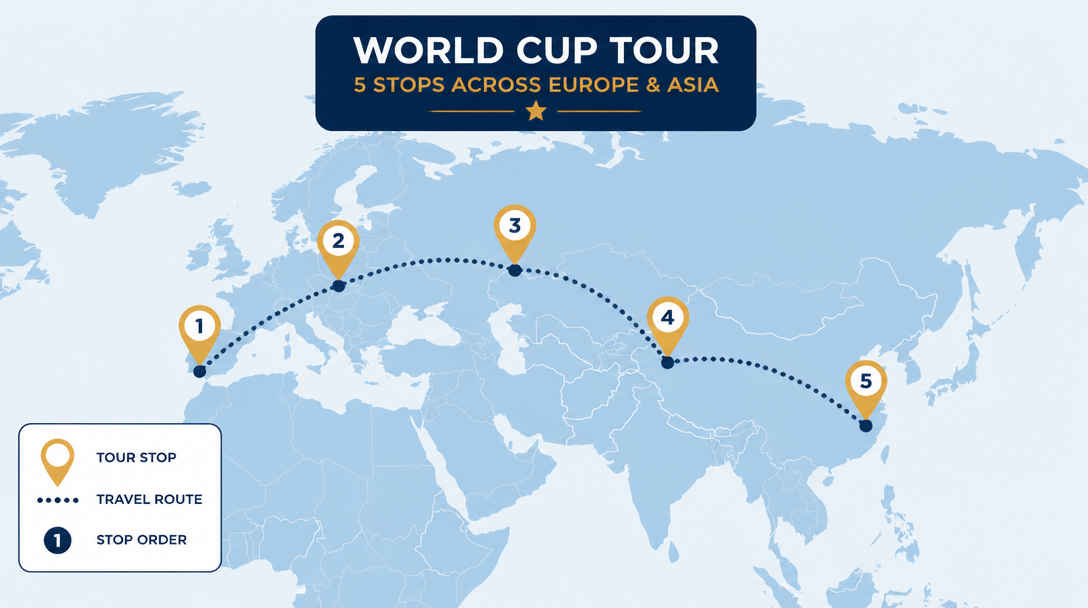
The Apparatus World Cup is a series in which gymnasts compete for standings on each individual apparatus. The 2026 season ran from February to April across Cottbus (Germany), Baku (Azerbaijan), Antalya (Turkey), Cairo (Egypt) and Osijek (Croatia), with annual champions decided on cumulative points (2026 FIG Apparatus World Cup records). Unlike the all-around, gymnasts can win on a single strong event.
The 2026 tour visited five stops:
- Cottbus, Germany
- Baku, Azerbaijan
- Antalya, Turkey
- Cairo, Egypt
- Osijek, Croatia
This format offers a realistic route to the top for nations with a thin talent pool or athletes who specialize. In 2026, the six champions came from six different countries. The FIG announced the winners on its official website.
The Six Men's Champions of 2026
The following six gymnasts topped the 2026 men's Apparatus World Cup.
Apparatus | Champion | Nation | |
|---|---|---|---|
Floor | Yahor Sharamkou | Individual Neutral Athletes (Belarus) | |
Pommel Horse | Zeinolla Idrissov | Kazakhstan | |
Rings | Artur Avetisyan | Armenia | |
Vault | Nazar Chepurnyi | Ukraine | |
Parallel Bars | Ángel Barajas | Colombia | |
Horizontal Bar | Tang Chia-hung | Chinese Taipei |
Why It Matters for Rotterdam
All six are legitimate contenders for the apparatus finals at the 2026 World Championships in Rotterdam (October 17–25). Strong World Cup form feeds directly into the Worlds medal race. If you want to build a men's routine and check the D-Score yourself, the Gymnastics AI — D-Score Calculator is handy: it follows the FIG 2025–2028 Code of Points and packs a database of 790+ skills, so you can recreate each champion's set as you read.
Reading the Floor and Pommel Champions by D-Score
Floor: Yahor Sharamkou's Hi gh-Difficulty Tumbling
The floor champion is Yahor Sharamkou, competing as an Individual Neutral Athlete (AIN) from Belarus. A power tumbler strong on floor and vault, he won the floor final at the 2025 Baku World Cup with 14.600 (per the Belarus NOC).
Floor D-Score is built from salto rotations, twists and the acrobatic series linking them. Elite gymnasts pack balanced forward and backward high-difficulty passes to push their D-Score into the low 6s. Sharamkou's edge is landing stability on twisting dismounts, letting him hold difficulty while limiting execution deductions. The scoring structure across events is unpacked in our judging system explainer.
Pommel Horse: Zeinolla Idrissov's Circle Work
Pommel horse went to Kazakhstan's Zeinolla Idrissov. Born in 2005, he won bronze on pommel at the 2023 Junior World Championships (athlete profile) and banked steady scores all series, including 13.733 for silver in Antalya.
Pommel horse is among the hardest events to load with difficulty: travels, flops and Russian-style transitions translate directly into value. Any wobble between elements draws an instant deduction, making it the least forgiving event. We cover its high-difficulty skills in our piece on pommel flops and Scissors. For the young Idrissov to top this brutal event signals Kazakhstan's development bearing fruit.
Analyzing the Rings and Vault Champions

Rings: Artur Avetisyan and a Tradition of Strength
Rings belonged to Armenia's Artur Avetisyan. Armenia is a rings powerhouse in the lineage of Albert Azaryan, and Avetisyan has won European gold on the event (per Armenia's state news agency).
Rings D-Score hinges on holding strength elements—cross, planche, inverted cross—dead still for two seconds, and on the difficulty of transitions from swing to strength. A shallow hold angle voids the element, demanding immense strength and core control. We discuss the swing-versus-strength balance in our rings article. Avetisyan's rock-solid holds should keep him central to the medal race in Rotterdam.
Vault: Nazar Chepurnyi's Two High-Difficulty Vaults
Vault's annual champion is Ukraine's Nazar Chepurnyi, who sealed the overall lead with bronze in Osijek and posted 14.900 in Baku (athlete profile).
Vault finals are decided by the average of two vaults from different families. A gymnast must prepare two high-difficulty vaults from separate groups—say a Kasamatsu-family and a Yurchenko-family vault. A big first vault is wasted if the second drops in difficulty, so matching both is the key. The families of top vaults are laid out in our vault article. To test how a set changes your D-Score, Gymnastics AI auto-calculates difficulty, group bonus and dismount value as you arrange skills.
Analyzing the Parallel Bars and High Bar Champions
Parallel Bars: Ángel Barajas's Youthful Polish
Parallel bars went to Colombia's Ángel Barajas. He took horizontal bar silver at the Paris 2024 Olympics—tied with Japan's Shinnosuke Oka but edged on execution—becoming Colombia's first-ever Olympic gymnastics medalist (per Olympics.com). He had already won junior world gold on parallel bars in 2023, so this is home turf. He topped Baku, Antalya and Osijek to claim the series.
Parallel bars D-Score combines support-to-hang transitions, salto release moves and dismount difficulty. A young gymnast executing high difficulty this reliably symbolizes a rising tide across South American gymnastics. Skill values by event are listed in our D-difficulty skill map.
Horizontal Bar: Tang Chia-hung's Five Release Moves
High bar's champion is Chinese Taipei's Tang Chia-hung, the Paris 2024 bronze medalist, who posted 15.350 in Osijek. That routine reportedly featured five different release skills, including three Tkatchev variations, a Cassina and an unusual Walstrom (per Focus Taiwan).
High bar D-Score swings on connection bonuses that link release moves in sequence. How many high-difficulty releases—Tkatchevs, a Cassina—you can chain without falling is the difference-maker. Fitting in five speaks to world-class air sense and re-grasp technique. The families of release moves are covered in our article on the Endo, Adler and Markelov.
Small Nations, Specialist Strategy and D-Score
Why You Can Win the World on One Event
The biggest lesson from 2026's six champions is that specializing on one apparatus can put you on top of the world without being a superpower. Beating China, Japan and the USA in the all-around requires high D-Score on all six events; on a single apparatus, you only need to maximize one.
Armenia (rings), Kazakhstan (pommel), Colombia (parallel bars), Chinese Taipei (high bar) and Ukraine (vault) are not team-podium nations, yet each can chase a world title per event. Concentrating limited funding on one strength is a rational play, and the champions' map shows exactly where each nation invests.
Implications for Japan and the Worlds
This is not abstract for Japan. Its apparatus-final rivals in Rotterdam won't only be all-around stars but specialists like these. To win apparatus medals, Japan must out-build the champions' D-Scores. We analyze Japan's outlook in our 2026 Worlds men's team D-Score preview and the all-around favorites in our Fred Richard all-around piece.
The Apparatus World Cup doubles as a valuable dress rehearsal, giving coaches concrete data on who can post what D-Score, where.
Summary
The 2026 Apparatus World Cup underscored the diversification of gymnastics and the power of specialization. Key points:
- The six 2026 Apparatus World Cup men's champions came from six different countries.
- Floor = Sharamkou, Pommel = Idrissov, Rings = Avetisyan, Vault = Chepurnyi, P-Bars = Barajas, High Bar = Tang.
- Each is a single-apparatus specialist who maximizes that event's D-Score.
- The map shows small, focused nations can realistically win the world per event.
- Expect these six to headline the apparatus finals at October's Rotterdam Worlds.
To simulate each champion's routine and see how the D-Score adds up, try Gymnastics AI—free on iOS and Android.