2026 World Gymnastics: Men's Apparatus Finals D-Score Preview
A D-score preview of the men's apparatus finals at the 2026 Worlds in Rotterdam: Zou Jingyuan, Rhys McClenaghan, Carlos Yulo and Japan's apparatus medal hopes.

This article reflects information as of October 1, 2026. Schedules and rosters are based on official announcements, but finalists are decided by qualification. Always confirm the latest details with the official event and national federation sources.
The 2026 World Artistic Gymnastics Championships run from October 17 to 25 in Rotterdam, Netherlands. The men's apparatus finals that close out the meet are a specialists' showcase, where the best gymnasts on each event throw their hardest routines. This preview looks at all six men's apparatus finals through the lens of the D-score (difficulty value), written from the perspective of a former competitor and D-score app developer. For the team battle see our men's team D-score preview, and for the all-around see the men's all-around showdown.
When are the apparatus finals? Schedule and context
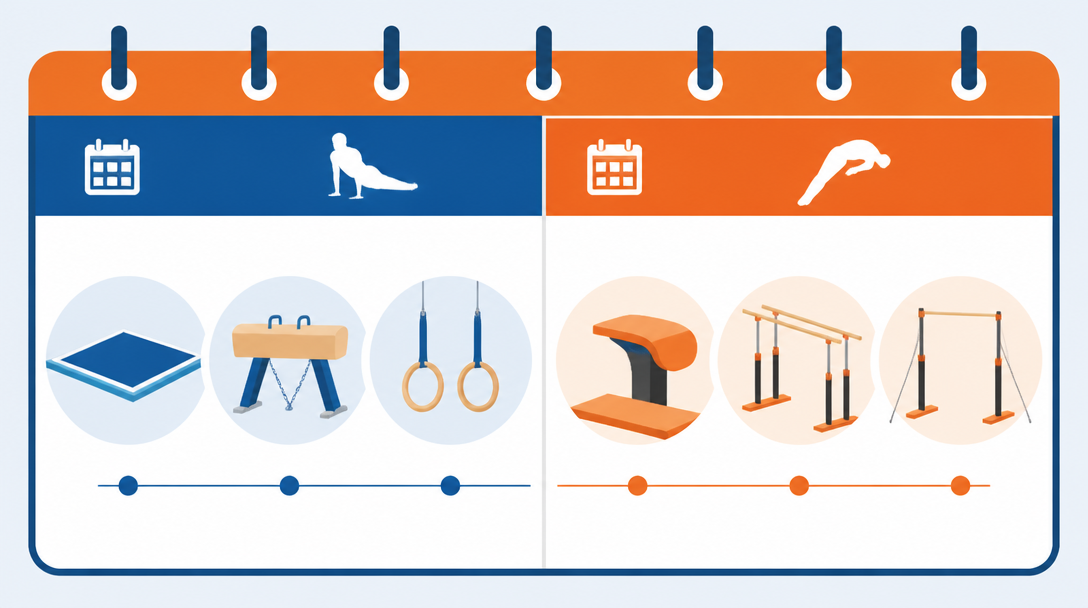
To enjoy the apparatus finals, it helps to see where they sit in the overall timetable. The 2026 Worlds span nine days, and the men's apparatus finals are packed into the final two days.
Event overview and schedule
The venue is the Rotterdam Ahoy arena. According to the event overview on Wikipedia, the men compete in qualification on October 17-18, the team final on October 20, the all-around final on October 22, and the apparatus finals on October 24 and 25. For the full flow of the meet, see our Rotterdam schedule and highlights guide.
Apparatus finals split across October 24 and 25
The six men's apparatus finals are split over two days: floor, pommel horse and rings on October 24, and vault, parallel bars and high bar on October 25. Each final features the top eight from qualification (maximum two per country), so only the world's specialists remain. The The Gymternet event hub also flags the apparatus finals as a meet highlight.
Date | Men's apparatus finals |
|---|---|
Oct 24 (Sat) | Floor, Pommel horse, Rings |
Oct 25 (Sun) | Vault, Parallel bars, High bar |
Apparatus finals are decided by the D-score
Because every finalist brings their hardest single-event routine, the D-score (difficulty value) tends to translate directly into placement. It is less about all-around consistency and more about how cleanly a gymnast can land one maximum-difficulty routine. If you want to see what a given routine's D-score looks like, Gymnastics AI — the D-score calculator is handy: it follows the FIG 2025–2028 Code of Points and auto-calculates difficulty from a database of 790+ skills.
Floor and vault: the presence of Carlos Yulo
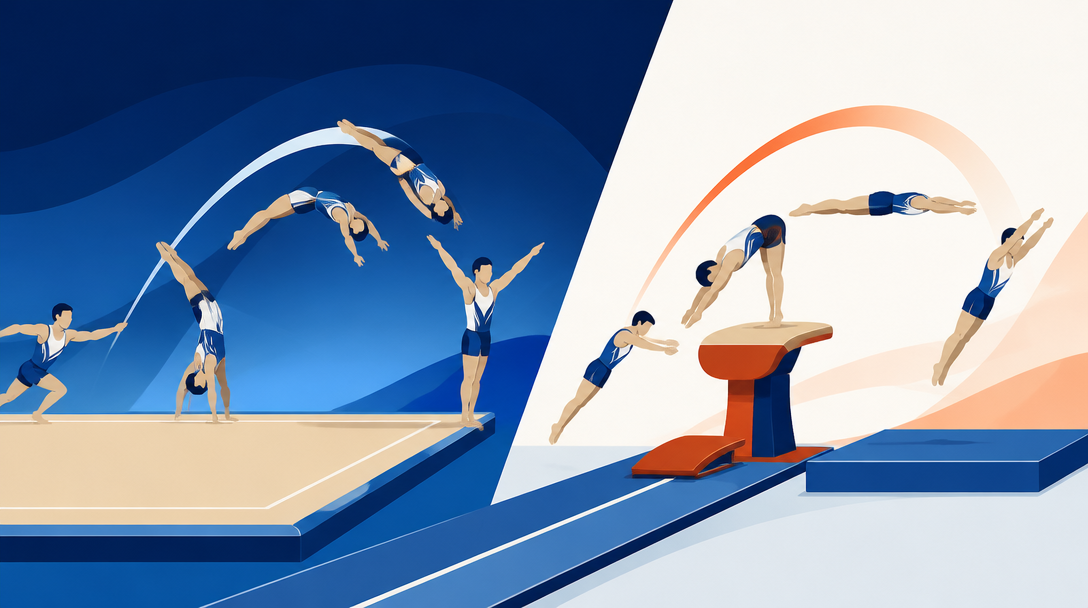
Floor on the 24th and vault on the 25th reward explosive power and acrobatic quality. One name stands out here: the Philippines' star, Carlos Yulo.
Floor: power and expression combined
Carlos Yulo is the Paris Olympic double champion on floor and vault. He also won floor gold at the 2019 Stuttgart Worlds and is known for pairing precise tumbling landings with expression. He added floor and vault golds at the 2026 Asian Games, making him one of the top apparatus-final favorites. On floor, the balance between tumbling difficulty and avoiding landing deductions decides the medals.
Vault: a high-difficulty duel settled in seconds
Vault is over in a few seconds, from run-up and board contact to flight and landing. In the apparatus final, two vaults from different families are averaged for the result. Yulo also won vault gold at the 2025 Jakarta Worlds, and Britain's roster member Jake Jarman is among those with high-difficulty vaults in the mix. To browse apparatus skills and their difficulty, see our guide to men's apparatus skills.
Pommel horse and rings: circles and strength specialists
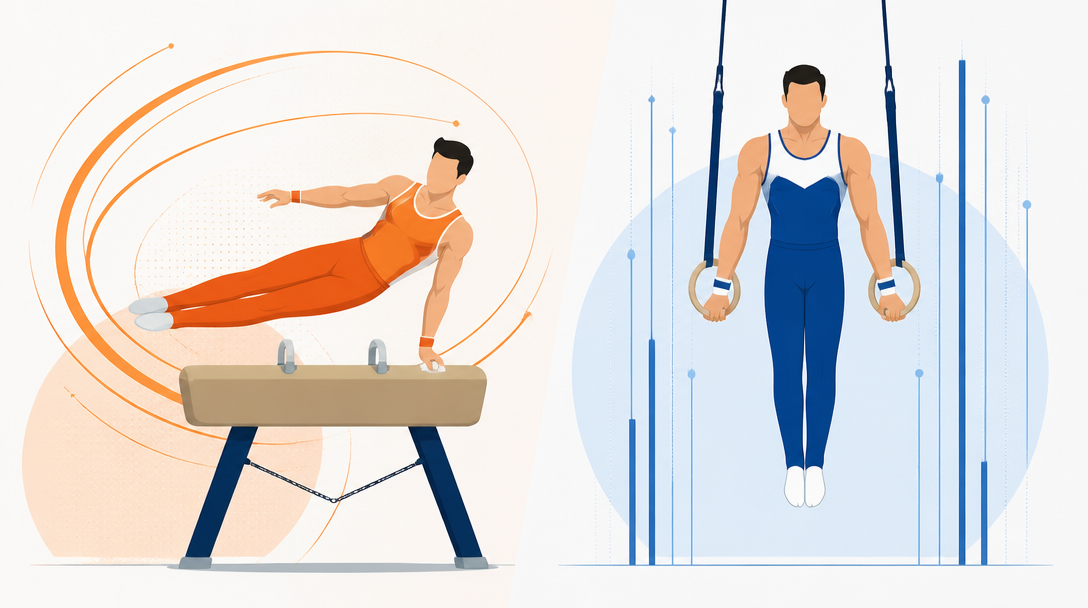
Also on the 24th, pommel horse and rings are a study in contrasts: flowing circles versus static strength.
Pommel horse: McClenaghan and the circle specialists
At the center of pommel horse is Ireland's Rhys McClenaghan, the Paris Olympic champion and back-to-back world champion in 2022 and 2023. Pommel horse demands continuous, balanced circles supported only on the hands and is notoriously error-prone, earning it the nickname "the event of fate." Japan's Ryosuke Doi also specializes here, setting up a delicate difficulty battle among specialists.
Rings: a D-score built on strength
On rings, the D-score is built from static strength holds, handstands out of swing, and the dismount. How many strength elements — such as crosses and planches — a gymnast can include, and at what difficulty, defines the routine, demanding exceptional core and shoulder strength. Small faults (like failing the required two-second holds) bring deductions, so difficulty and clean execution must go hand in hand.
Parallel bars and high bar: the highest-difficulty duels
On the final day, parallel bars and high bar are among the highest-difficulty events of the 2026 Worlds. Here a long-reigning king meets Japan's young high-difficulty specialists. If you want to test how a routine's D-score changes, Gymnastics AI lets you line up skills and auto-calculates difficulty, group bonus, and connection bonus.
Parallel bars: Zou Jingyuan at the summit
When it comes to parallel bars, China's Zou Jingyuan is the benchmark. He won Olympic parallel bars gold in both Tokyo and Paris and claimed world titles in 2017, 2018, 2022 and 2025. He won the Paris final with a score of 16.233, combining elite difficulty with beautiful execution. His routine carries one of the highest D-scores in the world, and the key question is how close anyone can get.
High bar: release moves and Japan's Fusuke Maeda
High bar's biggest thrill is the sequence of "release moves," where the gymnast lets go of the bar, flips and twists, then re-grasps it. Release moves are high in difficulty and stacking them sends the D-score soaring — but the risk of falling is real, making it a high-risk, high-reward event. Japan's Fusuke Maeda, named to his first Worlds team, is known for bringing one of the world's highest-difficulty high bar routines and is a dark horse in the apparatus final. For D-difficulty skills across events, see our guide to D-difficulty skills.
Japan's men: apparatus medal outlook
Japan's 2026 men's team balances all-arounders with event specialists, giving them medal chances not only in team and all-around but also on individual apparatus.
Fusuke Maeda (high bar) and Ryosuke Doi (pommel horse)
As noted in the GymCastic roster, Japan fields Daiki Hashimoto, Shinnosuke Oka and Shohei Kawakami alongside specialists Ryosuke Doi and Fusuke Maeda. Maeda focuses on high bar and Doi on pommel horse, and both are expected to contend in the apparatus finals. Pairing specialists with all-arounders also strengthens Japan's overall team depth.
The all-around strength of Hashimoto and Oka
All-around leaders Daiki Hashimoto and Shinnosuke Oka also have the ability to join apparatus medal fights on their best events, such as high bar and parallel bars. All-arounders live on consistent D-scores across all six events, but on their signature apparatus they are a match for the specialists. Which events Japan books finals spots in will depend on the October 17-18 qualification.
Enjoy the apparatus finals even more with the D-score
Knowing how the D-score works dramatically deepens how you watch apparatus finals. Once you understand how difficulty accumulates, you start to see why each gymnast chose each skill.
How the D-score relates to apparatus finals
Modern scoring combines the D-score (difficulty) and the E-score (execution). In apparatus finals, every gymnast brings a maximum-difficulty routine, so a higher D-score ceiling means a higher theoretical result. But raising difficulty also makes clean execution harder, increasing E-score deductions. Gymnasts like Zou Jingyuan reach the top precisely because they master this balance.
Calculate a routine's D-score yourself
The quickest way to understand how gymnasts build their D-scores is to calculate one yourself. Gymnastics AI is a D-score calculator for the six men's events under the FIG 2025–2028 Code of Points: line up skills and it auto-calculates difficulty, group bonus, connection bonus, dismount bonus and neutral deductions. Imagining each finalist's routine as you experiment makes watching far richer.
Summary
The men's apparatus finals at the 2026 Worlds are a festival of specialists pouring everything into a single event. Key points:
- Men's apparatus finals run Oct 24 (floor, pommel, rings) and Oct 25 (vault, parallel bars, high bar) at Rotterdam Ahoy
- Each final has the top eight from qualification (max two per country); the D-score tends to decide placement
- Floor and vault center on Paris double champion Carlos Yulo; parallel bars on two-time Olympic champion Zou Jingyuan; pommel horse on Olympic champion Rhys McClenaghan
- Watch Japan's Fusuke Maeda for a world-class high bar routine; Hashimoto and Oka can also contend on their best events
- Understanding the D-score reveals the intent behind each skill choice and deepens your viewing
To simulate the D-score of any routine, try Gymnastics AI — free on iOS and Android, and perfect for prepping for the apparatus finals.