Personal Trainer Certification Guide: NSCA vs NESTA vs JATI Compared
A complete guide to earning a personal trainer certification in Japan. Compare NSCA-CPT, NESTA-PFT, and JATI-ATI by eligibility, cost, and exam content to choose the right one.
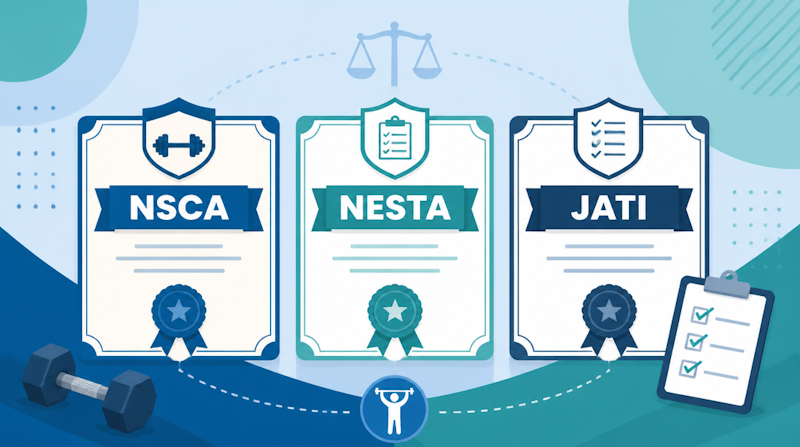
For anyone pursuing a career as a personal trainer, certification is a key marker of both knowledge and credibility. NSCA and NESTA are two of the most recognized credentials, yet many aspiring trainers struggle to decide which
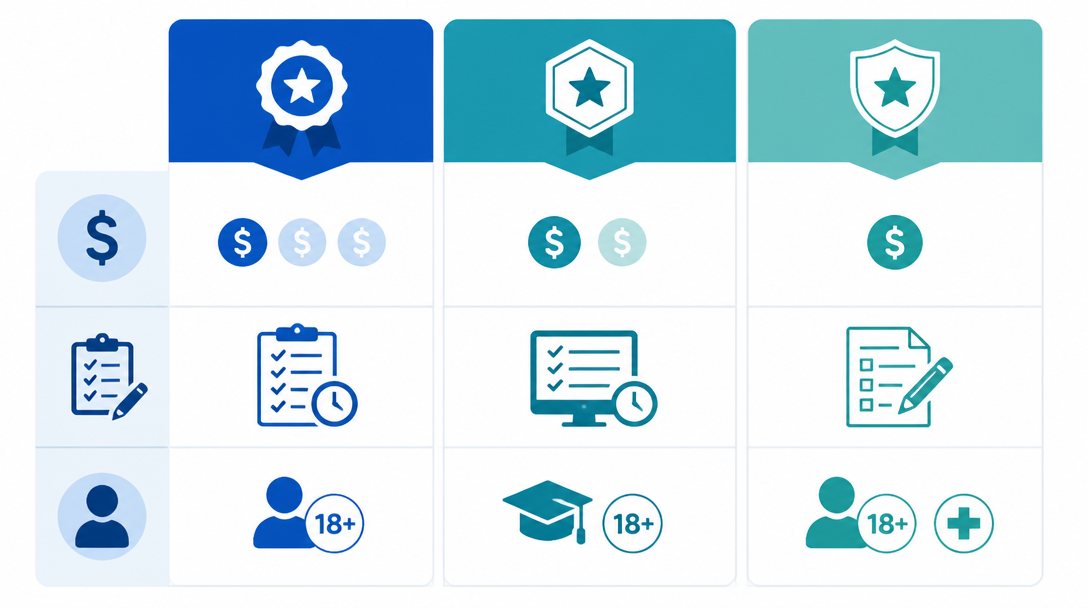
one to pursue, or how the cost and difficulty compare. This guide breaks down how to earn a personal trainer certification, comparing the three major options in Japan, NSCA, NESTA, and JATI, across eligibility, cost, and exam content, and offers guidance on choosing the right one for your goals.
The Personal Trainer Certification Landscape
Certification Is Not Mandatory, but It Builds Trust
In Japan, no national license is required to work as a personal trainer. You can legally coach clients without any credential, yet for employment at fitness clubs or launching your own studio, a recognized certification has become the de facto standard. Job listings frequently state "NSCA-CPT or NESTA-PFT holders preferred" for exactly this reason.
The anatomy, exercise physiology, nutrition, and program design you study while earning a certification form the foundation for keeping clients safe and delivering results. Whether you can manage injury risk and coach based on scientific evidence shapes you

r credibility long before the certificate itself does.
The Three Major Certifications: NSCA, NESTA, JATI
Many private organizations issue personal trainer certifications, but three are widely recognized in the hiring market. As a comparison of trainer certifications notes, these three form the core of the field.
- NSCA-CPT: US-based, strong in scientific rigor and international recognition
- NESTA-PFT: A practical credential that includes business and client-service skills
- JATI-ATI: A Japan-based certification that requires attending a training course
The broad content of all three is similar, and the fundamentals of nutrition and anatomy overlap. The differences lie in the barrier to entry, cost, and what strengths you can emphasize. Understanding the outline of these three is the first step in choosing.
Three Axes for Comparison
This article organizes each certification along three axes. Which one matters most depends on your priorities.
- Eligibility (education, age, membership, work experience)
- Cost (total of membership, exam, and course fees)
- Exam content and difficulty (number of questions, format, passing standard)
How to Earn NSCA-CPT: Eligibility and Cost
NSCA-CPT Eligibility
NSCA-CPT is issued by the NSCA (National Strength and Conditioning Association), founded in the United States in 1978. In Japan, the NSCA Japan official page publishes the exam requirements. To sit for the exam and gain certification, you must m
eet the following conditions.
- Be a member of NSCA Japan (regular or student member)
- Be at least 18 years old
- Have graduated from high school or passed an equivalency exam
- Hold a valid CPR/AED certification
Notably, completing a specific training school is not a requirement. You can study independently with the official textbook and, once you meet the criteria, sit for the exam, which keeps costs relatively low.
NSCA-CPT Costs
Membership is a prerequisite for the exam. According to NSCA Japan's certification information, the main fees as of 2025 are as follows.
Item | Amount (tax incl.) |
|---|---|
Regular membership (annual) | 13,200 yen |
Student membership (annual) | 11,000 yen |
Exam fee | 46,090 yen |
Membership plus the exam fee comes to around 60,000 yen. On top of that are the CPR/AED course fee (several thousand to about 10,000 yen) and the official textbook. As a breakdown comparing certification costs points out, the self-study route makes NSCA-CPT the easiest to keep affordable.
NSCA-CPT Exam Content and Difficulty
The exam is computer-based and runs three hours. Its structure is shown below, and it notably includes 25 to 35 questions that use video or images to test practical judgment.
Domain | Weight | Questions |
|---|---|---|
Client consultation and assessment | 23% | 32 |
Program planning | 32% | 45 |
Exercise technique | 31% | 43 |
Safety, emergency, and legal issues | 14% | 20 |
The total is 155 questions (140 scored, 15 unscored). According to a guide to studying for NSCA-CPT, pass rates vary by year, but systematic study anchored to the official textbook makes it well within reach even for self-learners. It suits those who value international recognition and want to demonstrate evidence-based coaching skills.
How to Earn NESTA-PFT: Four Exam Routes
NESTA-PFT Eligibility
NESTA-PFT is issued by the National Exercise & Sports Trainers Association (NESTA), with the NESTA Japan official page serving as the point of contact in Japan. Multiple eligibility paths exist; you qualify by meeting at least one of the following.
- Be at least 18 and have a high school diploma or higher
- Have completed a NESTA-accredited school
- Have graduated from a physical education or medical vocational school or university
- Hold a trainer-related certification from another organization
- Have at least one year of practical trainer experience
The wide entry point, open to both experienced practitioners and complete beginners, defines NESTA. A guide to NESTA-PFT eligibility also cites this flexibility as a reason beginners choose it.
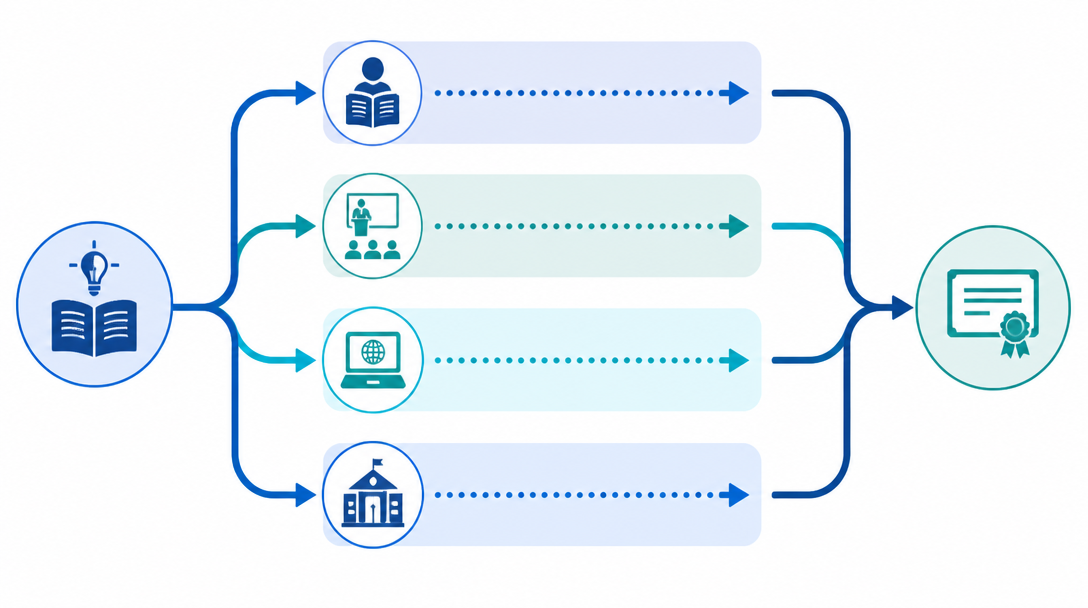
The Four Routes and Their Costs
NESTA-PFT lets you choose from four routes based on your learning style. Cost and pass rates differ substantially by route. Based on a summary of the acquisition routes, the picture is as follows.
Route | Cost (approx.) | Duration | Pass rate (approx.) |
|---|---|---|---|
Direct (self-study) | ~77,000 yen + materials | As little as 2 days | 30-40% |
Seminar (intensive) | ~147,400 yen | 4 days | 70-80% |
Web (online) | ~157,000-173,000 yen | 3-6 months | 50-60% |
Accredited school | ~198,000-330,000 yen | 2-6 months | 90-98% |
The self-study Direct route is the cheapest but has the lowest pass rate. Conversely, accredited schools with heavy support are expensive but push pass rates to near-certain levels. The choice comes down to balancing budget against certainty.
NESTA-PFT Exam Content and Features
The exam is a four-choice multiple-choice format (CBT or PBT) with 125 questions over 90 minutes. The passing standard is a clear 80% correct (100 of 125). According to an overview of the NESTA-PFT exam, a preparatory course is also mandatory before the exam.
The scope covers functional anatomy, exercise physiology, program design, and nutrition, plus a distinctive 5 to 8 percent devoted to business areas such as client acquisition and service. It suits those who want to learn coaching and marketing together, or who have independent practice in mind. The certification renews every four years and requires continuing education units (CEUs).
JATI-ATI and NSCA-CSCS: Going a Step Further
JATI-ATI: A Japan-Based, Hands-On Credential
JATI-ATI is issued by the Japan Association of Training Instructors (JATI). The JATI official site shows that attending a training course and submitting self-study assignments are built into the process. Because membership and course attendance are prerequisites, it cannot be completed by self-study alone, a major difference from NSCA.
Initial acquisition in fiscal 2025 is estimated at a total of 170,500 yen (tax incl.), and according to a guide to JATI-ATI costs, pass rates range from 59 to 84 percent depending on the year and venue. Rooted in Japan's coaching context, it appeals to those prioritizing domestic employment.
NSCA-CSCS: A Higher-Level Credential for Coaching Athletes
Even within NSCA, CSCS (Certified Strength and Conditioning Specialist) is positioned differently from the personal-trainer-focused CPT. According to NSCA Japan's certification overview, CSCS is a specialist credential aimed at injury prevention and performance enhancement for athletes and sports teams.
The biggest difference is eligibility: CSCS requires graduation from a four-year university (any major). It is a higher-level credential for those aiming to become strength coaches in competitive sport; if you are starting from general personal training, earning the CPT first is the realistic path. For careers in the sports field, see our guide to sports industry employment.
Comparing the Three at a Glance
Here is a summary of the three major certifications. Figures are estimates as of 2025-2026; always confirm the latest fees and requirements on each organization's official site.
Item | NSCA-CPT | NESTA-PFT | JATI-ATI |
|---|---|---|---|
Issuing body | NSCA (US) | NESTA (US) | JATI (Japan) |
Entry point | Self-study OK | 4 routes | Course required |
Cost estimate | From ~60,000 yen | ~80,000-330,000 yen | From ~170,000 yen |
Exam questions | 155 | 125 | Course + exam |
Strength | Global, scientific | Business, practical | Domestic, hands-on |
Choosing a Certification by Goal
Choose NSCA-CPT If Cost Is the Priority
If keeping the total cost down is your top concern, NSCA-CPT, with its well-established self-study route, is the first candidate. Membership and the exam fee total around 60,000 yen, and textbook-centered study compresses costs. With strong international recognition, its cost-effectiveness ranks among the highest of the three. That said, self-study assumes discipline, so it suits those who can build their own study plan.
Choose NESTA-PFT for Guided Learning from Scratch
If you have no coaching experience and want to learn systematically, including client acquisition and counseling, NESTA-PFT is a strong option. Seminar and Web routes offer substantial support and higher pass rates. The business content becomes a practical weapon for anyone eyeing an independent studio or freelance work. For thinking about independence, our introduction to athlete side businesses is also useful.
Look Beyond the Certification to Your Career
Certification is a start, not a finish. Renewal through continuing education is required, and you must keep your knowledge current. You can deepen coaching expertise or branch into nutrition and exercise physiology. Combining related credentials such as a coaching certification or a sports nutritionist qualification widens the areas you can coach and helps you stand out.
- Employment focus: NSCA-CPT or NESTA-PFT, both well recognized in job listings
- Independence focus: NESTA-PFT, which teaches business skills
- Coaching athletes: NSCA-CSCS, after a university degree
- Domestic field focus: JATI-ATI, with hands-on course training
Study Time and Tips for Passing
How Long It Takes
The study period depends on the certification and route you choose. NSCA-CPT, centered on self-study, is commonly targeted with three to six months of planned study, depending on your pace. NESTA-PFT's seminar and Web courses follow set curricula, ranging from a few days to half a year. Since many candidates study while working, building a habit of one to two hours a day largely determines both success and speed.
For every certification, technical fields like anatomy and exercise physiology tend to trip people up early. Understanding each term one at a time makes the later material on program design and nutrition far easier to absorb.
How to Avoid Failing at Self-Study
The affordable self-study route is appealing, but motivation management and accuracy of information are the keys. As a breakdown of certification costs notes, self-study demands strong self-discipline. Keeping these three points in mind helps prevent giving up midway.
- Anchor to the official textbook and exam scope, reinforced with a commercial summary guide.
- Divide the study scope by week and make your progress visible.
- Understand the "why," not just memorize, to prepare for practical questions.
If you are unsure about managing your time, applying the ideas in our time management guide to your study plan is also effective.
Summary
Personal trainer certification comes down to choosing among NSCA, NESTA, and JATI based on your goals. Here are the key points.
- No national license is needed in Japan, but a recognized certification anchors trust for employment and business.
- NSCA-CPT allows self-study, is the easiest to keep affordable, and offers international recognition.
- NESTA-PFT lets you choose from four routes and even covers the business side.
- JATI-ATI is a Japan-based credential requiring a course; NSCA-CSCS is a higher-level credential requiring a university degree.
- Choose the certification that fits you along three axes: cost, learning style, and target career.
Cost, difficulty, and points of appeal all differ, but the foundational content is shared. Picture your career first, then work backward to choose your first certification, the surest way to avoid detours.