Choosing Women's Gymnastics Floor Music by Gymnast Type & Style
How to choose women's artistic gymnastics floor music by gymnast type: powerful, expressive, or playful. Genre picks, age and level guidance, tempo, the 90-second rule, and the lyrics question.
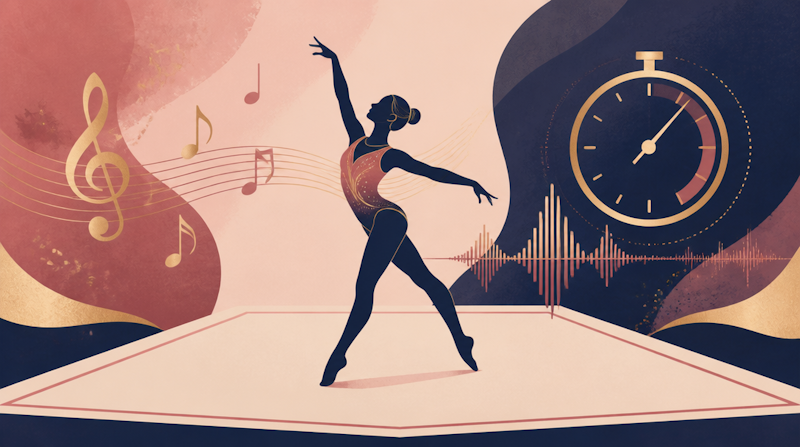
Choosing the right floor music is one of the most important decisions in women's artistic gymnastics. Good floor music is not just "a song you like" playing in the background—it is a blueprint that matches the gymnast's type, her skills, and the 90-second
time limit. This guide breaks down how to choose women's gymnastics floor music by gymnast type—powerful, expressive, and playful—along with genre picks, age and level guidance, tempo, structure, and the lyrics and copyright questions, from the perspective of a former gymnast and music artist.
Why Floor Music Choice Matters: Scoring and Expression
Before picking a track, it helps to understand why music is part of the score. Floor is the only women's event with musical accompaniment, and how well the music and movement match is itself judged.
The Only Women's Event Judged With Music
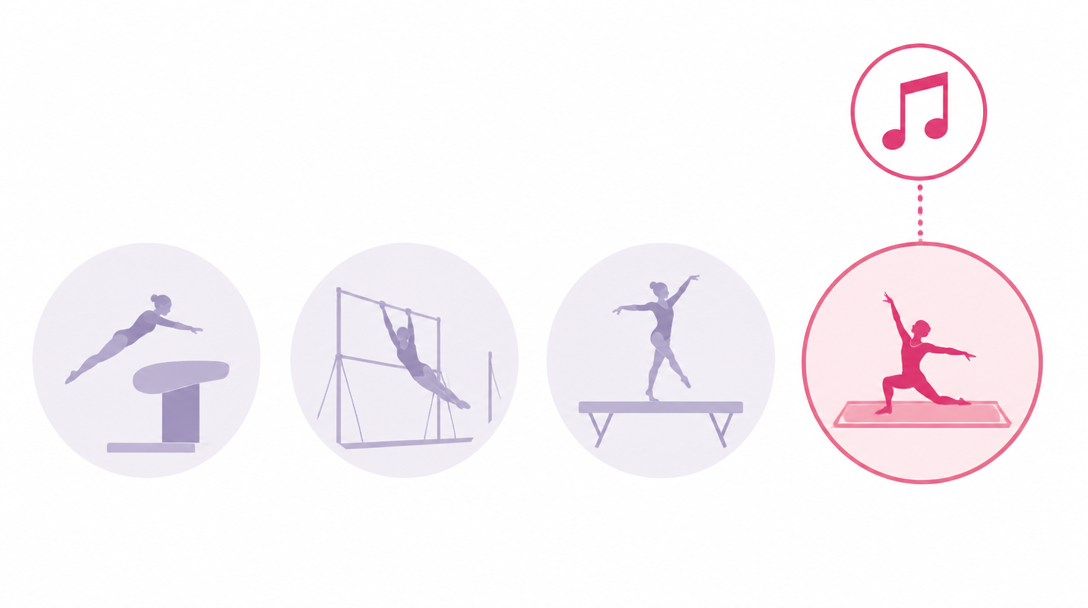
The women's vault, uneven bars and balance beam—and all six men's events—have no music. Women perform floor to music because artistry and expression are part of the requirement, and when the music and movement do not match, deductions follow. Women's floor runs up to 90 seconds, 20 seconds longer than the (music-free) men's floor.
Music Is the Blueprint of the Routine
According to GymnastGem's 2025–2028 breakdown, judges scrutinize "expression, choreography, posture, and musicality," and gymnasts are expected to "perform the music, showing phrasing, style, and emotional range." Weak posture, flat expression, or filler choreography draw deductions in the 0.10–0.20 range. In other words, choosing the music also means choosing the ch
aracter of the routine. For structuring choreography to music, see our article on building a women's floor routine to music.
Custom Music From a Former Gymnast and Artist
Selecting and producing floor music takes both a knowledge of the Code of Points and real music-production skill. Few creators can handle selection, editing, and original composition while respecting the rules. Our competition floor-music production service lets you consult a former gymnast who is also a music artist—starting from "what kind of gymnast is this, and what should the routine feel like?"
Choosing Floor Music by Gymnast Type: Power, Expressive, Playful
The single most important idea in floor-music selection is matching the music to the gymnast. As Jumptwist puts it, floor music "should reflect your personality and play to your strengths," and should make the gymnast feel "confident and in control."
A Type-Based Selection Matrix
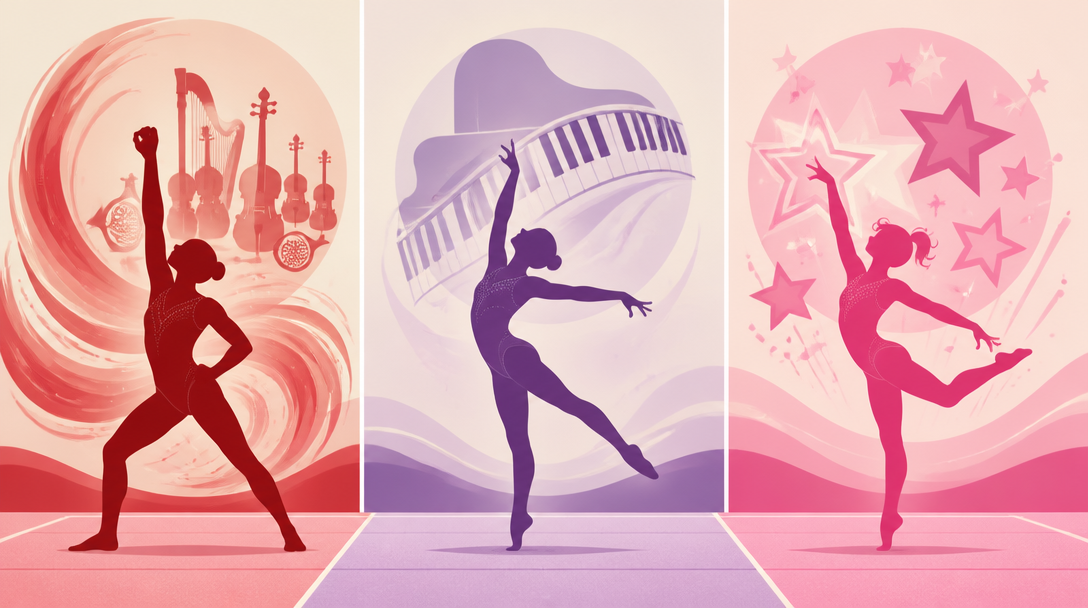
Type | Character | Suited styles | Highlight |
|---|---|---|---|
Power | Strong, bold, aggressive | Dramatic orchestral, rock, hip-hop | Dynamic tumbling and strong poses |
Expressive (lyrical) | Graceful, fluid, emotional | Piano, strings, cinematic ballads | Flowing dance, turns, emotion |
Playful / pop | Bright, charming, energetic | Pop, Latin, jazz, Broadway | Rhythmic steps, facial expression, claps |
Most gymnasts blend several types, so decide which strength to put front and center. GymnasticsHQ notes that "the best routines really capture the gymnast's personality and match it with the music."
Music for the Power Type
For gymnasts who thrive on strong, bold performance,
dramatic and driving tracks work best. GymnasticsHQ recommends "upbeat tracks with fast tempos that highlight your explosive moves." The key is to align the biggest musical accent with the hardest tumbling pass so the landing lands on the beat.
Music for the Expressive (Lyrical) Type
For fluid, emotionally expressive gymnasts, lyrical piano and string pieces shine. GymnasticsHQ suggests "softer, flowing music that complements your graceful movements," and GymnastGem advises "elegant strings or piano" for graceful athletes. Beware of staying quiet for the full 90 seconds—build in contrast so even lyrical routines have a peak. See our piece on artistry in floor exercise.
Music for the Playful / Pop Type
For bright, charming gymnasts, pop, Latin, jazz and Broadway make expression easy. GymnastGem's upbeat guide pairs playful confidence with Y2K pop and theatrical characters with Broadway. Just keep the choice age-appropriate—an overly mature track feels off on a young gymnast.
A Genre-by-Genre Floor Music Guide
Once the type is clear, understand each genre's traits to narrow down candidates.
Classical and Orchestral
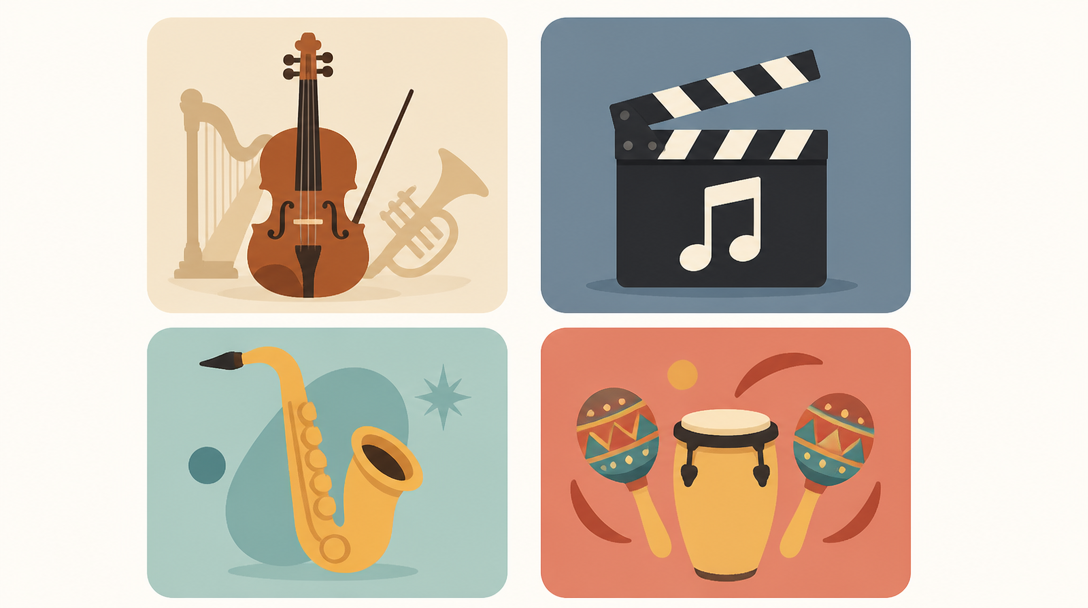
Classical and orchestral pieces have wide dynamic range and add drama. GymnastGem recommends "dramatic orchestral builds" for advanced gymnasts; align a grand crescendo with the final tumbling pass. Edit out overly long slow sections to avoid dragging.
Film Scores and Soundtracks
Movie scores are built for emotional swings, which fits floor beautifully. GymnastGem notes soundtracks offer "a dramatic, dynamic range that works well with gymnastics choreography," and narrative music helps a gymnast play a role—useful for both expressive and power types.
Jazz, Big Band and Broadway
Jazz, big band and Broadway suit gymnasts who love to perform. If she can act out a character, a jazz number invites rich facial expression, and clear rhythm makes it easy to hit steps and poses.
Pop, Hip-Hop and Latin
Pop, hip-hop and Latin engage the crowd with clear beats; Latin rhythms in particular invite clapping. For competition, remember the instrumental requirement discussed below.
Choosing by Age and Level
Even for the same type, the "right" song changes with age and level; match music to maturity and routine complexity.
The Right Song Changes With Age
GymnastGem warns that "a shy 11-year-old might struggle with a sultry piece, while a playful track wouldn't suit a powerful, dramatic performer at Level 10." GymnasticsHQ suggests playful pieces for very young gymnasts and more sophisticated choices as they mature.
Level Guidance
Level band | Direction |
|---|---|
Entry (approx. Lv6) | Fun, upbeat, clear rhythm with strong beats for simpler choreography |
Intermediate (approx. Lv7–8) | Movie soundtracks, Latin rhythms, bold mash-ups |
Advanced (approx. Lv9) | More complex, layered music |
Elite (approx. Lv10) | Dramatic orchestral builds, edgy remixes, cultural pieces |
Higher levels demand denser development; overly complex music at entry level leaves the choreography behind the beat.
Consulting on Selection and Production
Balancing age, level and type is hard without experience. Our competition floor-music production service covers everything from editing existing tracks to original composition, tailored to the gymnast's type and age.
Tempo and Structure: Making 90 Seconds Shine
Tempo and structure matter as much as style and genre.
Tempo (BPM) Guidance
GymnastGem notes most floor music sits around 120–130 BPM—"fast enough to energize without rushing skills." It is a guideline, but too fast makes skills look sloppy and too slow drags.
Choose Music With a Clear Arc
GymnastGem stresses that "good floor music should not sound the same from beginning to end," recommending a bold opening, a faster dance section, a softer moment, and a strong finish.
- Opening: a strong hook on the first beat
- Dance section: up-tempo showcase
- Quiet moment: a breath to show expression
- Finish: a build into the last pass and final pose
Music the Crowd Claps To
Crowd-pleasing tracks have a clear, audible beat. GymnastGem says a clear beat is "easy to hear during practice and competition" and helps time footwork and turns. Latin and pop are especially clap-friendly.
Avoiding Common Selection Mistakes
Finally, check the rules and rights before falling in love with a track.
Are Lyrics Allowed? FIG, Japan and NCAA
The most common misconception is about lyrics. Per GymnastGem, the FIG Code requires instrumental music—"vocals without lyrics" are allowed but "songs with words remain prohibited." FIG-aligned Japanese competition follows the same rule. US collegiate (NCAA) gymnastics, however, permits lyrics. Don't confuse the two—see our article on whether lyrics are allowed in women's floor.
Copyright and Use at Meets and on Social Media
Editing commercial tracks raises copyright questions that vary by song and context. See our primer on music copyright basics. A rights-clear original track is a strong way to avoid trouble.
Audio Quality and Submission Format
According to a 2026 requirements-and-deductions guide, the FIG/NCAA limit is 1:30, with a "0.10 deduction for every second over or under," and performing with no music "usually results in a 1.00 deduction or disqualification." A buffer around 1:28 is recommended, and a clear, definitive ending helps land the final pose. The full rules are on the official FIG rules page.
Summary
Choosing women's floor music means matching the track to the gymnast's type, age and level, and designing a routine that shines within 90 seconds.
- Floor is the only women's event judged with music—the track is the routine's blueprint.
- Match music to the gymnast type (power, expressive, playful) in style, genre and highlights.
- Age and level change the right song—match maturity and complexity.
- Aim for around 120–130 BPM with a clear arc and an audible beat.
- Lyrics are barred under FIG/Japan but allowed in NCAA—also check copyright, audio quality and the 90-second limit.
If you are unsure about selection or production, our competition floor-music production service can help design a track that matches movement and music for your gymnast's type and age.