Business Basics for Athletes: Marketing, Finance & Negotiation
Business basics for athletes—marketing, accounting, and negotiation—to gain an edge in sponsorship deals, money management, and building a second career.
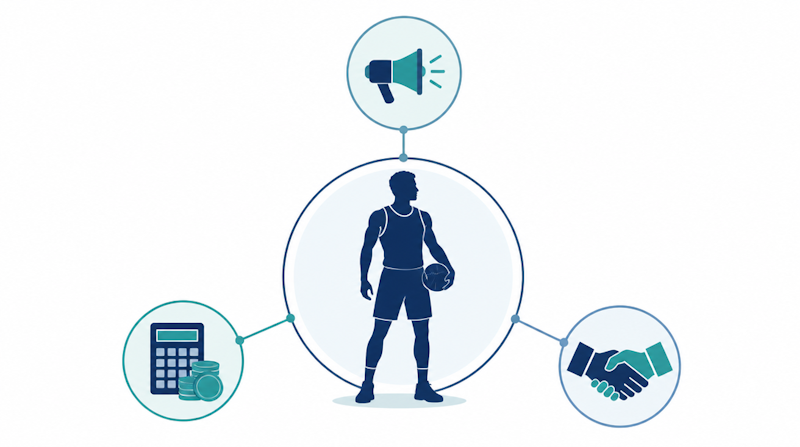
Athletic performance matters, but so does business literacy. Three foundations—marketing, accounting, and negotiation—can shape an athlete's life as much as competition results. Learning them

during your playing days gives you a real edge in sponsorship deals, money management, and your second career. This article organizes the business basics every athlete should learn into three areas, explained from a former athlete's practical perspective.
Why athletes should learn business basics
Many athletes feel they should just focus on their sport. Yet there are clear reasons why athletes, in particular, need business literacy.
A short career versus a long life
Most athletic careers end around age 30 to 40. Since office workers typically retire at 60 to 65, life after retirement lasts far longer than the competitive years. Japan's Sports Agency career support strategy frames "career" not as something that begins at retirement but as "life itself, including your playing days."
To navigate that long second half with stability, you need weapons beyond your sport—namely, business basics.
Earning is not the same as keeping
Even top earners oft
en struggle after retirement. According to a guide on athlete asset management, Sports Illustrated estimated that roughly 78% of NFL players face bankruptcy or serious financial stress within two years of retiring, and about 60% of NBA players lose their wealth within five years.
The ability to earn and the ability to protect and grow money are two different skills. Without a foundation in accounting and finance, even large incomes can vanish quickly.
The "dual career" mindset
A concept gaining traction is the dual career: developing your capacity as a working professional alongside your sport. Sports Agency materials explain that during your playing days you can accumulate "skills and assets that also boost performance and serve you for a lifetime." Building this up gradually while still competing is ideal.
Marketing basics: delivering your own value
The first business basic is marketing. It may sound intimidating, but for an athlete it is simply the familiar question of how to communicate your value and turn it into support.
Marketing is building a system that sells
At its core, marketing is about creating a system in which a product or service is naturally chosen. For an athlete, that means designing "who receives what value, and how." The starting point is tailoring your message to each audience—fans, sponsor companies, local communities.
This thinking carries directly into a post-retirement business career. The Sasakawa Sports Foundation's analysis highlights the importance of translating athletic experience into business value.
Self-branding and social media
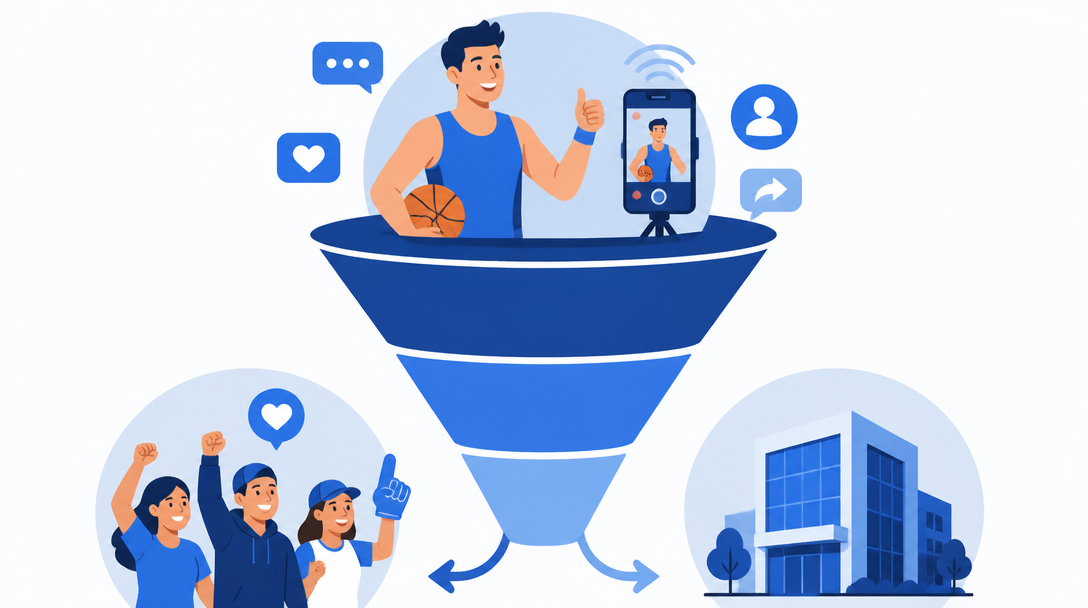
For today's athletes, social media is a powerful marketing tool. Sharing not only results but also your attitude, personality, and values builds relationships with fans and sponsors through genuine connection. Key points include:
- Focus your message on a single core theme
- Show the story behind the sport that makes people want to cheer for you
- Track numbers (followers, engagement) and keep improving
- Review posts from an outside perspective to avoid controversy
See our guide to building an athlete portfolio for concrete steps.
Articulating the value sponsors buy
Sponsors are not charities. Athletes who can clearly articulate what benefit they provide—exposure, image, product promotion—are the ones chosen. Translating your reach, results, and character into "value for the company" is marketing in practice. See our practical sponsorship guide for details.
Accounting and financial literacy: protecting your money
The second business basic is accounting and financial literacy—the money knowledge that lets you protect, plan, and grow what you earn.
Filing taxes as a sole proprietor
Many professional and independent athletes are, for tax purposes, sole proprietors. Yet an article on athlete money management quotes a tax accountant saying many pro players start from "What is a tax return?" Not understanding the basics—deducting expenses from income and paying tax accordingly—can lead to unexpected back taxes or cash shortfalls.
See our introduction to tax filing for athletes for more.
Asset management to avoid bankruptcy
With unstable income and short careers, asset management is critical for athletes. A basic order of priorities looks like this:
Step | Action | Purpose |
|---|---|---|
1. Emergency fund | Keep at least one year of living costs in savings | Survive income gaps |
2. Insurance | Cover injury and income loss | Protect assets from shocks |
3. Invest surplus | Diversified, regular investing | Grow money long-term |
4. Use experts | Consult trusted advisers | Avoid fraud and bad deals |
Athletes with fame and spare cash are prime targets for investment scams. Stay away from "guaranteed returns" and start with the emergency fund.
Using tax-advantaged accounts
As an entry point to building assets, understanding tax-advantaged systems such as Japan's NISA and iDeCo matters. Knowing that gains can be tax-free or contributions deductible helps you channel limited income efficiently toward the future. Because rules change, always confirm the latest details with official sources.
Negotiation basics: not losing out on contracts
The third business basic is negotiation. Contract terms and sponsorship fees can change dramatically depending on your negotiation knowledge.
Three types of athlete contracts
Athletes generally sign one of three contract types with companies, summarized from a guide on contract types:
Type | Content | Consideration |
|---|---|---|
Sponsorship | Financial support in exchange for logo exposure and PR | Mainly money |
Supplier | Provision of wear, shoes, and equipment | Mainly goods |
Ambassador | Embodying the brand's values over the medium to long term | Money plus ongoing relationship |
The first step is judging which type fits your level and reach.
Clauses to check in a contract
An article on sponsorship pitfalls lists key points to confirm:
- Scope of activities (event frequency, exposure obligations)
- Compensation amount, method, and timing of payment
- Compliance and social media rules, contract term and renewal conditions
Confirm terms in writing rather than by verbal promise. Signing without noticing an unfavorable clause is hard to undo later.
When to use an agent
You do not have to negotiate alone. According to a guide on sports agents, agents handle salary negotiation, transfers, sponsorships, and legal and tax matters, typically for a fee of around 5–7% of the player's salary. Because negotiation demands legal, financial, and tax expertise, using professionals becomes more rational as the stakes grow.
Still, never hand everything over blindly. Only when you have the basics can you engage an agent as an equal and negotiate in your favor.
How to learn these three areas
Marketing, accounting, and negotiation are closely linked. Here is how even a busy active athlete can learn them without strain.
Steps you can take while competing
You do not need to study systematically from the start. The trick is to begin small, tied to daily activity:
- Treat your own social media as a marketing testing ground
- Log income and spending in an app to visualize cash flow
- Read your own contracts carefully at least once
- Get familiar with terms via business books and public introductory content
The goal-setting, self-analysis, and persistence you built in sport transfer directly to learning.
Using public support programs
You do not have to study expensively on your own. Sports Agency materials note that the Sports Career Support Consortium (founded 2017) has 106 member organizations and 118 Athlete Career Coordinators (ACCs) providing consultations. Such public frameworks give you accessible expert support.
Reskilling: business school and certifications
For deeper study, business school in your late career or just after retirement is an option. The Sasakawa Sports Foundation argues that combining the leadership and teamwork athletes develop with foundational business skills widens second-career possibilities. Certifications also objectively prove your skills. See our guide to careers in the sports industry for related paths.
FAQ
Where should I start?
Begin with the area closest to you—money (accounting). Simply recording income and expenses and understanding tax filing greatly improves your ability to protect assets. From there, expand into marketing and negotiation.
I have no time to study
You do not need to learn everything at once. Reflecting on activities you already do—social media, reading contracts—as learning opportunities is enough of a first step. Public consultation services let you gain knowledge efficiently.
Can I just leave money to experts?
Using experts helps, but handing everything over blindly is risky. Only with your own basic knowledge can you judge the quality of their advice and choose trustworthy partners.
Summary
We organized the business basics every athlete should learn into three areas. Key points:
- Careers are short; the long life after retirement demands business literacy
- Marketing: articulate your value and deliver it to fans and sponsors
- Accounting and financial literacy: protect your earnings through tax filing and asset management
- Negotiation: understand contract types and clauses, and use agents when needed
- Start small while competing, and use public programs and reskilling
These three foundations help not only after retirement but right now, during your active career. Turn the learning power you built in sport toward building your business foundation.