Gymnastics Floor Music: What Famous Gymnasts Use and Why
Floor music used by Simone Biles, Rebeca Andrade, Aiko Sugihara and more, the FIG rules on lyrics, timing and editing, and lessons for picking your own.
Gymnastics floor music is one of the first things fans ask about after a great routine: "What song was that?" Women's floor exercise is the only event in artistic gymnastics performed to music, and at the Olympics and World Championships each gymnast's soundtrack becomes part of her identity.
This guide lists the floor music of famous gymnasts that we could confirm through news reports, explains the International Gymnastics Federation (FIG) rules that shape those soundtracks, and pulls out practical lessons for choosing your own floor music. It works both as a viewing guide and as a starting point for gymnasts, coaches, and parents planning a new routine.
Why Gymnastics Floor Music Gets So Much Attention
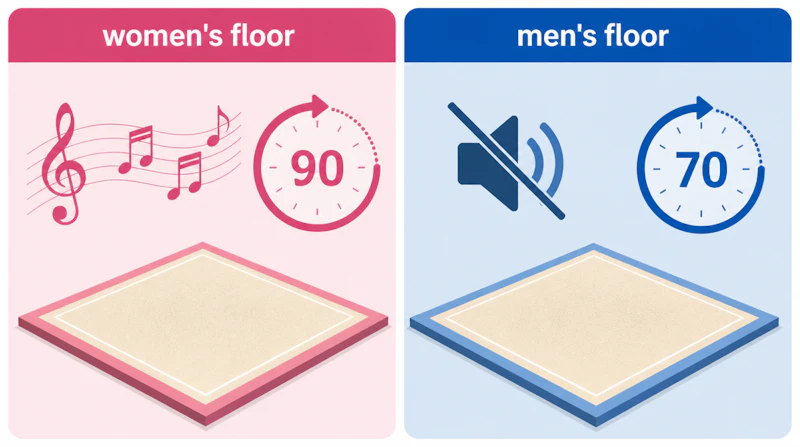
Women perform floor to music; men do not
Both men and women compete on floor, but only women use music. According to the Wikipedia overview of floor exercise, women's floor routines last up to 90 seconds and are synchronised to recorded music, while men's floor routines are no longer than 70 seconds and have no musical accompaniment.
That is why women's floor is judged and remembered not only for its tumbling but also for dance, facial expression, and choreography. It is also why a particular song can trend on social media the moment a routine airs on TV.
The music sets the theme of the routine
The FIG Women's Artistic Gymnastics Code of Points 2025–2028 says the character of the music should provide the guiding idea or theme of the composition, and that the chosen music must help highlight the gymnast's unique characteristics and style. In other words, floor music is not background noise. It is the concept of the whole exercise.
So when you study what top gymnasts use, the real question is not "which song scores best?" but "what is this gymnast saying with her music?" That same question is the best place to start when you pick your own. If you would like help with song choice or routine structure, Daito Iwasaki, a former gymnast and recording artist, offers custom competition floor music production.
How we sourced the songs in this article
Floor music rarely appears in official results, and much of what circulates online has no clear source. We only list music that could be confirmed through at least one of the following:
- Reports from news organisations such as NBC Olympics and the Associated Press
- Newspaper or magazine articles quoting the gymnast or her choreographer
- The FIG Code of Points and Help Desk (for the rules)
FIG Rules for Gymnastics Floor Music
No words or sung lyrics
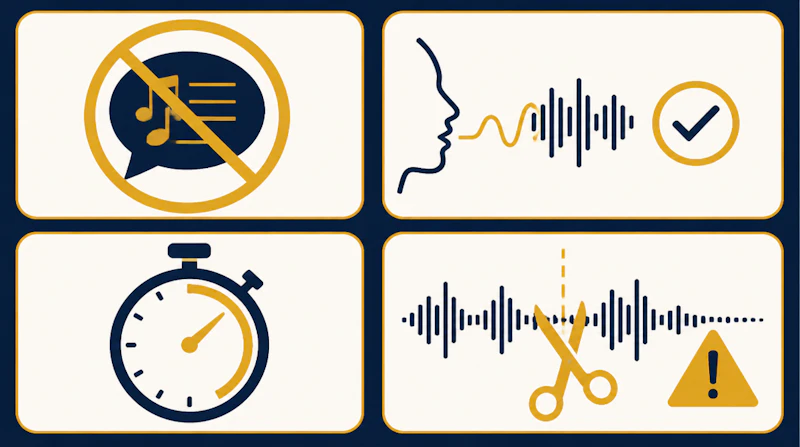
Section 13.1 "Music Requirements" of the FIG Code states that the musical accompaniment must be recorded with orchestration, piano, or other instruments, and lists "absence of music or music with words" as a penalty taken by the D-Jury from the final score. That means a famous pop song cannot simply be played in its original, sung version at an FIG-rules competition.
This is a common point of confusion, because U.S. college gymnastics (NCAA) does allow music with lyrics. We break down the difference in Can women's floor music have lyrics? FIG vs NCAA.
The human voice is allowed as an instrument
The same section allows the human voice to be used as a musical instrument without words. The examples given are humming, vocalising without words, whistling, and chanting. It also says that any music that is not clearly a song or part of a song is accepted.
The FIG WAG Help Desk (2nd edition, April 2026) adds that if the voice imitates the music or follows the melody, the music may be used for floor, and that federations in doubt may submit the music to the Women's Technical Committee (WTC) for approval.
Stay within 90 seconds and finish with the music
A floor exercise may not exceed 1:30 (90 seconds); the overtime penalty applies at 1:31 (91 seconds) or more. Timing starts with the gymnast's first movement and stops at her final position, and the Code states plainly that the exercise must end with the music.
Music editing and musicality are judged too
Some of the artistry deductions on floor relate directly to the music itself. The main ones are summarised below.
Item (FIG Code / Help Desk) | What it means | Deduction |
|---|---|---|
Music with words / absence of music | Sung lyrics or spoken words, or performing in silence | Taken by the D-Jury from the final score |
Overtime | Routine lasting 91 seconds or more | Taken from the final score |
Poor editing of the music | Abrupt cuts or unnatural transitions | 0.1 |
Poor expressive engagement according to the style of the music | Expression and movement do not match the music's style | 0.1 / 0.2 / 0.3 |
Lack of connectivity of the music to the exercise | Movements do not match the mood or rhythm of the music | 0.1 / 0.2 / 0.3 |
Lack of synchronisation at the end | The final movement and the final musical beat do not line up | Per the Code's deduction table |
Check the exact size of the overtime and music-with-words penalties in the rule book for your competition. The key takeaway is that the quality of your song choice and edit affects your score independently of your skills.
Famous Gymnastics Floor Music: Songs Used at the Olympics and Worlds
Floor music at the Paris 2024 Olympics
NBC Olympics' "Songs you might recognize while watching gymnastics" lists the floor music of several gymnasts in Paris. The table below is built mainly from that list, plus other confirmed reports.
Gymnast (country) | Event | Floor music (original song / artist) | Source |
|---|---|---|---|
Simone Biles (USA) | Paris 2024 | "...Ready For It?" (Taylor Swift) + "Delresto (Echoes)" (Travis Scott ft. Beyoncé) | NBC Olympics |
Jordan Chiles (USA) | Paris 2024 | Beyoncé mashup ("Black Parade," "My House," "Energy," "End of Time," and Destiny's Child's "Lose My Breath") | NBC Olympics |
Jade Carey (USA) | Paris 2024 | "Seven Nation Army" (The White Stripes) | NBC Olympics |
Hezly Rivera (USA) | Paris 2024 | "Carol of the Bells" (Pentatonix) | NBC Olympics |
Jade Barbosa (Brazil) | Paris 2024 | "...Baby One More Time" (Britney Spears) | NBC Olympics |
Laura Casabuena (Spain) | Paris 2024 | A cover of "Material Girl" (Madonna) | NBC Olympics |
Qiu Qiyuan (China) | Paris 2024 | "Inferno" (Sub Urban and Bella Poarch) | NBC Olympics |
Rebeca Andrade (Brazil) | Paris 2024 | Medley including "End of Time" (Beyoncé) and "Movimento da Sanfoninha" (Anitta) | Billboard Brasil |
Rebeca Andrade (Brazil) | Tokyo 2020 | "Baile de Favela" (Brazilian funk) alternating with Bach's "Toccata and Fugue" | Associated Press |
Aiko Sugihara (Japan) | Routine for the Tokyo 2020 season | "NA" (Nissy) | Kobe Shimbun |
The song titles above refer to the original tracks the music was built from. As covered in the previous section, music with words is penalised under FIG rules, so pop-based floor music at FIG competitions is generally performed with versions arranged or edited to remove the sung parts.
Rebeca Andrade: switching between funk and classical
According to an Associated Press report from August 2021, Brazil's Rebeca Andrade performed her Tokyo floor routine to the Brazilian funk track "Baile de Favela," alternating with Bach's "Toccata and Fugue" over roughly 90 seconds. Her choreographer, Rhony Ferreira, called the music a "chance to show the world our culture."
In Paris, as Billboard Brasil reported in July 2024, she used a medley that included Beyoncé's "End of Time" and Anitta's "Movimento da Sanfoninha." With that routine she won the floor final with 14.166, ahead of Simone Biles in silver, as NBC New York reported. Billboard Brasil also noted that she answered "Beyoncé" without hesitation when asked about her favourite artist, and that she looks for music with strong beats to match her energetic style.
Aiko Sugihara: asking the original choreographers
Japan's Aiko Sugihara chose "NA," an up-tempo track by Nissy (Takahiro Nishijima), for her floor routine. According to a Kobe Shimbun column from July 2021, she wanted the routine choreographed by "the originals," so she messaged Kazuki of the dance group s**t kingz, who choreographs for Nissy, directly on social media, and he agreed to choreograph it.
Sugihara later won floor gold at the 2025 World Championships in Indonesia, which Number Web described as only the second floor world title for a Japanese woman.
Floor Music Lessons from Famous Gymnasts
Lesson 1: Tell your story through the music
Andrade's funk was chosen with a clear purpose: to show Brazilian culture. It is a textbook example of what the Code asks for, music that highlights the gymnast's unique characteristics.
- How would you describe your personality in one word: bright, cool, passionate, playful?
- Is there a background you can express, such as your hometown, country, or a favourite artist?
- Can the audience easily picture you performing to this song?
For a deeper look at matching music to gymnast type, see choosing floor music by gymnast type: power, expressive, or cute.
Lesson 2: Combine contrasting pieces to shape the 90 seconds
Many top routines combine two or more pieces. Andrade paired funk with Bach in Tokyo, Biles combined Taylor Swift and Travis Scott in Paris, and Chiles used a mashup of several Beyoncé songs.
Joining contrasting music creates clear quiet and loud peaks within 90 seconds. But an unnatural join can be deducted 0.1 as poor editing of the music, so the more pieces you combine, the more the quality of the edit matters.
Lesson 3: Use a recognisable song to win over the arena
Songs like "Seven Nation Army," "Carol of the Bells," and "...Baby One More Time" are instantly recognisable from the first few notes, which makes it easier to get a reaction from the crowd. Clapping and cheering from the stands can also carry a gymnast through her routine.
On the other hand, famous songs are more likely to be used by other gymnasts, and the original carries a strong image. Choreography and arrangement are what turn a well-known song into your routine.
Lesson 4: Decide on music together with your choreographer and team
Speaking to NBC Olympics, Biles said that "everybody kind of wanted something different – choreographer, as well as music." Just as Sugihara went to the original choreographers, top gymnasts treat music and choreography as one decision.
- Prepare several candidate songs
- Check with your coach and choreographer that each one fits your skill placement and highlights
- Run through the routine to see whether the musical accents line up with your skills and poses
What to Watch Out for When Using a Famous Song as Floor Music
The original version usually cannot be used as-is
Most pop songs and film soundtracks contain lyrics or dialogue. Under FIG rules, and at competitions that follow them, music with words is penalised, so you will need an instrumental version or an edit that avoids the sung parts. If a voice remains, check whether it counts as an instrument, such as humming or wordless vocalising.
Awkward cuts hurt both the score and the impression
Splicing together only the most exciting parts of a song can cause sudden jumps in tempo or key that break the flow of the routine. The FIG Code says music must be flawless, without abrupt cuts, and must give the whole exercise a sense of unity. Common mistakes are covered in floor music editing mistakes and how to make smooth transitions.
Copyright at competitions and on social media
Using a commercial song at a competition and posting a routine video on social media raise different issues. We explain both, including what to consider when sharing edited music, in floor music and copyright.
How to Choose Your Own Floor Music
Using famous routines as a reference, step by step
- List three routines you love: note not just the song but the exact moment that grabbed you
- Put the common thread into words: fast tempo, dramatic, bright, strong cultural flavour, and so on
- Compare with your own type: look for music with the same direction, not the same song
- Check the rules: no words, fits within 90 seconds, and your competition's regulations
- Test it with your skill placement: make sure skills and poses land on the musical accents
Can you use the same song as a famous gymnast?
No rule prohibits using the same song. But it invites comparison, and the stronger the original choreography is in people's memory, the more your routine may look like a copy. Re-editing the tempo and structure to fit your own routine is the most reliable way to make it yours.
Editing or original composition
Top gymnasts' floor music usually involves professional work: combining pieces into a medley, arranging songs without vocals, and editing everything to fit 90 seconds. If you are editing yourself, our 90-second floor routine timing template is a useful guide.
If you would rather have rules-aware editing or a fully original composition tailored to your image, our competition floor music service, run by a former gymnast and recording artist, can build music around your skill placement and highlights.
Summary
- Only women use music on floor, and the FIG Code says the music should provide the theme of the routine
- At FIG competitions, music with words or sung lyrics is penalised; the human voice is allowed only as a wordless instrument
- In Paris, Biles, Chiles, and Andrade used pop-based floor music, while Sugihara performed Nissy's "NA" with choreography from the song's original choreographers
- Famous routines teach four lessons: tell your story, combine contrasting music, use recognisable songs wisely, and decide music together with choreography
- Music editing and musicality are judged too, so prepare transitions and the final beat as carefully as your skills
If you want floor music that fits your routine, or need your current music re-edited to meet the rules, feel free to get in touch through our competition floor music production page.