How to Become a Sports Nutritionist in Japan: A Career Guide
How to become a sports nutritionist in Japan: the registered dietitian exam, the Certified Sports Dietitian system, workplaces, salaries, and career paths.
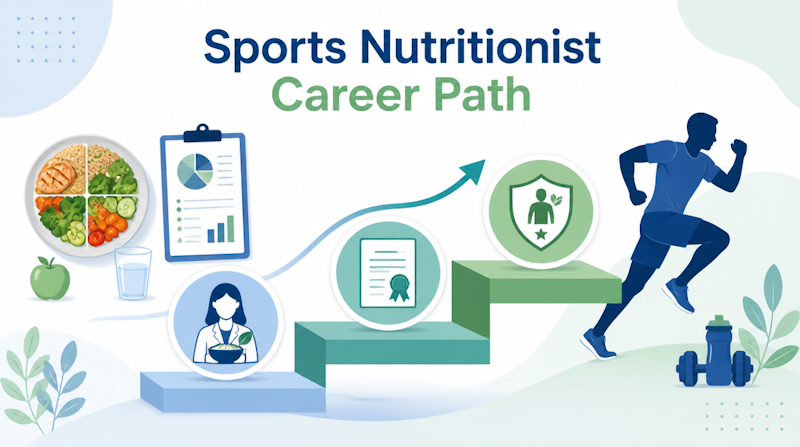
A sports nutritionist supports the performance of athletes and active people from the standpoint of food and nutrition. Demand is rising not only for elite competition but also for youth development, injury prevention,

and recovery. This guide explains how to become a sports nutritionist in Japan: the certification routes, the registered dietitian national exam, the Certified Sports Dietitian system, private certifications, workplaces, salaries, and career paths.
What a Sports Nutritionist Does
In Japan, "sports nutritionist" is not itself a national qualification. It is an umbrella term for professionals who build on a dietitian or registered dietitian license and add expertise in sports nutrition to support conditioning and performance.
Core Responsibilities
The work ranges from individual nutritional assessment to meal planning and managing food environments during training camps. Typical duties include personalized nutrition guidance, designing meal menus, and food management during camps and away trips.
- Nutritional assessment based on body composition and dietary surveys
- Goal-based meal planning for gaining, cutting, or making weight
- Pre- and post-co
mpetition fueling (glycogen loading, recovery meals)
- Supervising menus at dormitories and training facilities
- Nutrition education for parents, coaches, and kitchen staff
Dietitian vs. Registered Dietitian
A dietitian mainly guides healthy people, while a registered dietitian is a higher qualification able to manage nutrition for the sick or those needing special care. A sports nutritionist layers knowledge of exercise physiology, energy metabolism, and sport-specific demands on top of that foundation.
Why the Field Is Growing
Scientific support for youth development and pro teams is now common, and more organizations place nutrition specialists on staff. Alongside body building and sleep and recovery strategies, nutrition is a daily "part of training" whose expert value is being re-evaluated.
Two Routes to Becoming a Sports Nutritionist
There are two broad routes. One is the full professional path: earn the registered dietitian national qualification and pursue Certified Sports Dietitian status. The other is to start from a private certification and build practical experience.
Route 1: Registered Dietitian to Certified Sports Dietitian
To work as a professional with pro teams or national athletes, the royal road is to obtain the registered dietitian license and then the Certified Sports Dietitian credential jointly certified by the Japan Sport Association (JSPO) and the Japan Dietetic Association.
Route 2: Private Certifications First
If your goal is to learn quickly or apply knowledge in clubs and gyms, private certifications such as Athlete Food Meister are an option. They are accessible but rarely lead to standalone professional hiring.
Which Route to Choose
Work backward from the field you want to enter and the time you can invest.
Item | RD to Certified Sports Dietitian | Private Certification Route |
|---|---|---|
Nature | National license + public certification | Private certification |
Time to obtain | 4-year school + years of training | Weeks to months |
Main fields | Pro, national teams, hospitals, government | Home, clubs, gyms, food education |
Professional hiring | Easier | Difficult alone |
Earning the Registered Dietitian Qualification
The serious path starts with the registered dietitian license, because the Certified Sports Dietitian program requires applicants to already be registered dietitians.
Paths to the License
A dietitian completes a 2-4 year training program and receives a license from the prefectural governor. To become a registered dietitian, you must then pass the national exam. Graduates of a 4-year RD training course can sit the exam in their graduation year, while those from 2-3 year dietitian schools need practical experience so the total reaches five years.
The National Exam
The exam is held once a year, usually from late February to early March. According to the Japan Dietetic Association, it is a 200-question, 9-subject multiple-choice test with an exam fee of 6,800 yen.
Pass Rate and Difficulty
In the 39th exam held in March 2025, 7,778 of 16,169 candidates passed, a pass rate of 48.1% (Japan Dietetic Association / MHLW). The overall figure is about half, but new graduates passed at 80.1%, showing that structured study pays off.
The Certified Sports Dietitian System
Once you are a registered dietitian, the next step is Certified Sports Dietitian, the top-tier credential publicly recognizing sports nutrition expertise.
Certifying Bodies and Eligibility
According to the Japan Dietetic Association, the credential is jointly certified by the Japan Dietetic Association and JSPO (the course outline is published by the Japan Sport Association). Eligibility requires:
- Being a registered dietitian aged 22 or older as of April 1 of the enrollment year
- Having, or planning to gain, experience supporting athletes or active people
- Being approved by both certifying bodies
Completing the Sports Nutrition Basic Course run by the Japan Sports Nutrition Association is also a prerequisite.
The Path to Certification
According to the Japan Sports Nutrition Association, training proceeds in two stages: common subjects run by JSPO and specialized subjects managed by the association.
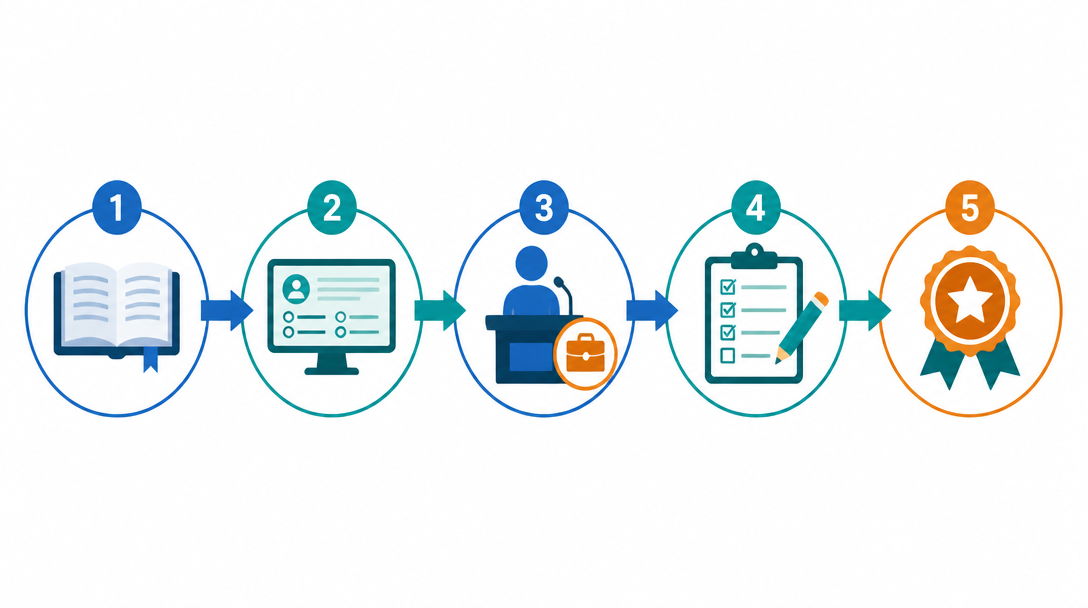
- Complete the Sports Nutrition Basic Course
- Finish common subjects (online study and exam)
- Attend 8 days of specialized lectures plus a 40-hour internship
- Pass the specialized exam (oral test and internship presentation)
- Be certified and registered by both bodies
Enrollment is valid for five years, assuming candidates progress while working. JSPO materials also frame the goal as developing nutrition support staff for local and competitive settings.
Costs and Renewal
There are course and registration fees, and the credential must be renewed.
Item | Detail |
|---|---|
Course fee | 45,100 yen (tax incl.) |
Registration fee | 23,300 yen |
Renewal fee | 20,000 yen |
Validity | 4 years (renew via training) |
Total certified | 608 (end of FY2025) |
With only around 600 holders nationwide, the credential is clearly rare and highly specialized. For FY2026, specialized lectures are scheduled from November 2026 into 2027 (FY2026 program notice).
Private Certifications as an Option
Even without a registered dietitian license, several private certifications teach sports nutrition. They rarely secure professional roles alone but are useful for coaching, home practice, and as an entry point.
Athlete Food Meister
Certified by the Japan Athlete Food Association, Athlete Food Meister offers levels 3 to 1, covering meal programs by age, sport, and timing, plus body mechanics and communication with athletes. It is popular with parents and team staff.
Other Certifications
The Sports Nutrition Planner run by Office LAC-U emphasizes the enjoyment of eating and includes many recipes. Many other private options exist with varying scope and cost, so check who each is for and what it enables.
Making Private Certifications Count
Since they seldom lead directly to professional hiring, use them for coaching or parenting practice, or as a stepping stone toward the registered dietitian license. Combining them with a coaching certification can raise their value.
Career Paths and Salary
A sports nutritionist's career is not a single track. Workplace strongly affects both work style and income, so clarify where you want to add value.
Main Workplaces
- Pro teams, sport federations, national teams
- Hospital rehabilitation and sports medicine departments
- School and university teams and dormitories
- Food and supplement makers (R&D and product planning)
- Fitness clubs and personal gyms
- Freelance (individual contracts, online coaching, writing)
Salary Benchmarks by Workplace
Income varies widely by workplace and experience. Benchmarks from a career media survey are below (estimates, not guarantees).
Workplace | Salary benchmark |
|---|---|
Hospital / rehab | ~3.5-4.5M yen |
School / club | ~4-6M yen |
Sport team / federation | ~3-5M yen |
Food / supplement maker | ~4-6M yen |
Fitness club / gym | ~2.4-3.6M yen |
Freelance / contract | Several million to 10M+ yen |
Against an average dietitian salary of about 3.1M yen, specialists with a track record can earn more, especially freelancers whose results drive income.
Directions for Advancement
Certification opens doors to supporting pro and national athletes, and paths extend to graduate research, writing, speaking, and independence. For former athletes, it is a strong second career. Understanding mental training and overall conditioning further raises on-site value.
Steps to Get Started
Finally, here are realistic steps by situation.
High School Students and Future Enrollees
The fastest route is a 4-year registered dietitian training course. You can sit the exam in your graduation year, and gaining support experience through seminars or club work helps meet the Certified Sports Dietitian requirement. See our sports industry career guide for perspective.
Working Adults and Athletes
If you already work or still compete, consider schools with evening or correspondence options or the practical-experience route. Starting with a private certification and later moving to the registered dietitian license is also realistic.
Lifelong Learning Is the Real Edge
Sports nutrition research and rules update yearly, which is why the credential requires renewal every four years. To stay trusted, treat certification as a milestone, not the finish line.
Summary
- "Sports nutritionist" is an umbrella term built on the dietitian/registered dietitian license
- The main route is registered dietitian (national) to Certified Sports Dietitian (joint certification)
- The RD exam has 9 subjects and 200 questions; the 2025 pass rate was 48.1%
- Certified Sports Dietitian requires RDs aged 22+, with 608 holders nationwide (end of FY2025)
- Salary varies widely by workplace, so design your career from the field you target