2026 Worlds Women's Floor Preview & Sugihara's Title Defense
A preview of the women's floor final at the 2026 Worlds in Rotterdam: Sugihara's title defense, how floor is scored, the music rules, and who to watch.

From 17 to 25 October, Rotterdam hosts the 2026 World Artistic Gymnastics Championships. For Japanese fans, one event stands out: the women's floor exercise. Aiko Sugihara, who won floor gold at the 2025 World Championships, arrives in the Netherlands to defend her title, in a di
scipline where difficulty, music and artistry collide inside a 90-second routine. This preview breaks down the schedule, how floor is scored, the music rules, the athletes to watch and Japan's team — all through the lens of the D-score and E-score.
Women's Floor at the 2026 Worlds: Schedule and Why It Matters
The basics: Rotterdam Ahoy, 17–25 October
According to the official event information, the 2026 World Artistic Gymnastics Championships run from 17 to 25 October 2026 at Rotterdam Ahoy in the Netherlands. It is the second Worlds of the post-Paris cycle, and unlike the 2025 edition in Jakarta, a women's team competition returns. Teams and individuals qualify through continental championships and the FIG World Cup series.
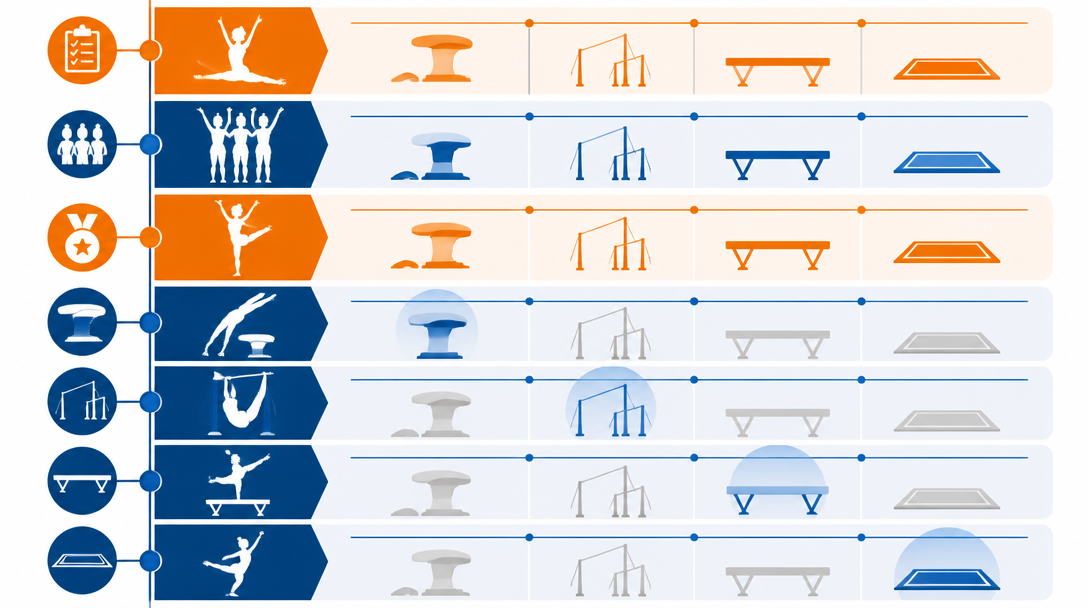
The women contest four apparatus: vault, uneven bars, balance beam and floor. Of these, floor is the event where artistry and difficulty must coexist most fully, performed to music across 90 seconds.
Women's competition schedule
The competition schedule places women's qualification on 18–19 October, the team final on 21 October and the all-around final on 23 October. Apparatus finals are split over two days: vault and uneven bars on 24 October, and balance beam and floor on the final day, 25 October. In oth
er words, the women's floor final is one of the closing events of the championships.
- 18–19 October: Women's qualification (ten subdivisions)
- 21 October: Women's team final (top 8 teams)
- 23 October: Women's all-around final (top 24)
- 24 October: Vault and uneven bars finals
- 25 October: Balance beam and floor finals
Why women's floor is the event to watch
The reason is simple: the reigning 2025 floor champion is Japan's Aiko Sugihara, and her title defense is on the line. Floor is also decided not only by difficulty but by music, composition and expression, so knowing the Code of Points makes it far more enjoyable to watch. For the full event calendar, see our Rotterdam 2026 schedule and viewing guide.
A 90-second floor track can transform a routine depending on the edit and song choice. Gymnasts and coaches who want music built around the Code of Points can commission competition floor music production > from a former gymnast and recording artist.
Sugihara's Title Defense: The 2025 World Champion

Japan's second-ever women's floor world title
In October 2025 in Jakarta, Aiko Sugihara won the women's floor final with a score of 13.833 (via the Japanese Olympic Committee). It made her Japan's second women's floor world champion, after Mai Murakami in 2017 and 2021. Olympics.com framed the title as a defining moment of her career.
A late-blooming peak after six years away
According to her athlete profile, Sugihara was born in 1999 and was part of Japan's 2016 and 2020 Olympic teams. The 2025 Worlds marked her fifth appearance and first in six years — and at 26 she claimed her first world medal, which happened to be gold. She even has an eponymous beam skill, "the Sugihara," in the Code of Points.
A floor-and-beam double threat
In Jakarta she added balance beam bronze (14.166) to her floor gold. That beam final was won by China's Zhang Qingying (15.166), with Paris bars champion Kaylia Nemour of Algeria taking silver — so bronze in that field carried real weight. Her ability to medal on both floor and beam is a key strength heading into 2026.
How Women's Floor Is Scored: D-Score and E-Score
The D-score (difficulty)
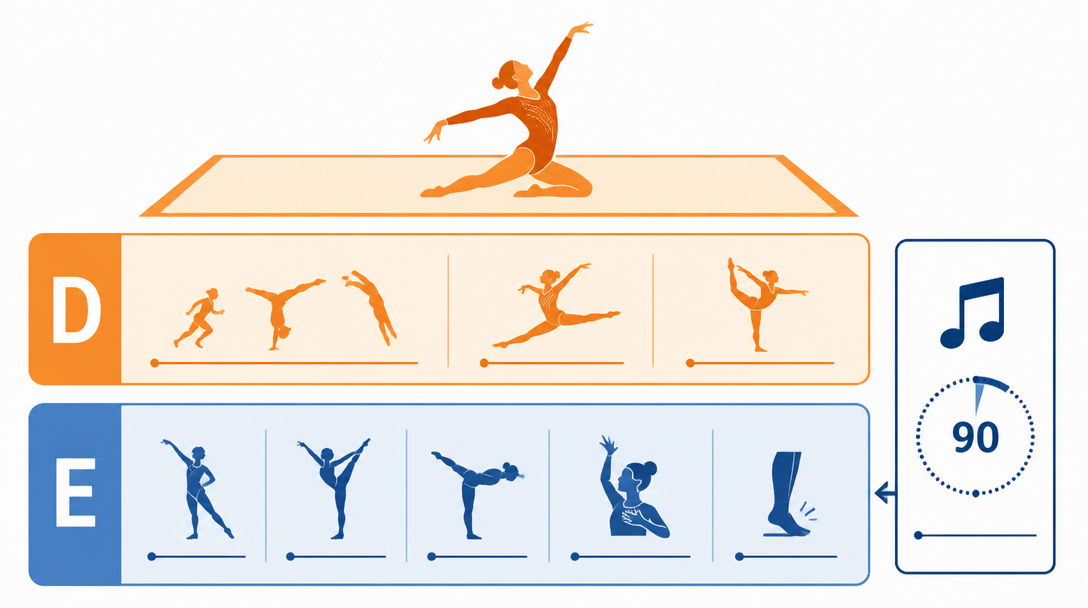
A floor score is the sum of the D-score (difficulty) and the E-score (execution). Per the scoring overview, the D-score adds the values of the eight most difficult elements (acrobatic and dance), plus connection bonuses and composition requirements. Element values range from 0.1 (A) up to 1.0 (J).
For a deeper look at floor difficulty and composition, see our article on how women's floor is scored.
The E-score (execution) and deductions
The E-score starts at 10.0 and falls with each error — landing deductions, form and leg-line breaks, and stepping out of bounds. The rules also note a deduction for using music with lyrics. Floor is therefore not just about big tumbling; clean, expressive execution reshuffles the standings.
Composition requirements (CR)
Composition requirements are elements a routine must include. On women's floor, meeting certain acrobatic lines and dance elements earns credit; missing them caps the score. Building a routine means satisfying those required "shapes" and then arranging the skills to the 90-second music.
Because skill placement and the edit are inseparable, athletes who want a routine assembled with the Code of Points in mind can discuss original composition and cutting through competition music production.
The Music Rules: 90 Seconds, Lyrics and Expression
90 seconds, instrumental by default (no lyrics)
Under the FIG rules, a women's floor routine lasts up to 90 seconds on a 12m x 12m area. Any musical style is allowed, but spoken words and sung lyrics are not permitted. The voice may be used "as an instrument," but meaningful lyrics draw a deduction.
FIG vs. NCAA
This lyrics rule is often misunderstood. FIG and domestic elite competition prohibit songs with lyrics, whereas U.S. college gymnastics (NCAA) allows them. It is worth knowing the difference — we cover it in can you use songs with lyrics on women's floor?.
Performing the music, not just moving to it
Modern judging rewards gymnasts who perform the phrasing and world of the music, not just move in time. Flat expression or filler choreography that ignores the music is penalized. That is why a song with a clear arc, matched to the composition, pays off on the scoreboard. See also how to build a floor-music arc.
Athletes and Nations to Watch in Rotterdam
The 2025 Worlds podium
Sugihara's biggest obstacles are the two British gymnasts who joined her on the 2025 podium. Per the 2025 results, the women's floor podium was as follows.
Medal | Gymnast | Nation | Score |
|---|---|---|---|
Gold | Aiko Sugihara | Japan | 13.833 |
Silver | Ruby Evans | Great Britain | 13.666 |
Bronze | Abigail Martin | Great Britain | 13.466 |
Scores per official and media reports; 2026 outcomes are not predicted here.
Strong nations and returning stars
As the Jakarta preview noted, the 2025 Worlds were missing Paris stars such as Simone Biles (USA) and Rebeca Andrade (Brazil). How they approach 2026 is still unconfirmed, but the depth of the USA, China, Brazil and Romania means they should remain central to the medal fight in Rotterdam.
Apparatus specialists
The 2026 entry list names floor specialists including Sevgi Kayisoglu (Turkey), Patricie Makovickova (Czechia), Daniz Aliyeva (Azerbaijan) and Mafalda Costa (Portugal). Beyond the all-around stars, these floor-focused gymnasts are worth watching.
Japan's Women to Watch
The 2026 team
According to the announced roster, Japan's 2026 women's team includes, alongside Aiko Sugihara, Rina Kishi, Mana Okamura, Haruka Nakamura and Misa Nishiyama. With the women's team competition returning this year, Japan's collective depth will also be tested.
17-year-old Rina Kishi
Kishi, 17, is one to watch. As the 2025 results show, she won her first All-Japan title that year and placed sixth in the all-around at the World Championships. The blend of veteran Sugihara and a new generation led by Kishi is Japan's strength for 2026.
Competing as a team
For an overview of all four women's apparatus, see our guide to the women's events. In the team final, the key is combining each gymnast's best events to stack points — and a strong, expressive floor lineup can target both the team total and individual apparatus podiums.
Viewing Guide: Schedule and Key Points
Women's schedule at a glance
To help you plan, here is the women's schedule (based on the official schedule; local time).
Date | Event / Round |
|---|---|
18–19 Oct | Women's qualification |
21 Oct | Women's team final |
23 Oct | Women's all-around final |
24 Oct | Vault and uneven bars finals |
25 Oct | Balance beam and floor finals |
What to look for on floor
When you watch floor, three things make it richer:
- Difficulty and composition: the difficulty of the opening and closing tumbling passes, and whether connections add credit.
- Music and expression: whether the movement rides the music's arc, down to the facial nuance.
- Landings and lines: are landings stuck, and are there out-of-bounds deductions?
Keep these in mind and you will see why close finals are decided the way they are.
Summary
- The 2026 Worlds run in Rotterdam from 17–25 October; the women's floor final is on the last day, 25 October.
- 2025 world champion Aiko Sugihara (13.833) defends her title — Japan's second women's floor world champion aiming to go back-to-back.
- Women's floor is 90 seconds on a 12m square; lyrics are not allowed, and the result is the sum of D-score and E-score.
- Britain's Evans and Martin, plus national specialists, are the rivals; Japan's edge is blending veterans with a new generation led by Kishi.
- A women's team competition also returns this year, testing both depth and individual artistry.
A 90-second floor track lives or dies on song choice, structure and editing. If you want competition music built around the Code of Points, you can commission everything from song selection to original composition and cutting via competition floor music production.