How to Build a Compelling Floor Music Arc: Climax and Structure
Build a women's floor music arc with a four-act story and climax design: 90-second timing, syncing tumbling to beats, editing, and FIG vs NCAA lyric rules.
In women's artistic gymnastics, what wins a floor routine is not difficulty alone. How you design a compelling floor music arc shapes the impression and the artistry score of your 90 seconds. Once you understand how to structure the
music like a story with a clear build and climax, the same skill composition can look far more electrifying. This guide breaks down how to build floor music—from the compositional concept to the practical editing—based on the FIG 2025–2028 Code of Points.
Why the Floor Music Arc Drives Your Score
The 2025–2028 Code rewards "performing the music"
Under the current FIG Code, gymnasts are expected to perform the music rather than merely move to it. Judging is more nuanced: phrasing, style, and emotional range are evaluated, and flat expression or filler choreography draws 0.10–0.20 deductions more consistently (2025–2028 women's floor update, FIG women's Code changes). In short, the music arc and its connection to skills now translate directly into points.
Women's floor uses music precisely because expression itself is part of the competition, not just difficulty and execution. That is why simply playing a chosen song is not enough—you need to design the 90 seconds as a story.
What "arc design" means: the four-act backbone
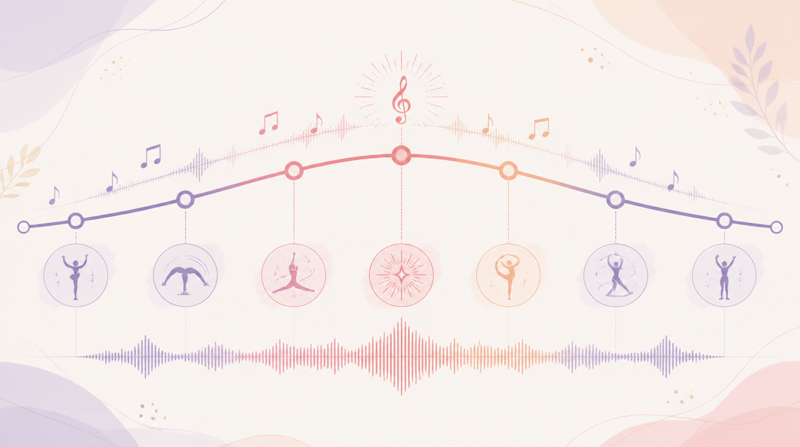
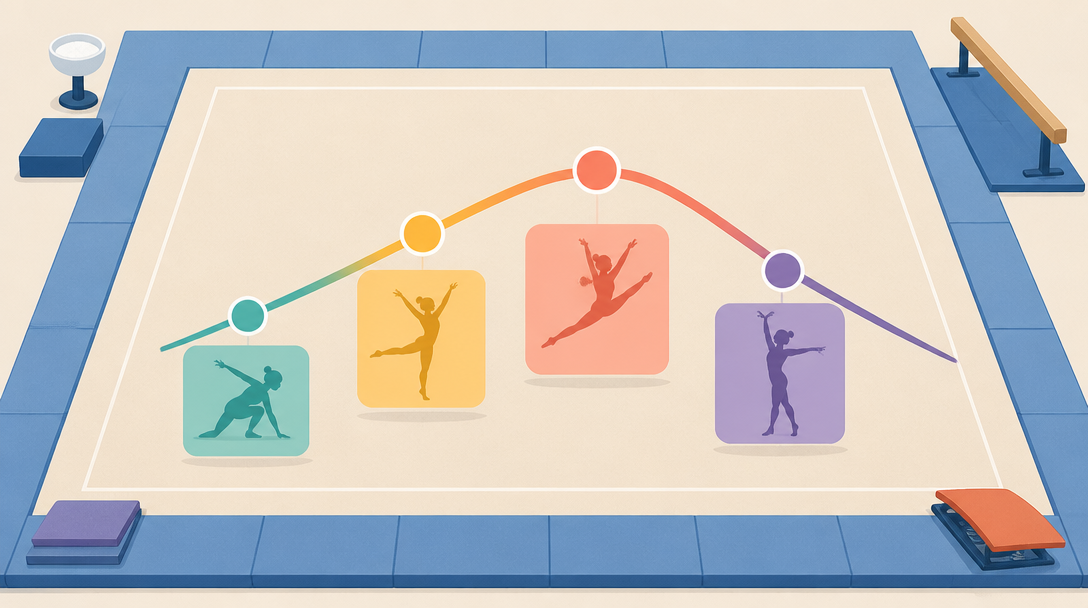
Arc design means mapping the 90 seconds onto a hook–build–peak–close backbone and placing your skills, dance, and poses along it. When the music's swell aligns with the routine's energy peak, both the audience and the judges
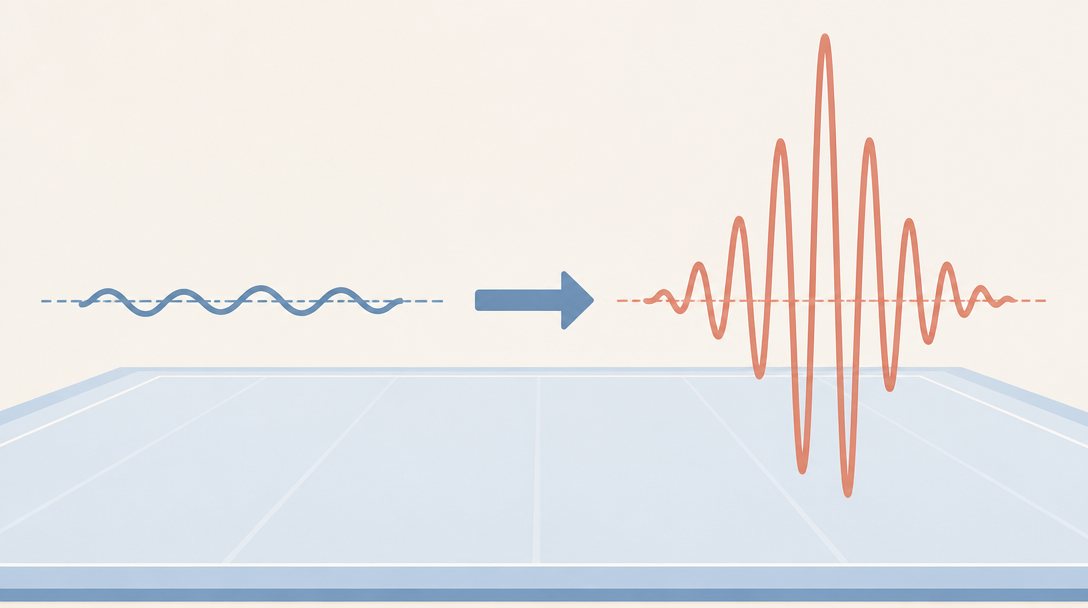
feel the climax. A floor music timeline guide stresses that a winning routine is built on timing, structure, and connection to the music.
For the overall 90-second framework and time allocation, see the 90-second floor timing template first.
You can get expert help with music and editing
"I understand the four-act idea, but I don't know how to build it with a real track" is a common concern. Through competition floor music production, you can discuss selection, editing, and 90-second structure with a former gymnast who is also an artist—someone who designs the arc with the Code of Points in mind.
The Four-Act Floor Music Arc: Splitting 90 Seconds into a Story
Act 1 — The hook: present your world in the first pose
The opening sets the first impression. Hit a strong still pose on the first beat, then use a short choreographic hook to establish the style (power, expressive, or cute). This is the job of the "hook."
Act 2 — The build: flow into the first tumbling pass
The "build" raises the energy toward the first tumbling pass. Match the take-off to a strong beat, then follow with leaps and turns and a breathing space (an artistic passage) to prepare for the next peak.
Act 3 — The climax: overlay the peak with the music's high point
This is the showcase. Place your hardest tumbling or connection where the music peaks. If it is misaligned, even high difficulty looks flat. We cover climax design in the next section.