Commonwealth 2026 Men's All-Around: Reuben Ward's D-Score Gold
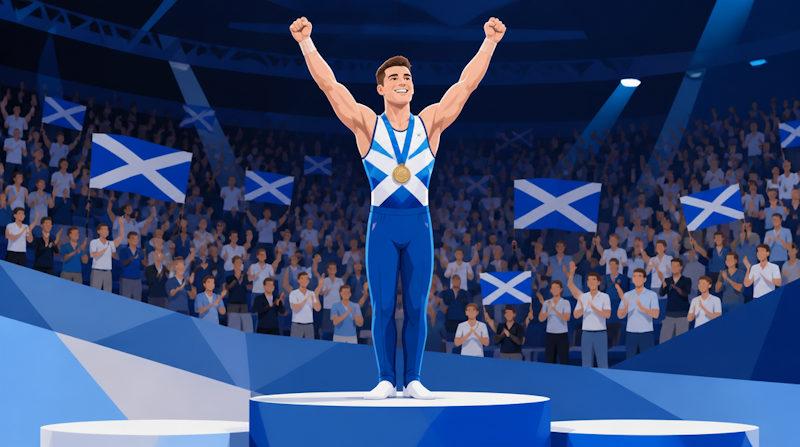
At Glasgow 2026, pommel specialist Reuben Ward became Scotland's first Commonwealth all-around champion, edging Felix Dolci by 0.200 in a tight D-score battle.
Note: This article reflects information as of July 28, 2026.
The men's individual all-around final at the 2026 Commonwealth Games took place on July 26 at the Glasgow International Arena (part of the Emirates Arena complex). Roared on by a home crowd, Scotland's Reuben Ward won gold with a total of 79.650, b
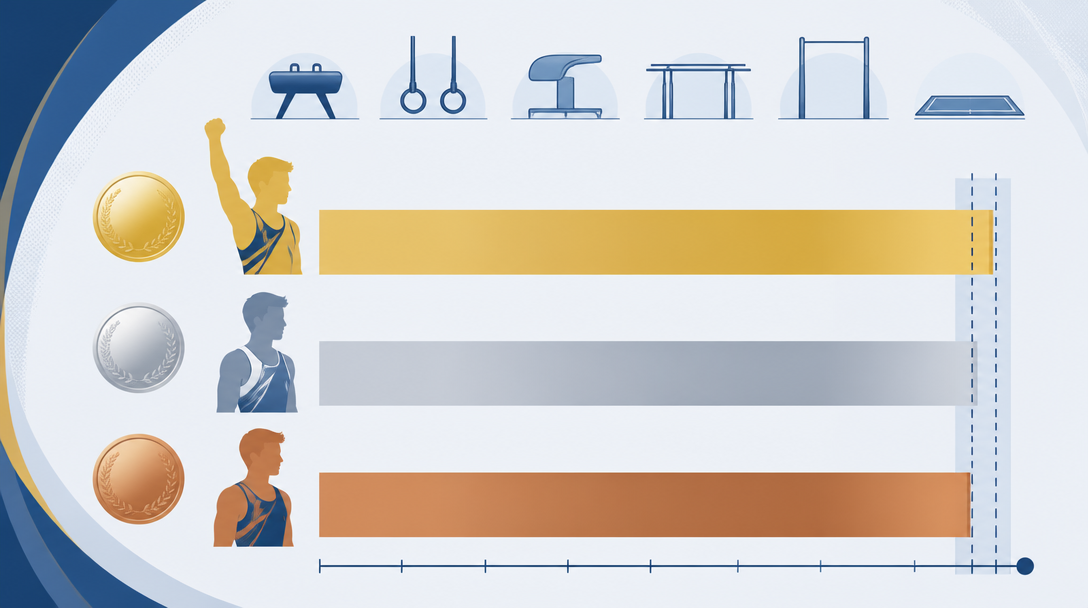
ecoming the first Scottish gymnast, man or woman, to claim a Commonwealth all-around title. He edged Canada's Felix Dolci by just 0.200. This article breaks down that result through the lens of the D-score (difficulty) and execution stability, from the perspective of a former gymnast and D-score app developer.
Men's All-Around Results at the 2026 Commonwealth Games
When, where, and what happened
Ward qualified third but held his nerve across all six events, sealing victory with a 12.700 on his final high bar routine. Olympics.com reported it as a historic coronation in front of a packed home arena.
The 21-year-old was born in Bury, England, but competes for Scotland through his parents from East Kilbride. According to The Scotsman, pommel horse is his favourite apparatus, and he is the reigning British pommel champion.
If you want to explore how routine composition affects the D-score, the Gymnastics AI D-Score Calculator is a handy tool. Built on the FIG 2025–2028 Code of Points with a database of 790+ skills, it lets you assemble routines and see difficulty values instantly.
The all-around podium
The top three totals were tightly bunched around 80 points.
Medal | Gymnast | Nation | Total |
|---|---|---|---|
Gold | Reuben Ward 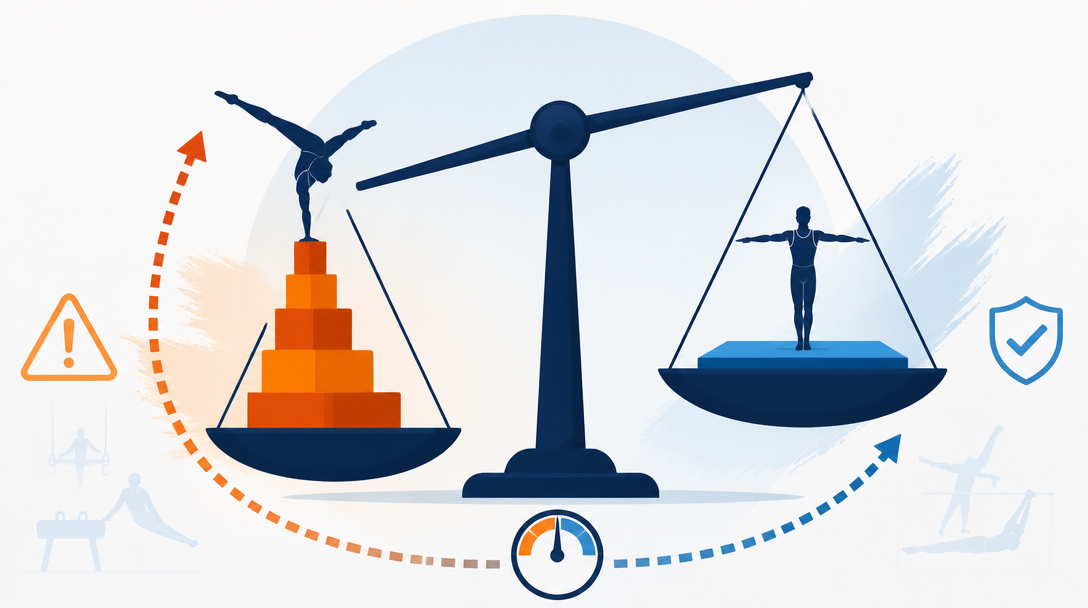 | Scotland | 79.650 |
Silver | Felix Dolci | Canada | 79.450 |
Bronze | Jesse Moore | Australia | 79.000 |
Full results are available via Gymnastics Now. In the women's all-around, Canada's Ellie Black won with 53.050 for her second Commonwealth title after 2018.
A dress rehearsal for the Rotterdam World Championships
Glasgow 2026 doubled as a warm-up for the World Championships in Rotterdam (October 17–25, 2026). For Commonwealth powers like Canada, England, Australia and Scotland, it offered rare competitive reps against strong rivals. The team final is covered in our article on Canada's first team gold in 20 years.
Why Ward Won: A D-Score and Consistency Perspective
What it means for a pommel specialist to win the all-around
The all-around demands one gymnast perform all six events and combine the scores. It is rarely easy for a single-apparatus specialist to win it, because Ward's signature event—pommel horse—carries high fall risk and large score variance. The mechanics of pommel work are explained in our article on pommel horse circle technique.
Ward triumphed by banking a strong pommel horse (14.100) while avoiding disaster on vault (14.050) and parallel bars (13.650). Not leaning on any single event, and simply not throwing scores away, is the golden rule of the all-around.
Reading the routine from apparatus scores
Ward's key reported apparatus scores were:
- Pommel horse: 14.100 (banking points on his best event)
- Vault: 14.050
- Parallel bars: 13.650
- High bar: 12.700 (holding on to seal the win)
He posted few standout marks but stacked high-13s and 14s across the board—a balanced profile. Glasgow 2026 credited his unbroken focus as the key to victory.
A comeback from third in qualification
Ward had qualified third. Building his total event by event and topping the standings after the final high bar rotation was an all-around comeback in the truest sense—qualification rank matters far less than delivering in the final.
The 0.200 Margin: Difficulty vs. Execution Risk
What Dolci's two pommel falls (9.500) reveal
Silver medalist Dolci is a genuinely strong all-arounder, but two falls on pommel horse sank him to 9.500. Per Gymnastics Now, he roared back with 14.500 on high bar but could not fully recover, finishing 0.200 behind. Just 0.3 more on pommel would have flipped the result.
To test how routine choices change the D-score, try the Gymnastics AI app: pick and arrange skills, and it auto-calculates difficulty, group requirements and connection bonuses so you can see exactly how much each skill adds.
Balancing D-score and E-score
A gymnastics score combines the D-score (difficulty value) and the E-score (execution). The fundamentals are covered in our Code of Points primer.
Raising the D-score lifts your ceiling, but harder skills mean higher fall risk and bigger execution deductions. Dolci's pommel horse is a textbook case: when a high-difficulty plan misfires, a safer, cleaner rival can overtake you.
The all-around rewards six-event totality
This 0.200 margin came down not to a single sky-high D-score but to who stayed steady across all six pieces. As the Wikipedia event overview shows, the top three finished within 0.650 of each other—an exceptionally tight race.
Canada and the Home Nations Shine in Event Finals
Men's apparatus medal snapshot
Canada and the host gymnasts dominated the apparatus finals that followed. Confirmed men's gold medalists include:
Event | Gold | Score |
|---|---|---|
Floor | Luke Whitehouse (England) | 14.566 |
Pommel Horse | Jordan Carroll (Canada) | 15.000 |
Rings | Felix Dolci (Canada) | 13.766 |
Vault | Felix Dolci (Canada) | 13.766 |
TNT Sports called Whitehouse's floor gold "dominant." A full breakdown is available at Gymnastics Now's results hub.
Two Scots on the pommel horse podium
In the pommel final, Carroll (Canada) took gold with 15.000, Ward silver with 14.966, and Cameron Lynn (Scotland) bronze. Olympics.com reported it was the first time in Commonwealth artistic gymnastics history that two Scots shared the same apparatus podium—proof Ward's all-around pommel strength was no fluke.
For Japanese Readers: The Essence of the All-Around and What It Signals for Rotterdam
The "totality" Japan has long cultivated
Japan is not a Commonwealth nation and did not compete, but the result resonates for Japanese fans. Japanese men, from Kohei Uchimura to Daiki Hashimoto, have built their identity on all-around totality—delivering all six events at a high level. Ward's lesson that "the one who doesn't collapse wins" is precisely Japan's traditional strength.
Looking ahead to Worlds 2026
The real target is the Rotterdam World Championships in October. Japan's five-man squad and D-score outlook are covered in our article on Japan's men's team for Worlds 2026. See also our Commonwealth men's gymnastics preview for the wider outlook.
Summary
- Reuben Ward won the 2026 Commonwealth men's all-around with 79.650—Scotland's first ever all-around title.
- He beat Canada's Dolci by 0.200; Dolci's two pommel falls (9.500) proved decisive despite a 14.500 on high bar.
- The result hinged on six-event consistency, not a single towering D-score.
- Canada and the home Scots shone in event finals, including two Scots on the pommel podium.
- The real test is October's Rotterdam Worlds; the all-around rewards exactly the steady totality Japan has long mastered.
To simulate D-scores yourself, try the Gymnastics AI app—FIG 2025–2028 compliant, free on iOS and Android.