How to Write a Bassline: Root Notes, Chord Tones & Groove
How to write a bassline from root notes to chord tones: lock the groove to the kick, add ghost notes and octaves, and mix a tight, punchy low end.
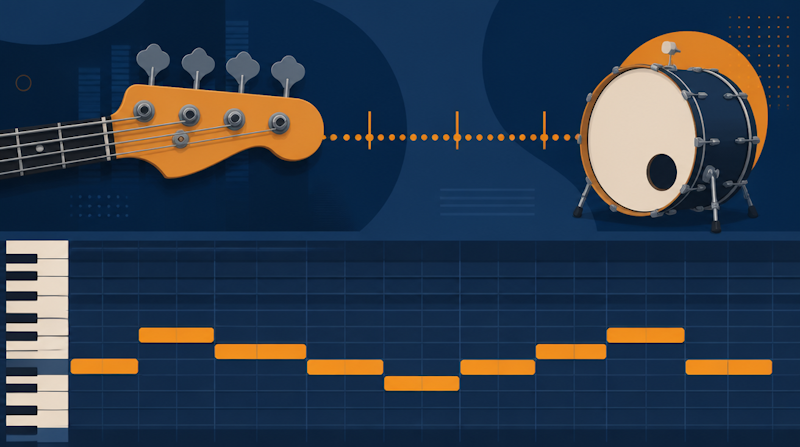
Writing a bassline starts with one simple idea: play the root note of each chord. Once that low-end foundation locks into both the harmony and the rhythm, the whole track suddenly feels tighter and more coherent. Th
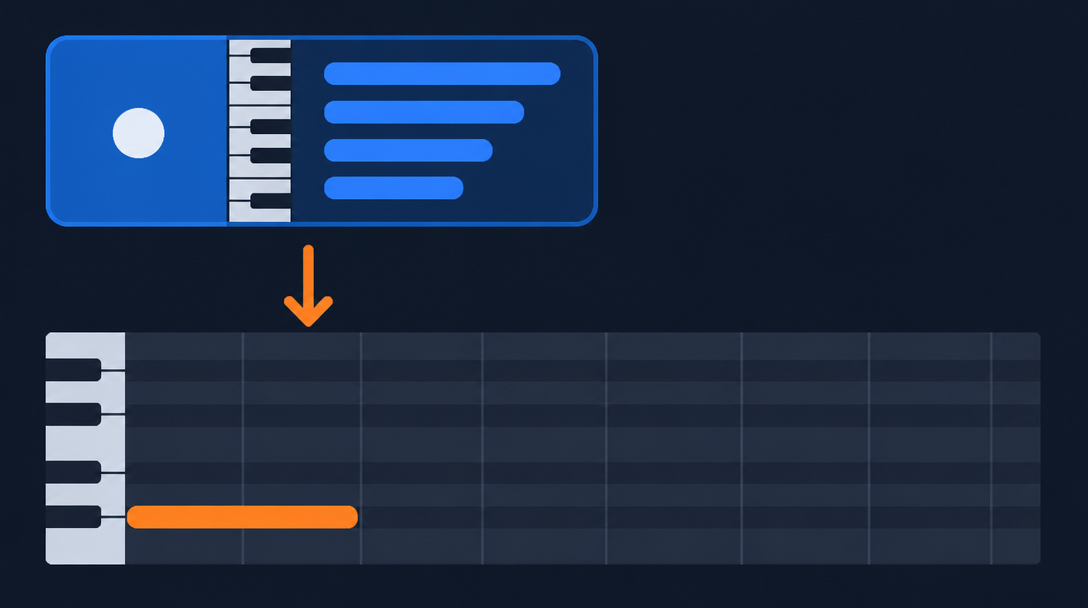
is guide walks through how to write a bassline from root notes to chord tones, how to groove with the kick drum, practical programming techniques, and mixing tips so your bass never gets buried.
Bassline Basics: Start With Root Notes
The first thing to master when writing a bassline is anchoring it to the root note of each chord. The root is the lowest reference tone of a chord and defines its harmonic character.
Root Notes Are the Starting Point
If the chord is C (C-E-G), the root is C; if it is Am (A-C-E), the root is A. Simply playing the root of each chord in sequence already gives you a working bassline. As Native Instruments explains, the first step in bassline writing is following the roots of the chord progression.
Begin with one root per bar, or steady quarter notes, so you can hear how the bass supports the harmony without disturbing the skeleton of the progression. For the harmony side of things, see our guide to chord progressions.
The 80/20 Rule Keeps It Simpl e
Many bass players follow an "80/20 rule": spend 80 percent of your time on root notes and fundamental grooves, and 20 percent on fills and melodic variation. Supporting the track matters more than showing off.
- Place the root firmly at the start of each chord
- Keep decorative motion to roughly 20 percent of the line
- Start with a 4-bar phrase, then expand to 8 bars
Why Root Notes Alone Work
When the bass plays the root, it clarifies the reference point for the chords and melody above it. Listeners track harmonic changes through the low end, so a correctly placed root already stabilizes the music. Everything else builds on top of that.
Adding Color With Chord Tones
Once root playing feels comfortable, bring in chord tones to give the line personality while keeping it tied to the harmony.
The Role of Thirds, Fifths and Sevenths
After the root, the third and fifth are the most common notes. According to Mastering.com, the third defines whether the chord is major or minor, while the fifth reinforces stability. Adding the seventh brings a more sophisticated, jazzy flavor
.
Interval | Role | Character |
|---|---|---|
Root (1st) | Foundation / reference | Stable, classic |
3rd | Major vs. minor | Bright or wistful |
5th | Reinforces the sound | Powerful, solid |
7th | Adds color | Sophisticated, floating |
Arpeggios Outline the Chord
Playing chord tones in sequence—an arpeggio—is a classic way to add motion. Try root, fifth, octave root, third to move melodically while staying inside the harmony.
Passing Notes Connect Chords Smoothly
Passing notes act as stepping stones between chords. MusicRadar describes walking up or down the scale toward the next root so the progression flows. Placing chromatic passing notes on weak beats smooths the connection even further.
If you produce in a DAW, your choice of software matters too—see our DAW buying guide.
Rhythm and Groove: The Kick Relationship
A bassline lives or dies by its rhythm, and nothing matters more than its relationship with the kick drum.
Kick and Bass Work as a Team
The kick and bass share the low end and complement each other. In MusicRadar's beat programming guide, the guiding principle is that "the bass should follow the kick," ranging from hitting together to weaving around each other. The kick supplies accent and attack; the bass supplies melody and sustain.
Three Ways They Lock Together
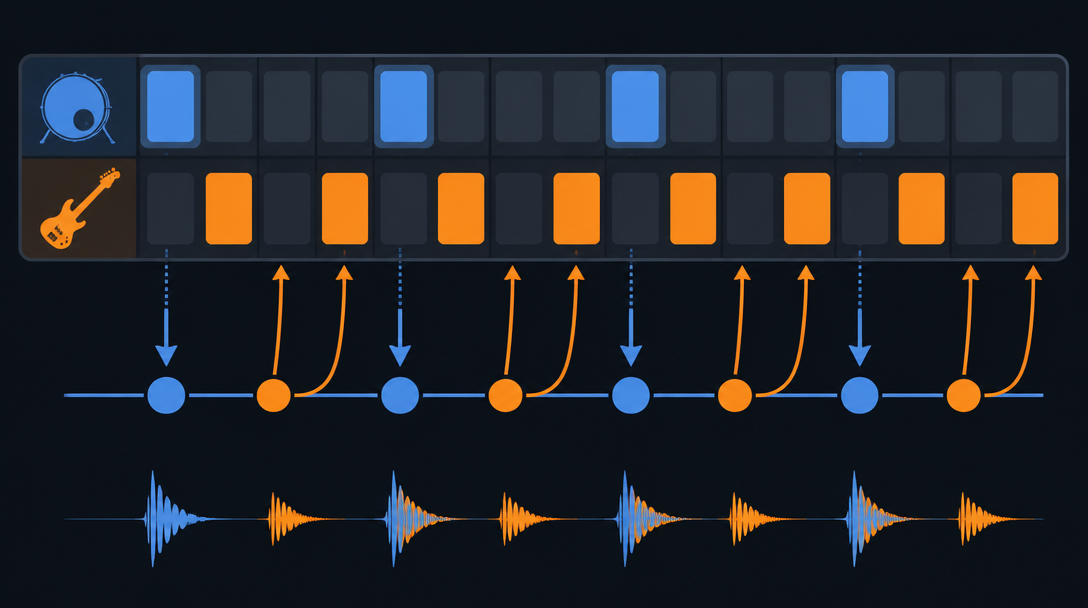
- Synchronized: place bass notes on every kick for a tight, punchy low end
- Complementary: fill the gaps where the kick is silent to keep the low end moving
- Offbeat: a four-on-the-floor staple—put the bass on the offbeats between kicks for a danceable sway
Which pattern fits depends on genre and the groove you want. Map the kick pattern first, then design how the bass weaves around it. See our beatmaking guide for drum programming.
Use Syncopation to Avoid Monotony
Copying the kick exactly is stable but dull. Native Instruments suggests syncopation—using dotted eighths and pushing off the strong beat—to add tension and keep the line fresh.
Programming Groove in the DAW
Notes placed evenly on the piano roll sound stiff and robotic. A few tweaks bring your programmed bass closer to a real performance.
Shape Dynamics With Velocity and Note Length
Don't set every note to the same velocity. Accent important notes and soften connecting notes, and vary note length—short for bouncy parts, longer for sustaining ones.
- Raise velocity on downbeats and chord changes
- Lower velocity on offbeat connecting notes
- Alternate legato and staccato phrasing
Ghost Notes for a Bouncing 16th Feel
Ghost notes are near-inaudible decorations. As MusicRadar notes, they should be clearly lower in velocity and duller in tone, driving the groove forward—especially in funk and bouncy 16th-note tracks.
Octaves and Swing for Momentum
Jumping between the root and the octave above is a danceable staple in disco and house. Add a touch of swing by nudging the grid off the straight timing, and the line gains a human sense of push and pull.
Genre Approaches to Basslines
Different genres emphasize different priorities. Match the role of the bass to the style you're after.
Rock and Pop: Solid Root-Based Lines
Rock and pop favor dependable root-based lines. LiveAbout lists root-centered lines as the most versatile type—supporting the chords without crowding vocals or guitar.
Funk and R&B: Syncopation and Ghost Notes
Funk and R&B thrive on syncopation, ghost notes and rests. Within a busy 16th-note grid, the contrast between where you play and where you rest creates the groove.
Jazz: Walking Bass
Jazz's signature approach is the walking bass—steady quarter notes that combine chord tones and passing notes to "walk" toward the next chord, marking time with a swing feel.
EDM and Dance: Locked to Four-on-the-Floor
In house and trance, the kick relationship is decisive. Offbeat bass placement and sidechaining the bass to duck under the kick are standard. See our sidechain compression guide for the details.
Mixing Tips So the Bass Isn't Buried
Even a great bassline turns muddy if it clashes with the kick. Here's how to keep the low end tight.
Carve the Low End With EQ
Most kick-and-bass action happens between 60 and 250 Hz. Sonarworks notes that below 60 Hz is sub bass and above 250 Hz is harmonics, and the two compete in this range. Boost the kick around 50 Hz and dip 100-250 Hz, then do the opposite on the bass. Our mixing guide covers EQ basics.
Sidechain to Make Room for the Kick
Sidechain compression briefly ducks the bass whenever the kick hits, avoiding low-end collisions. Mastering The Mix highlights it as a go-to method for marrying kick and bass—managing them in time rather than clashing frequencies.
Keep the Low End in Mono
Keep everything below about 120 Hz in mono. Armada Music explains that mono low end avoids phase issues and preserves punch and translation across systems.
To shape the bass tone itself, understanding synthesis speeds things up—see our synthesis basics. You can also study real mixes such as Daito's released tracks to train your ear for low-end balance.
Summary
Writing a bassline means locking the foundation first, then layering color and groove. Key takeaways:
- Start with root notes and keep it simple via the 80/20 rule
- Add chord tones—thirds, fifths, sevenths, arpeggios and passing notes
- Lock to the kick using synchronized, complementary or offbeat patterns
- Humanize your programming with velocity, ghost notes, octaves and swing
- Clean the mix with EQ separation, sidechain and mono low end
Begin with the humble root note and gradually build motion and groove, and you'll have a bassline that truly supports the song. Try lining up roots under a chord progression you already have.