Financial Planning for Athletes: Money & Investing Basics
A practical guide to money management for athletes with variable income: emergency funds, Japan's NISA and iDeCo, the order to invest, and mistakes to avoid.

Financial planning for athletes works differently from a typical salaried worker. Income swings year to year and event to event, the competitive career is short, and a gap in earnings often follows retirement. That is exactly why athletes need to le
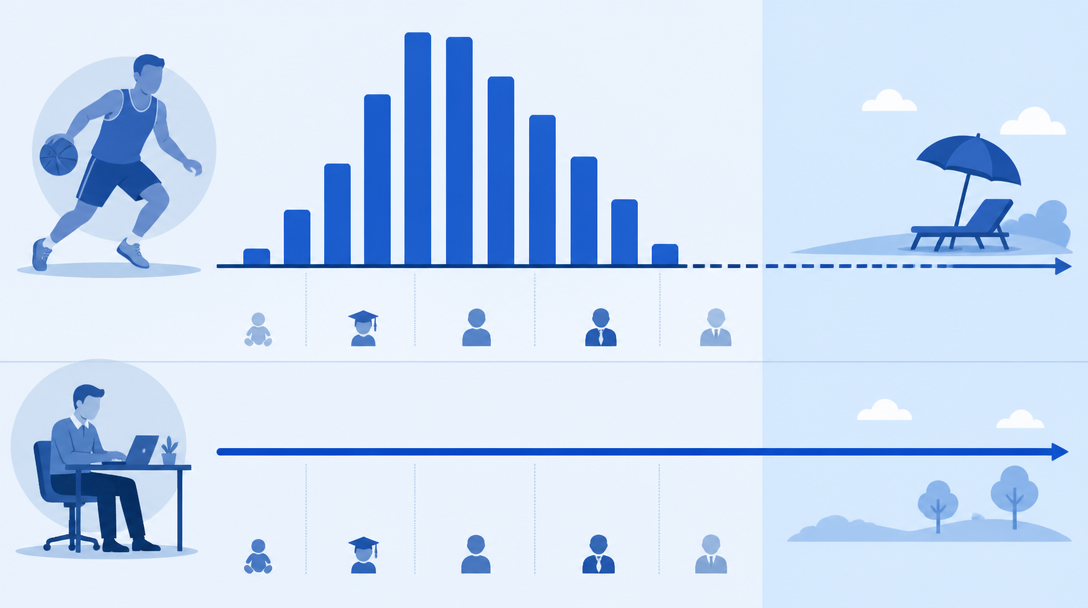
arn the basics of money management and investing early, and build both a defensive base and a long-term plan while still competing. This guide walks through the steps in order: from an emergency fund to Japan's new NISA and iDeCo, and the pitfalls to avoid, all grounded in official sources.
Why Athletes Cannot Skip Financial Planning
Financial planning is not something only wealthy people do. The less stable your income, the sooner you should start. Athletes have an unusual income structure that makes preparation more urgent than average.
Variable income and a short career
Sponsorship fees, prize money, and appearance fees depend on results and contract renewals, so last year's income is no guarantee for this year. A single injury, a lost final, or a sponsor deciding not to renew can cut your annual income sharply, often with little warning. In many sports, the window to compete at the top lasts only a few years to a little over a decade. You ca
nnot assume a stable salary until a fixed retirement age, so it is essential to set aside future funds during your high-earning years rather than treating a good season as your new normal. Think of a strong year as funding several ordinary ones, not as permission to raise your baseline spending.
Second careers and the post-retirement gap
Income often stops abruptly at retirement, and a gap can appear before the next career takes off. Japan's Sports Agency actively promotes career support that connects an athlete's active years with life after retirement, as outlined in its Sports Career Support Strategy. Financially, you need to plan for this gap in advance.
The dual-career mindset
Preparing a post-retirement career and assets while still competing is known as a "dual career." The Sports Agency's public-relations magazine explains that starting during the active years lets athletes focus on competition with peace of mind, which can even improve performance. Asset building is the foundation of this dual career and expands your options after retirement. For turning athletic experience into a career, see our article on designing an athlete's second career.
The Big Picture and the Basics of Money Management
Before investing, get the foundation of money management in place. Starting to invest without control over your cash flow means you cannot keep it up when life gets shaky.
Make your household finances visible
The first step is to know your monthly income and spending precisely. Athletes with variable income tend to inflate their lifestyle to match a good month, which strains the budget when income drops. Set your baseline living costs on an average, conservative month, and track fixed and variable expenses separately using a budgeting app. Fixed costs such as rent, insurance, and subscriptions are where lifestyle inflation quietly locks in, because they are hard to cut once raised. Reviewing them once or twice a year, and keeping your fixed costs low relative to a normal month's income, gives you far more room to weather a lean season without touching investments.
Split income into three purposes
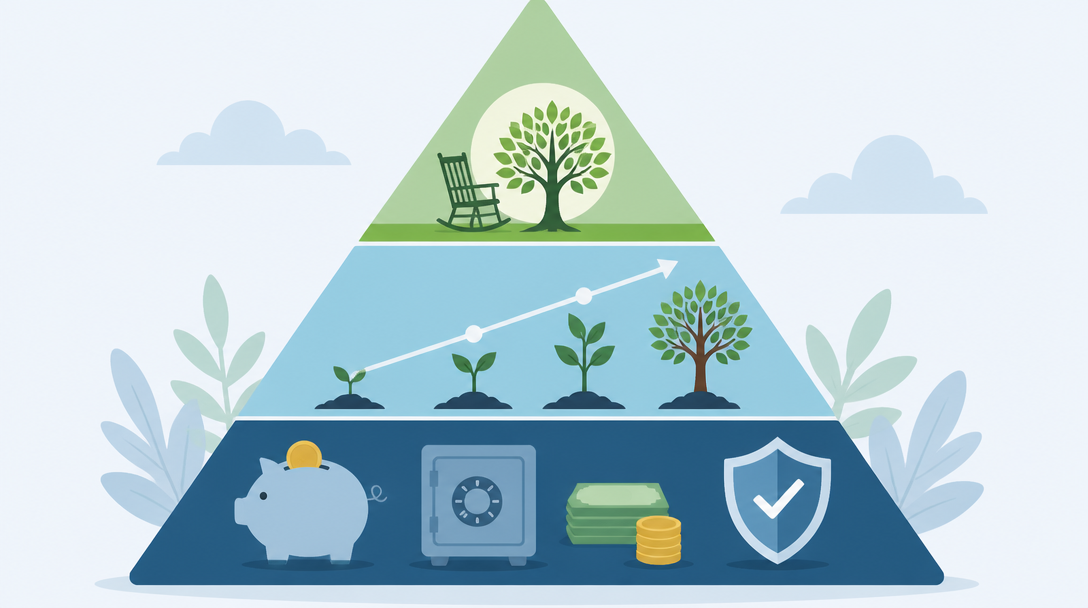
Money is easier to manage when you divide it by purpose. Keeping these three buckets in mind makes planning more resilient.
- Money to spend: daily living and training costs, kept in a spending account.
- Money to protect: your emergency fund and near-term planned expenses, held in easily accessible deposits.
- Money to grow: surplus you will not touch for a while, invested for the long term via NISA or iDeCo.
Automate a "pay yourself first" system
"Save and invest whatever is left" leaves nothing in a lean year. Set aside money to protect and money to grow first, the moment income arrives. Use automatic transfers and automatic investing so you do not rely on willpower. For managing and filing sponsor and prize income, see our detailed guide on tax filing for athletes.
The Emergency Fund: Build Your Defense First
Before investing, set up an emergency fund for the unexpected. Without it, a break in income forces you to sell investments at the worst possible time.
How much you need (athletes should hold more)
A common guideline for an emergency fund is three to six months of living expenses. However, freelancers and the self-employed lack the employee safety nets of unemployment and sickness benefits, so a Japanese bank's explainer suggests holding at least one year of expenses to be safe. Athletes face income swings and injury risk, so this heavier cushion applies to them too.
Type | Income & safety nets | Emergency fund guide |
|---|---|---|
Salaried employee | Unemployment & sickness benefits | 3-6 months of expenses |
Freelance / self-employed | No unemployment or sickness benefit | 1 year or more of expenses |
Pro / self-employed athlete | Large income swings, injury risk | Hold heavily, 1 year or more |
Where to keep it
An emergency fund is not money to grow; being able to withdraw it anytime comes first. Keep it in safe, liquid places such as ordinary or time deposits, not in investments that fluctuate. Separate it from your everyday payment account to avoid spending it by accident.
Dividing roles with insurance
An emergency fund covers short-term income drops and sudden costs; insurance covers large losses and long-term inability to work. Income-protection insurance can be an option for long injuries, but avoid over-insuring and straining your budget. Cover only what public benefits and savings cannot. Diversifying income sources also helps; see our guide on side and multiple careers for athletes.
NISA Basics: Start Investing Tax-Free
Once your defense is set, consider Japan's new NISA to grow money tax-free. The new system that began in 2024 is far more usable than before.
Annual limit and lifetime tax-free cap
According to Japan's Financial Services Agency NISA website, the new NISA that started in January 2024 raised the annual investment allowance to up to 3.6 million yen and the lifetime tax-free holding limit to 18 million yen. The tax-free holding period is now indefinite, making it well suited to long-term asset building. SMBC's Money VIVA also lays out these limits in detail.
The tsumitate and growth investment frames
The annual 3.6 million yen consists of two frames. Understand the basic distinction.
Frame | Annual limit | Main targets |
|---|---|---|
Tsumitate (accumulation) | 1.2 million yen | Funds suited to long-term, regular, diversified investing |
Growth investment | 2.4 million yen | Listed stocks and funds (up to 12 million of the lifetime cap) |
As Rakuten Securities explains, of the 18-million-yen lifetime cap, up to 12 million yen can be used in the growth frame.
Long-term, regular, and diversified
To make the most of the tax break, sticking to long-term, regular, diversified investing tends to be more reliable than chasing short-term gains. Japan's Central Council for Financial Services Information (Shiruporuto) also introduces the idea of spreading purchases over time so that you buy at many different prices rather than betting everything on one entry point. Athletes with variable income can use more of the frame in high-earning years while continuing modest regular investing in leaner ones, which keeps the habit alive without straining cash flow. Note that tax-free does not mean principal-guaranteed; the value can fall as well as rise, and only money you will not need for several years belongs here.
iDeCo Basics: Retirement Funds and Tax Benefits
The other pillar is iDeCo, Japan's personal defined-contribution pension. It targets retirement funds with strong tax benefits, but in principle you cannot withdraw until age 60.
Contribution limits and recent reforms
iDeCo contribution limits differ by occupation and pension coverage. According to Japan's Government Public Relations Online, a December 2024 reform raised the limit for company employees and public servants enrolled in defined-benefit plans. Expansions of the eligible age and higher limits are also being phased in. Check your own category on the official iDeCo site.
Category | Example monthly limit |
|---|---|
Self-employed / freelance | 68,000 yen combined with national pension fund |
Employee (no corporate pension) | 23,000 yen |
Employee / public servant (other plans) | Up to 20,000 yen after the Dec 2024 reform (combined cap applies) |
Tax benefits and withdrawal limits
iDeCo's big advantage is that contributions are fully deductible from income, gains are tax-free, and there are deductions at payout too. SMBC's explainer highlights the tax savings from the income deduction. On the other hand, you cannot withdraw before age 60 in principle, so do not park money there that you may need during your active career. Decide contributions using only "money you will not touch until retirement."
Using NISA and iDeCo together
NISA can be withdrawn anytime and adapts to life changes; iDeCo excels at securing retirement funds and cutting taxes. A workable order for athletes with variable income is: secure an emergency fund first, then the more liquid NISA, and finally iDeCo with money you will not touch until old age. To learn accounting and tax basics systematically, our article on business basics athletes should learn is useful.
The Right Order for an Athlete's Money Plan
Knowing the systems is not enough; the wrong order collapses the foundation. Set priorities on the premise of variable income and a short career.
What to do while competing
High-earning years are your best chance to set aside future funds. This order keeps defense and offense balanced.
- Make finances visible and set a conservative baseline for living costs
- Secure an emergency fund (aim for one year or more of expenses) in a dedicated account
- Start long-term, regular, diversified investing via NISA
- Use iDeCo with money you will not touch until retirement
- Build multiple income sources and prepare a second career in parallel
Smoothing out variable income
Do not spend everything in a big year; set aside funds for next year's living costs and taxes. Prize money and sponsor income affect the next year's taxes and social insurance, so do not mistake the deposited amount for money you can freely spend. For building sponsor relationships and stabilizing income, see our practical guide to winning sponsors.
Tax filing and incorporation
Athletes who operate as individuals often need to file taxes, and understanding expenses and deductions shapes your take-home pay. As income grows, incorporation may become an option, but that decision needs professional input. Confirm tax details with Japan's National Tax Agency or a tax accountant before proceeding.
Mistakes to Avoid: Protecting Your Assets
Financial planning is as much about not losing money as growing it. Athletes who receive a lump sum are frequent targets of solicitation, so caution is warranted.
Sweet deals and "guaranteed principal"
"Guaranteed principal with high returns" or "sure to profit" essentially do not exist. Japan's FSA also warns about investment fraud, noting that good-sounding stories have a catch. Even when introduced by an acquaintance or using a famous athlete's name, avoid unregistered operators and high-yield claims.
Excess leverage and concentration
Leveraged trading aimed at fast gains, or concentrating in a single stock or property, can pay off big but can also wipe out your entire base if it fails. Borrowing to invest is especially dangerous when your income itself is unstable, because a downturn can hit your earnings and your investments at the same time. The more variable your income, the more a long-term, diversified approach suits you, and the less you should rely on any single bet, tip, or asset to secure your future.
Lending your name and casual guarantees
Lending your name or co-signing a guarantee at a friend's request is a classic trap that can saddle you with unexpected debt. Never sign a contract you do not understand, and always consult an independent professional (a tax accountant or financial planner) before any large contract or investment. That is the final line of defense for your assets.
Summary
An athlete's financial plan should be built defense-first, on the premise of variable income and a short career. The key points:
- Make finances visible, split income into spend/protect/grow, and automate a pay-yourself-first system
- Before investing, secure an emergency fund of at least one year of expenses in a dedicated account
- Grow money via the new NISA (3.6 million/year, 18 million lifetime, indefinite tax-free) with long-term, regular, diversified investing
- Use iDeCo with spare capacity you will not touch until retirement, understanding its tax benefits and withdrawal limits
- Avoid sweet deals, excess leverage, and casual guarantees; consult professionals for big decisions
Rules and taxes can change. Always confirm the latest details with primary sources such as the FSA, the National Tax Agency, and the official iDeCo site, and design a plan that fits your situation.