Athlete Side Hustles & Dual Careers: 7 Business Models
Complete guide for athletes on building side income while competing. Explore dual career concepts, 7 athlete-friendly business models, contract tips, and tax basics.
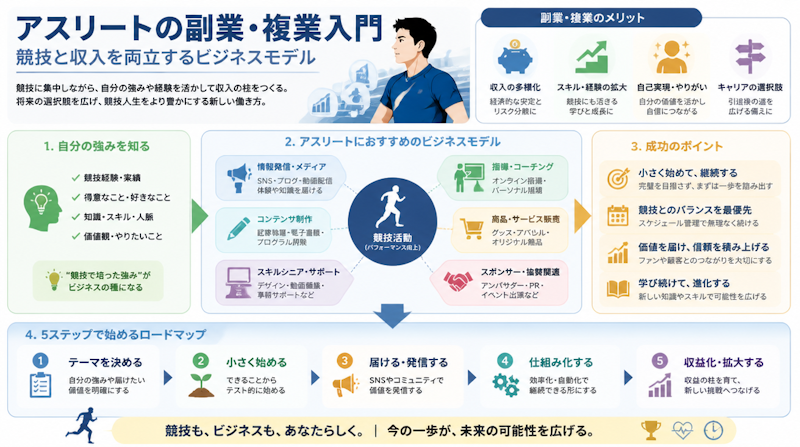
Many athletes pour everything into their sport while quietly worrying about financial stability. Side hustles and portfolio careers aren't just about earning extra money—they're a strategic investment in life after competition. This guide covers everything an athlete needs to know: from the dual career framework championed by sports governing bodies, to seven business models that fit around a training schedule, to tax obligations that come with supplemental income.
What Is a Dual Career? How the Side Hustle Conversation Has Changed
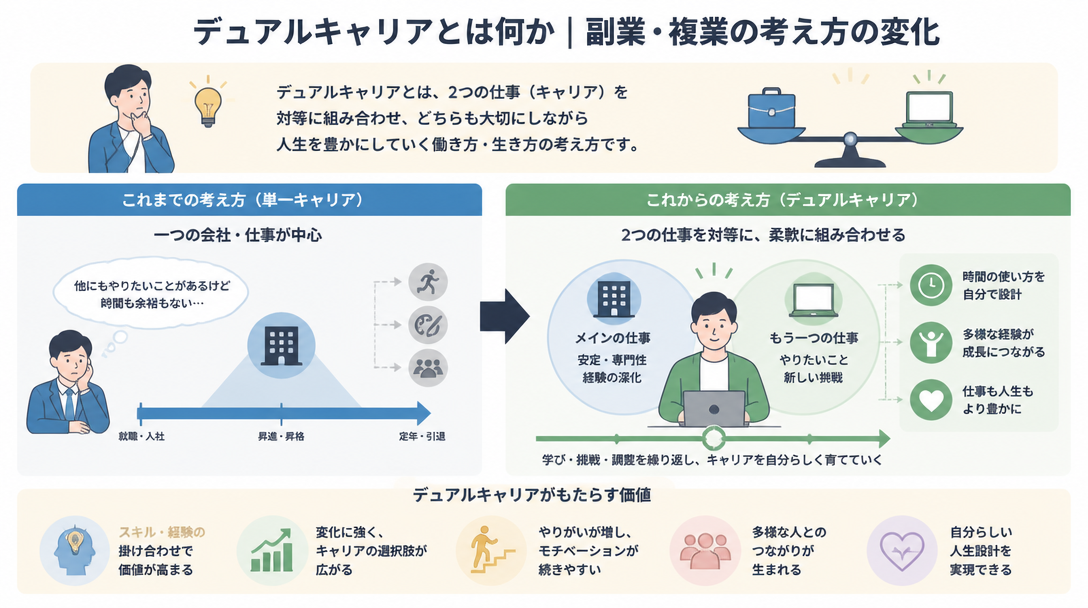
From "Side Job" to Dual Career: A Fundamental Shift in Thinking
For a long time, an athlete's "side job" meant picking up part-time work to cover expenses that prize money or a club salary couldn't. That framing has changed dramatically. Today the conversation centers on the dual career—a model in which athletes deliberately build a professional identity alongside their sport, so that retirement marks the beginning of the next chapter rather than a cliff edge.
A dual career means pursuing sport and a parallel professional or academic track simultaneously, with the goal of sustaining both livelihood and ambition across an entire life—not just the playing years. The concept gained momentum in Europe around 2008 and has since been adopted by sports ministries worldwide. In Japan, the Japan Sports Agency embedded dual career support into its first Basic Plan for Sport, signaling a national commitment to athlete career development. Internationally, governing bodies such as the European Parliament have published dedicated frameworks on dual careers in sport. The takeaway: supplemental work is no longer seen as a distraction from athletic excellence—it's recognized as a tool for it.
Institutional Support for Athlete Career Development
Japan's Sports Agency established the Sports Career Support Consortium in 2017, bringing together government agencies, sport federations, and private companies to support athletes' professional development. By October 2024 the consortium had grown to 121 member organizations, with 118 dedicated Athlete Career Coordinators (ACCs) providing one-on-one guidance. Annual conferences highlight successful dual career case studies, spreading best practices across sports and sectors.
This institutional momentum matters because it signals a shift in cultural norms. When a national sports authority actively encourages athletes to explore business ventures during their competitive years, the stigma around "distraction" fades—and real infrastructure for making it work begins to emerge. Similar support structures exist in many countries: organizations like Athlete Career Institute in the United States and Careers in Sport in the UK offer analogous resources for English-speaking athletes.
Three Core Reasons Athletes Start a Side Hustle
- Income stability: Athletic earnings fluctuate with performance, injury, and sponsorship cycles. A second income stream smooths out those peaks and valleys, reducing financial anxiety that can itself harm performance.
- Seamless career transition: Athletes who accumulate real business experience while competing face far less disruption when they eventually retire. Skills, networks, and a professional reputation built during the playing years translate directly into post-sport opportunities.
- Performance and mindset benefits: Engaging with a professional world outside the training bubble builds resilience, perspective, and social capital—qualities that frequently translate back into stronger competitive performances.
7 Side Hustles That Work for Athletes: Business Models Built Around Training
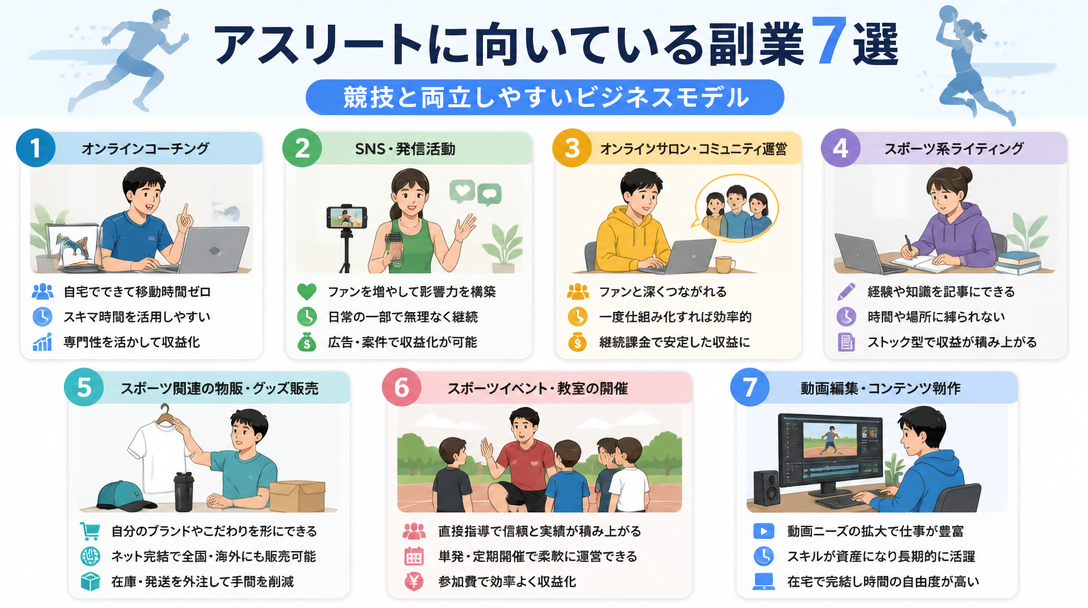
1. Personal Training
Personal training consistently ranks as the most accessible and in-demand side hustle for athletes. Competitive experience and deep training knowledge provide instant credibility that generic fitness professionals spend years trying to establish.
- Earnings: In the United States, personal trainers typically earn between $20–$50+ per hour depending on location, specialization, and whether sessions are conducted in a gym, privately, or online (U.S. Bureau of Labor Statistics).
- Scheduling flexibility: Evening and weekend sessions are the norm, slotting naturally around most training schedules. Online coaching via video call removes location constraints entirely.
- Credentials: Certifications such as the NSCA-CSCS or ACE Personal Trainer significantly increase earning potential and client trust—many athletes already meet the eligibility requirements.
2. Social Media, YouTube, and Content Creation
Athletes possess something most content creators can never buy: authentic, first-hand expertise in high-performance sport. Sharing training insights, recovery protocols, competition preparation, and behind-the-scenes access creates content that resonates with audiences ranging from casual fans to serious amateurs. As a following grows, multiple monetization channels open up—brand partnerships, affiliate commissions, sponsored posts, merchandise, and online courses. For a deeper look at how to build an audience strategically, see the guide on athlete social media and personal branding.
- Revenue streams: Ad revenue, brand sponsorships, affiliate marketing, digital products, paid memberships
- Competitive advantage: Primary-source credibility from lived experience is a genuine differentiator in a crowded content landscape
- Key caution: Review sponsorship and club contracts carefully before posting commercial content—more on this in the contract section below
3. Web Development and Programming
Web development is one of the most schedule-agnostic side hustles available. The work is asynchronous, location-independent, and can be picked up and set down around training blocks. Coding skills can be learned independently through structured online resources, and freelance platforms provide a direct pipeline to paying clients.
- Earnings: Freelance web developers in the U.S. typically earn $30–$80+ per hour, with rates climbing sharply as specialization and portfolio depth increase (Upwork)
- Getting started: Free and low-cost platforms like freeCodeCamp, The Odin Project, and Codecademy offer structured curricula. Freelance marketplaces such as Upwork and Fiverr are natural starting points for landing initial clients
- Timeline: Plan for 3–6 months to build foundational skills, and 6–12 months to land consistent freelance work
4. Video Editing and Media Production
Demand for video content from sports organizations, brands, individual athletes, and YouTubers continues to accelerate. Athletes who can edit compelling sports footage bring a contextual understanding of pacing, highlight moments, and storytelling that outside editors struggle to replicate.
- Earnings: Freelance video editors typically charge $25–$75+ per hour in U.S. markets, with experienced editors earning significantly more on project-based work
- Tools: Adobe Premiere Pro is the industry standard; DaVinci Resolve offers a powerful free version that is more than adequate for most freelance work
- Long-term potential: Established editors frequently operate as independent contractors with multiple ongoing clients, providing relatively stable monthly income
5. Writing and Content Strategy
Sports media, health and wellness publishers, fitness brands, and athletic equipment companies all need writers who actually understand what they're writing about. An athlete contributing expert commentary, training guides, or competition breakdowns brings a level of authenticity that generic freelance writers simply cannot offer. The barrier to entry is low, the work is location-independent, and rates climb steadily with a growing portfolio.
- Earnings: Entry-level freelance rates typically range from $0.05–$0.15 per word, with experienced specialist writers commanding $0.25–$1.00+ per word for high-quality publications
- Getting started: Freelance platforms like Upwork and direct pitches to sports publications are both viable entry points; building a personal blog first creates a portfolio that demonstrates voice and expertise
6. Youth Coaching and Sports Instruction
Working with youth athletes—through club sports, school programs, camps, or private instruction—is a natural extension of competitive experience. Beyond the income, coaching builds leadership, communication, and teaching skills that transfer broadly into business contexts. It is also, for many athletes, inherently meaningful work.
- Earnings: Youth sports coaches and instructors typically earn $15–$40+ per hour depending on sport, level, and format (BLS)
- Scheduling: After-school and weekend programs align well with most competitive training schedules, particularly outside of peak competition periods
- Pathway value: Coaching experience provides a direct route toward professional coaching credentials—a well-documented second-career trajectory for retiring athletes
7. Dual Career and Freelance Platforms
A growing ecosystem of platforms specifically matches athletes with business opportunities designed to accommodate competitive schedules. These range from general freelance marketplaces to sport-specific programs run by professional leagues and associations. Athletes have used these platforms to contribute to product development, marketing, technology projects, and more—gaining genuine corporate experience while still competing full-time. Reported case studies include professional soccer players completing technology projects within five months of being matched with a partner company.
In the English-speaking world, platforms like LinkedIn (filtered for part-time or contract roles), Toptal for technical specialists, and sport-specific career networks through national Olympic committees are worth exploring. Several professional leagues in the NFL, NBA, and Premier League now operate formal player development programs that include business internship components.
Choosing the Right Side Hustle: A Business Model Map by Athletic Lifestyle
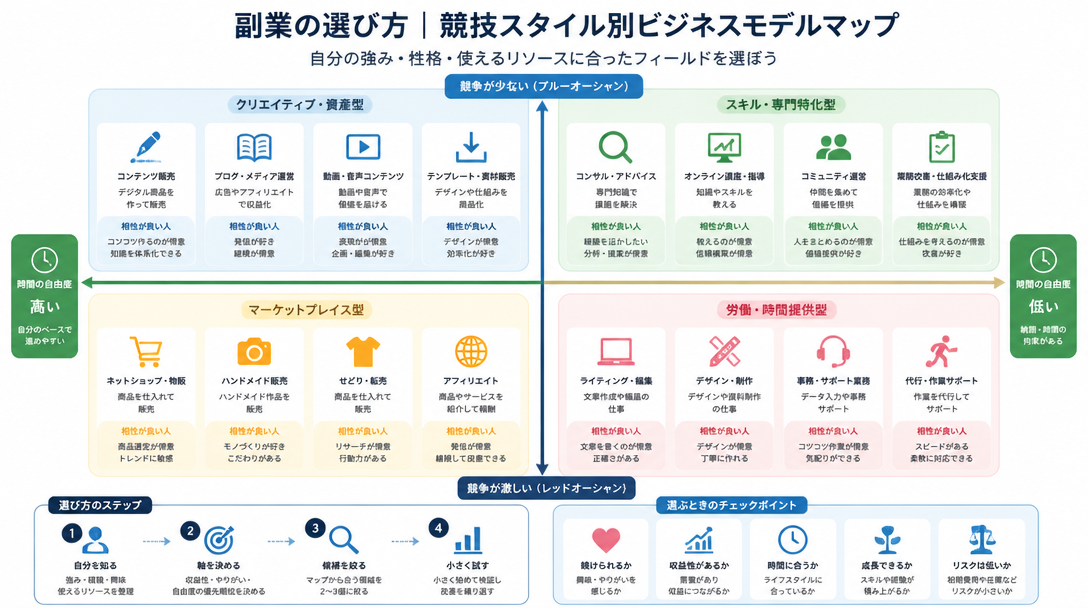
Working Backward from the Training Schedule
The most important variable in choosing a side hustle is compatibility with the competitive calendar—not income potential. The following matrix maps athlete profiles to appropriate options.
Athlete Profile | Best-Fit Side Hustles | Recommended Weekly Hours |
|---|---|---|
Professional / full-time club athlete (heavy schedule) | Blogging, social media content, freelance writing | 5–10 hours |
Student athlete (weekday practice commitments) | Web development, video editing, social media | 10–15 hours |
Amateur / recreational athlete (weekend competition focus) | Personal training, youth coaching | 15–20 hours |
Self-managed / independent athlete | All categories; dual career platforms recommended | 20–30 hours |
Three Revenue Models: Which Fits Your Goals?
Side hustles fall into three broad economic categories. Understanding which model aligns with personal strengths and career goals clarifies the decision considerably.
- Time-for-money: Personal training, coaching, and hourly consulting exchange time directly for income. Revenue is predictable and immediate but scales with available hours—a natural ceiling for full-time athletes.
- Skill-based services: Web development, video editing, and writing allow for increasing rates as skills and reputation grow. Income scales with expertise rather than raw time, making this model more sustainable long-term.
- Asset-building: Blogs, YouTube channels, and social media followings require the most upfront investment of time before generating meaningful income. But unlike the other models, they continue producing revenue even when the athlete isn't actively working—creating genuine financial assets that appreciate over time.
Step-by-Step: How to Launch an Athlete Side Hustle
Step 1: Review Contracts Before Doing Anything Else
This step is non-negotiable and must come before any public-facing activity. Professional athletes, national squad members, and athletes holding commercial sponsorships frequently have contractual obligations that restrict outside work, commercial appearances, or endorsements. Violating these provisions—even inadvertently—can jeopardize not just the commercial relationship but the sporting one.
- Read the employment agreement or athlete contract in full, specifically sections covering outside employment, moonlighting, and intellectual property
- Review any sponsorship contracts for exclusivity clauses that prohibit promotion of competing brands or industries
- For ambiguous situations, seek written clarification from the club or federation's administrative contact, or consult a sports lawyer before proceeding
Step 2: Start Small and Monitor the Impact
The strongest predictor of long-term success in an athlete side hustle is not aggressive income targets—it's a disciplined, conservative start. Beginning with 5–10 hours per week creates space to evaluate how the added workload affects training quality, recovery, and competitive performance before any irreversible commitments are made.
- Treat the first three months as a pilot: the primary question is whether competition performance is maintained, not whether income targets are met
- Keep a simple log tracking hours worked, earnings, energy levels, and training quality week by week
- Use the off-season or pre-season periods to launch new initiatives, then stabilize into maintenance mode during competition blocks
Step 3: Use Platforms and Networks to Find Work
Athletes rarely need to cold-start from zero. A range of platforms and networks exist specifically to connect people with credible expertise—including competitive athletes—to paying opportunities.
- General freelance marketplaces: Upwork and Fiverr cover writing, web development, video editing, and more
- Athlete-specific career platforms: National Olympic committee career programs, professional league development offices, and sport-focused LinkedIn communities
- Dual career matchmakers: Programs run through sport federations or government sports agencies that pair athletes with business partners
- Inbound via social media: Athletes who establish a visible content presence frequently receive direct outreach for partnerships, speaking, and consulting—often at rates well above what platforms offer
Time Management and Recovery: Protecting Athletic Performance
The Real Risk: Cumulative Fatigue
The most significant threat a side hustle poses to athletic performance is not distraction—it is physical and cognitive fatigue. This is particularly acute for physically demanding side hustles like personal training or youth coaching, where the body is expending energy across both roles simultaneously. For an in-depth look at optimizing physical readiness before competition, see the guide on competition peaking and pre-event conditioning.
- Set a hard cap on total weekly hours: Add training volume and side hustle hours together and set a ceiling that does not exceed the athlete's historical maximum sustainable workload
- Build in a competition buffer: Reduce or pause side hustle activity in the 1–2 weeks before major competitions; performance must remain the priority
- Enforce "sport first" scheduling: When training obligations and side hustle deadlines conflict, training wins—every time. Side hustle commitments that cannot accommodate this reality should be reconsidered
Finding and Using "Gap Time" Strategically
Athletes often underestimate how much productive time exists within a typical training week—travel to and from venues, waiting periods between sessions, recovery days, and early mornings before training begins. Asynchronous side hustles like writing, social media content creation, and web development are ideally suited to these pockets of time. As discussed in the article on time management for student athletes, visualizing the week in full—including these gaps—is a foundational planning tool.
- Travel time: Writing drafts, planning social posts, recording voice memos for scripts, or responding to client emails are all portable tasks ideal for transit
- Pre- and post-training windows: Brief bursts of focused side hustle work—30 to 60 minutes—can compound meaningfully over a week without eating into recovery
- Off-season and extended rest periods: These windows are the right time to launch new ventures, acquire new skills, or build content libraries that can be published during the competition season
Tax Basics for Athletes with Side Income
When Does Side Income Require a Tax Filing?
Tax rules vary by country, but the core principle is consistent: side income above a certain threshold triggers an obligation to report and pay tax on that income. In the United States, for example, the IRS requires self-employment tax filings for net self-employment income exceeding $400 per year, and individuals with more than $1,000 in estimated tax liability are generally expected to make quarterly estimated payments (IRS). In the UK, income above the £1,000 trading allowance must be declared to HMRC via Self Assessment.
Failing to report side income exposes athletes to back taxes, interest charges, and penalties—all of which are avoidable with basic record-keeping and timely filing.
Side Hustle Type | Income Classification | Commonly Deductible Expenses |
|---|---|---|
Personal training (freelance) | Self-employment / business income | Equipment, insurance, professional development, travel |
Freelance writing / web development | Self-employment / business income | Computer, software, home office, internet, subscriptions |
YouTube / social media ad revenue | Self-employment income | Camera equipment, editing software, internet, props |
Brand partnerships / sponsorship fees | Self-employment / business income | Content production costs, agent fees, related expenses |
Maximizing Deductions: What Athletes Can Write Off
One of the most overlooked financial advantages of operating a legitimate side business is the ability to deduct ordinary and necessary business expenses. For athletes, this can include a meaningful range of costs depending on the nature of the side hustle. The IRS guidance on business expense deductions and equivalent resources from other national tax authorities outline what qualifies.
- Home office deduction: A dedicated workspace used exclusively for business may qualify for a proportional deduction of rent or mortgage interest, utilities, and related costs
- Equipment and technology: Cameras, microphones, computers, and software subscriptions used for the side hustle are generally deductible
- Professional development: Training courses, certifications, books, and conference fees directly related to the side hustle are deductible business expenses
- Retirement accounts: Self-employed individuals in many jurisdictions can contribute to tax-advantaged retirement accounts (such as a SEP-IRA or Solo 401(k) in the U.S.) on self-employment income, creating powerful long-term tax savings
Tax Considerations Specific to Athletes
Athletes face several tax situations that standard employment guidance doesn't fully address. Consulting a tax professional familiar with professional sports—or at minimum reviewing official guidance from the relevant national tax authority—is strongly recommended.
- Sponsorship and in-kind income: Cash payments from sponsors are taxable income. Product or equipment provided under a sponsorship arrangement may also have taxable value and should be documented and declared accordingly
- Prize money: Competition winnings are generally taxable income. International prize money may involve foreign currency conversion and potential withholding tax in the country where the event was held—specialist advice is valuable here
- Grants and support payments: Athlete support grants from national federations vary in their tax treatment by jurisdiction; confirm the applicable rules with a tax professional
From Side Hustle to Business: Building Something That Lasts Beyond Competition
Turning Athletic Experience Into Business Equity
The stories of athletes who have built successful businesses on the foundation of their sporting careers are no longer exceptions—they are a recognized career path. What competitive sport develops—discipline, performance under pressure, resilience, high-functioning teamwork, and coachability—is precisely what the most effective business professionals exhibit. The difference is that athletes have demonstrated these qualities under observable, high-stakes conditions. That is a powerful and credible signal to business partners, investors, and employers.
Post-sport business success has been documented across coaching, sports technology, fitness entrepreneurship, media, agent representation, event management, and beyond. Research cited by organizations including the Careers in Sport Foundation consistently shows that athletes who accumulate genuine business experience during their competitive years have significantly broader post-sport options than those who make the transition cold. The side hustle, in this framing, is not a distraction from the athletic career—it is an investment in the career that follows it.
Using the Side Hustle as a Business School
For athletes who approach side hustles as learning environments rather than purely income sources, the returns compound differently. Marketing, sales, financial management, client relationships, project delivery, and team coordination are all skills that competitive sport rarely demands in their business forms. Side hustles provide a relatively low-risk environment to develop them. For a comprehensive look at how to plan the transition out of sport, the article on athlete second career planning is a valuable companion resource.
- Embrace failure as data: The cost of a failed side hustle during the playing years is orders of magnitude lower than the cost of a failed business after retirement. Experiment now, when the financial and psychological safety net of a competitive career is still in place
- Build cross-industry relationships: Every client, collaborator, or professional contact made through a side hustle extends the athlete's network beyond the sport world—dramatically expanding the range of post-retirement opportunities available
- Develop objective self-awareness: Competing in an unfamiliar domain—business—reveals strengths and gaps that the training environment can mask. That self-knowledge is valuable regardless of what career path ultimately follows
Summary
For athletes, side hustles and dual careers are far more than financial supplements—they are strategic investments in a complete life. The key takeaways from this guide:
- Adopt the dual career mindset: Building professional experience during the competitive years is not a compromise of athletic ambition—it is a logical extension of it. National sports agencies worldwide are now actively encouraging this approach
- Match the side hustle to the training schedule: Personal training, content creation, web development, video editing, and writing all offer the schedule flexibility that competitive athletes need. Start with models that fit the current training load
- Always check contracts first: Before launching any public-facing or income-generating activity, review athlete contracts, employment agreements, and sponsorship agreements for relevant restrictions. When in doubt, seek written clarification or professional legal advice
- Start conservatively and protect performance: Beginning at 5–10 hours per week, monitoring training quality carefully, and reducing side hustle activity before major competitions are non-negotiable practices for sustainable dual careers
- Handle taxes correctly from day one: Side income above jurisdiction-specific thresholds must be declared. Keep records from the beginning, understand what expenses are deductible, and consult a tax professional if the situation involves international income, in-kind payments, or other athlete-specific complexities