Athlete's Guide to Social Media: Build Your Brand & Grow Fans
Learn how athletes can use Instagram, X, TikTok, and YouTube to build a personal brand, grow a fanbase, and attract sponsors with proven social media strategies.
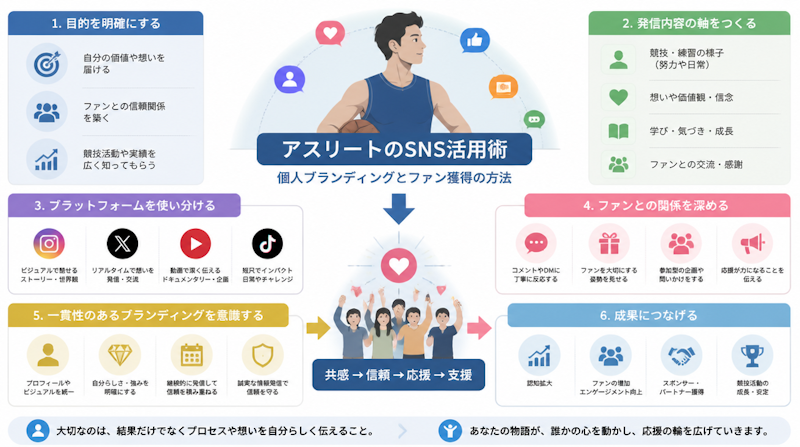
Social media has fundamentally reshaped what it means to be a professional athlete. Today, an athlete's influence on social platforms is just as important as their performance on the field, court, or gym floor. The ability to connect with fans, attract sponsors, and build a recognizable personal brand through social media has become an indispensable career skill. This guide breaks down how athletes can use each major platform strategically, establish a compelling personal brand, and build lasting relationships with fans — all while managing the very real risks that come with life in the public eye.
Why Social Media Is Transforming the Athlete Experience
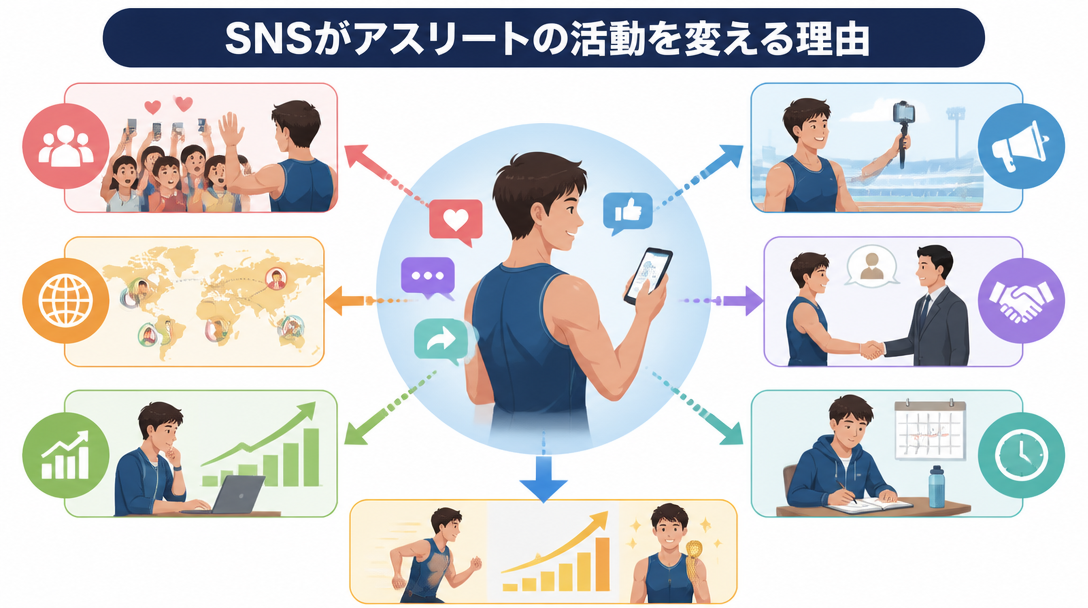
How Fans Interact with Athletes on Social Media
The scale of sports fandom on social media is staggering. According to Statista's research on social media and sports, hundreds of millions of people globally follow sports accounts on platforms like Instagram, with the average sports fan following multiple individual athletes. More striking still, a significant majority of fans report that posts from athletes they follow have directly influenced their purchasing decisions — a clear signal that athlete social media presence carries real economic weight.
Research also consistently shows that athletes themselves benefit psychologically from social media engagement. The majority of athletes who actively use social media report that fan support boosts their motivation, and many describe the connection with their online community as a genuine contributor to better performance. Far from being a distraction, a well-managed social media presence can reinforce an athlete's sense of purpose and connection to their sport.
Three Core Benefits of Social Media for Athletes
When athletes use social media with intention, the advantages extend across every dimension of their career:
- Increased visibility and recognition: Social media gives athletes a direct channel to showcase their work, personality, and achievements beyond what traditional sports media covers. As follower counts grow and engagement accumulates, media outlets and brands take notice — creating opportunities that might never arise otherwise.
- Sponsor and partnership acquisition: Brands increasingly view an athlete's social media metrics as a primary criterion when evaluating sponsorship candidates. Follower counts, engagement rates, and audience demographics give companies quantifiable data to justify investment in an athlete's personal brand.
- Monetization opportunities: Platforms like YouTube and X offer revenue sharing based on views and impressions. A growing follower base also opens the door to paid promotional partnerships, affiliate deals, and product collaborations — income streams that can meaningfully supplement competition earnings and help fund athletic careers, especially for athletes in less commercially prominent sports.
Social media can also lay important groundwork for an athlete's second career after competition ends. A strong personal brand built over years of consistent posting becomes a valuable professional asset that transitions well into coaching, media, business, and beyond.
Platform-by-Platform Breakdown: Choosing the Right Social Media for Athletes
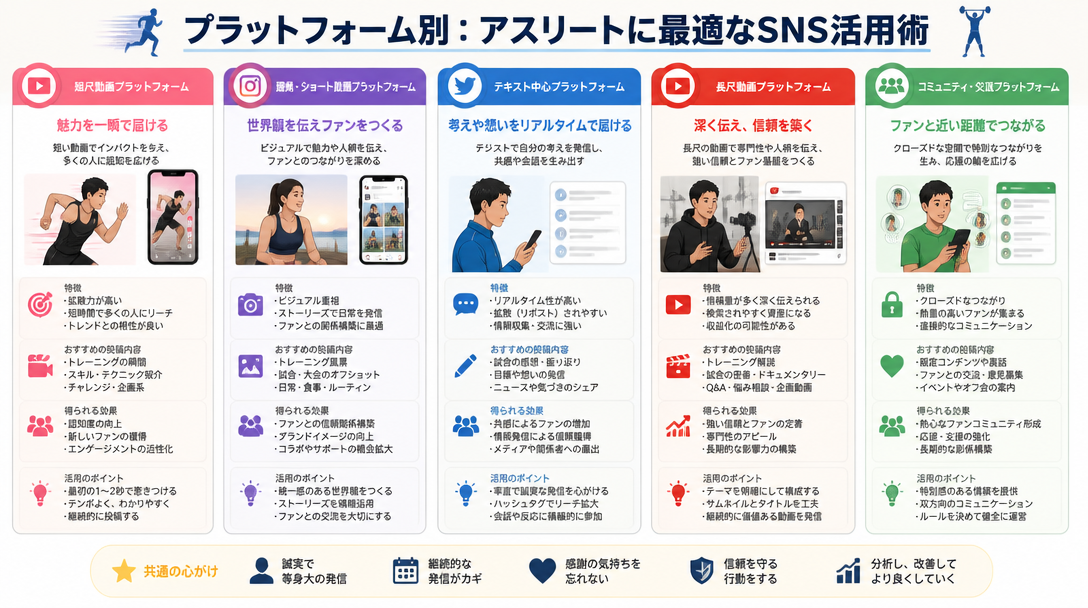
Not all social media platforms serve the same purpose. Each has its own audience demographics, content formats, and algorithmic logic. The most effective athletes don't try to do everything on every platform — they identify which platforms align with their goals and master those first. The table below provides a quick reference:
Platform | Primary Audience | Best Content Types | Primary Athlete Use Case |
|---|---|---|---|
X (formerly Twitter) | Ages 18–45, broad demographics | Text, real-time updates, threads | Match updates, thoughts, fan conversation |
Ages 13–40, skews female | Photos, Reels, Stories | Visual brand building, sponsorship content | |
TikTok | Ages 13–25, younger audience | Short-form video (15 seconds–10 minutes) | Sport discovery, viral reach, new fans |
YouTube | Ages 13–60, broadest range | Long-form video, vlogs, tutorials | Deep fan connection, monetization, storytelling |
X (Formerly Twitter) — Real-Time Updates and Fan Dialogue
X remains one of the most powerful platforms for real-time communication. Its text-first format makes it ideal for immediate reactions, quick thoughts, and direct fan engagement. Athletes can share post-competition reflections, training milestones, and candid thoughts in a way that feels immediate and authentic. The platform's retweet and quote-tweet mechanics give content high viral potential — a single post can reach far beyond an athlete's existing follower base in minutes.
However, X also carries the highest risk of controversy. Because the platform encourages spontaneous, unfiltered communication, emotional posts made in the heat of the moment can quickly spiral into public relations problems. The most successful athletes on X treat it as a professional communication tool first, maintaining a tone of gratitude, determination, and sportsmanship rather than using it as a personal venting platform. Fan engagement should focus on content that makes followers want to cheer — match day excitement, behind-the-scenes glimpses, and genuine acknowledgment of supporter messages.
Instagram — Visual Brand Building and Sponsorship Content
Instagram is widely considered the premier platform for athlete personal branding. Its visual-first format rewards high-quality photos and videos, making it ideal for showcasing the aesthetics of athletic performance — powerful movements, technical precision, and the emotional moments that define sporting careers. The combination of permanent feed posts, 24-hour Stories, and short-form Reels allows athletes to communicate different types of content to different segments of their audience.
Instagram's built-in Brand Content tools allow athletes to formally disclose paid partnerships with brands, creating transparent and professional-looking sponsored posts. The platform's detailed analytics (available through a professional or creator account) provide the engagement data that sponsors want to see. For athletes actively pursuing brand partnerships, a well-maintained Instagram presence with a coherent visual identity is often the most important social media asset they can develop.
TikTok — Reaching Younger Audiences and Showcasing Sport
TikTok's algorithm is uniquely democratic: unlike platforms where reach depends heavily on existing follower counts, TikTok's "For You" recommendation engine actively surfaces content from new and small accounts to large audiences based on engagement signals alone. This means an athlete with zero followers can produce a compelling short video and potentially reach millions of viewers within days — an opportunity that simply doesn't exist on other platforms to the same degree.
For athletes in niche or less commercially visible sports, TikTok represents a particularly powerful discovery tool. Sport-specific skills demonstrations, "day in the life" content, and behind-the-scenes training footage consistently perform well. Technique breakdowns, common misconceptions about a sport, and relatable "athlete life" content tend to accumulate high view counts and generate new fans who might never have encountered the sport otherwise. TikTok success often comes from leaning into authentic, slightly unpolished content rather than highly produced videos.
YouTube — Long-Form Content for Deep Fan Connection
YouTube operates on a fundamentally different dynamic than other social platforms. Where Instagram and TikTok reward brevity, YouTube rewards depth. Viewers who choose to watch a 10–20 minute video about an athlete's preparation for a major competition develop a much stronger sense of connection and loyalty than those who consume a 30-second clip. This depth of engagement makes YouTube uniquely valuable for building the kind of devoted fanbase that supports athletes through wins and losses alike.
YouTube also offers direct monetization through its Partner Program once channels reach eligibility thresholds (1,000 subscribers and 4,000 watch hours). Beyond ad revenue, YouTube channels serve as powerful hubs that can drive traffic to other platforms, merchandise stores, and sponsor campaigns. The investment required — planning, filming, and editing longer videos — is substantial, but for athletes committed to long-term brand building, the returns compound significantly over time. Consistency matters more than production quality, especially early on; uploading one or two videos per week on a reliable schedule outperforms sporadic bursts of high-production content.
Building a Personal Brand as an Athlete
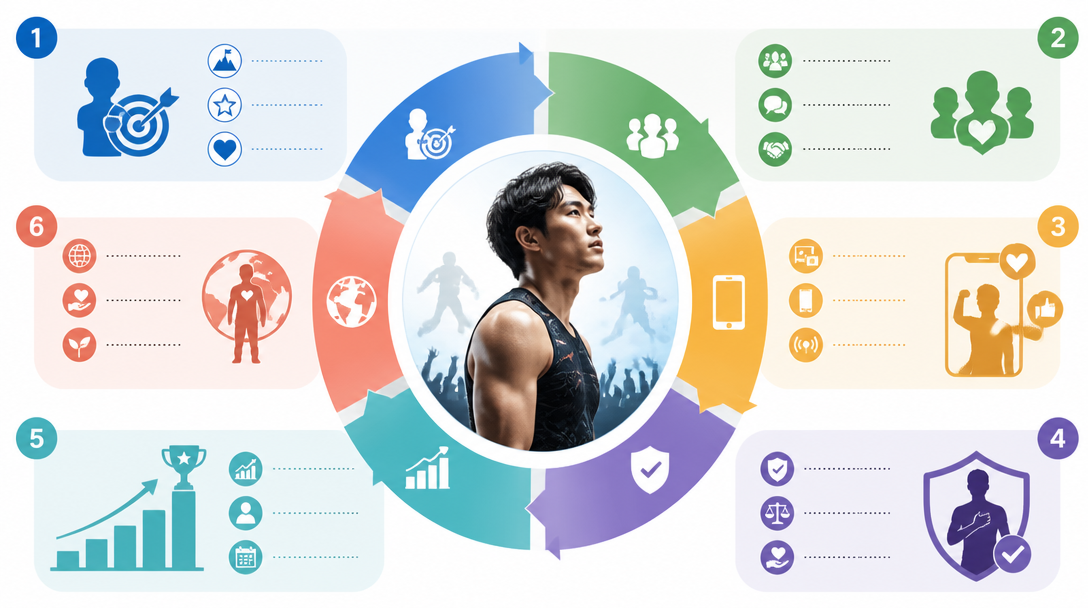
Clarifying Your Strengths and Values
Personal branding is the practice of clearly and consistently communicating who you are, what you stand for, and what value you bring to others. For athletes, a personal brand is built from a combination of competitive expertise, personal story, values, and character. The starting point is being able to articulate your unique identity in a single sentence — a surprisingly difficult exercise that forces genuine self-reflection.
The following questions can help uncover the core of an athlete's personal brand:
- What is the single thing I do better than almost anyone else in my sport?
- What value or perspective do I offer fans beyond my athletic performance?
- What genuinely differentiates me from other athletes in my discipline?
- What kind of athlete and person do I want to be known as in ten years?
The answers to these questions should inform every content decision — the topics covered, the tone of communication, the visual style, and the platforms prioritized. Athletes who can answer these questions clearly tend to build more cohesive, compelling brands than those who simply post whatever comes to mind.
Establishing a Brand Concept and Maintaining Consistency
Once the core brand identity is clear, the next step is maintaining consistency across all platforms and over time. Consistency doesn't mean posting identical content everywhere — it means ensuring that every piece of content reflects the same underlying identity and values. A gymnast who brands themselves as a technical authority might focus their content on skill breakdowns, judging analysis, and training methodology. An athlete who positions themselves as an honest documenter of the athletic journey might lean into raw, unfiltered behind-the-scenes content.
One of the most common mistakes athletes make on social media is creating accounts that only show athletic performance without revealing any personality or humanity. Training videos and competition highlights are valuable, but followers who never learn anything about the person behind the performance rarely develop genuine loyalty. Sharing growth stories — the setbacks, the doubts, the small victories — creates the emotional resonance that converts casual followers into committed supporters. Authenticity, not perfection, is what builds lasting fan relationships.
Optimizing Your Profile for First Impressions
An athlete's social media profile is the equivalent of a professional business card. When a new visitor arrives on the page, they should be able to understand within seconds who this person is, what sport they compete in, and what kind of content they can expect to find. A well-optimized profile converts casual visitors into followers far more effectively than one that is vague or incomplete.
- Clearly state the sport, team or national affiliation, and notable achievements (e.g., "Artistic Gymnast | National Championships Competitor")
- Include keywords that reflect the content focus (e.g., "gymnastics technique | training life | competition vlogs")
- Use a high-quality profile photo that features athletic activity — dynamic action shots tend to outperform standard headshots for athletes
- Use a link aggregation tool (such as Linktree or a personal website) to direct visitors to other platforms, merchandise, or sponsor pages from a single link
A clearly defined profile also functions as a self-discipline tool: once the brand concept is stated publicly, content decisions become easier to make because they can be evaluated against that stated identity. Just as mental training in sport benefits from a clearly defined sense of purpose, social media consistency benefits from knowing exactly what the account stands for.
Content Strategy to Grow Your Follower Base
Content Categories and Posting Frequency
A sustainable and effective social media strategy requires intentional content planning. Athletes who post randomly and reactively tend to stagnate, while those who plan a balanced mix of content types see more consistent growth. There are three primary content categories that work well for athletes:
Sport and technique content — skill demonstrations, training footage, competition highlights, and technical breakdowns. This type of content appeals directly to existing fans of the sport and positions the athlete as a knowledgeable authority. It's particularly effective for attracting followers who are already interested in the discipline.
Personality and lifestyle content — meals, travel, rest day activities, team dynamics, and candid off-the-field moments. This content humanizes the athlete and attracts a broader general audience who may not follow the sport closely but connect with the person. This category is essential for building the kind of personal connection that sustains fan loyalty through competitive ups and downs.
Informational and educational content — explanations of sport rules, training methodology, nutrition principles, or recovery practices. This type of content tends to generate saves and shares (strong engagement signals on most platforms) and can drive organic discovery through search. It establishes the athlete as a credible source of expertise beyond just competing.
As a general posting frequency guide: X works best with one to three posts per day; Instagram with three to five posts per week; YouTube with one to two videos per week. These are ideals, not requirements — the most important factor is consistency over time. An account that posts two to three times per week for twelve consecutive months will outperform one that posts daily for two months and then goes silent. Developing a sustainable rhythm that accommodates training demands is far more valuable than chasing maximum output.
Creating Posts That Drive Engagement
Engagement — the combination of likes, comments, shares, and saves — is the metric that most social media algorithms use to determine how widely to distribute content. High engagement signals that content is resonating with audiences, triggering the algorithm to push it further. There are several consistent characteristics of high-engagement posts for athletes:
- Emotionally resonant storytelling: Posts that describe a genuine emotional experience — the disappointment after a tough loss, the fear before a major competition, the joy of a breakthrough — generate significantly more comments and shares than purely informational posts. Emotion drives connection.
- Practically useful information: Content that teaches something — how to perform a technique, how to structure training recovery, what a common misconception about a sport actually is — earns saves. Saved posts carry strong algorithmic weight, particularly on Instagram.
- Visual impact: In sport, there is inherent visual drama available — the frozen moment of peak athletic expression, the beauty of a technically perfect movement, the raw energy of competition. High-quality photos and videos that capture these moments can attract viewers who have no prior interest in the sport.
- Calls to action and questions: Simply asking "What do you think?" or "Drop your thoughts in the comments" measurably increases comment volume. Posts that invite participation generate more two-way interaction than purely broadcast-style content, and that interaction feeds algorithmic distribution.
Hashtags and Posting Time Optimization
On Instagram, strategic hashtag use remains one of the most accessible ways to reach users who don't already follow an account. Using ten to fifteen relevant hashtags per post — a combination of sport-specific tags, technique or training tags, and broader lifestyle tags — maximizes discoverability without appearing spammy. The goal is to appear in search results for communities that would genuinely find the content valuable.
Posting timing also has a meaningful impact on initial engagement. Content posted when followers are most active tends to accumulate likes and comments faster in the critical early window after publication, sending positive signals to the algorithm. Most platforms' built-in analytics tools show when followers are most active — checking this regularly and aligning post scheduling with those peak periods is a simple optimization with real returns. Incorporating posting into a consistent post-training routine, as discussed in resources on athlete time management, makes it easier to maintain the discipline required for long-term consistency.
Building Real Connections with Fans Through Social Media
Turning Followers into Supporters Through Replies and DMs
There is a meaningful difference between a follower and a supporter. Followers passively consume content; supporters actively champion an athlete — they share posts, buy merchandise, attend events, and defend the athlete in public conversations. The bridge between the two is genuine interaction. When an athlete takes the time to respond thoughtfully to a comment or reply to a message, it creates a moment of personal connection that the fan is likely to remember and share.
Responding to every comment may not be feasible as an account grows, but even a modest and consistent commitment to engagement — setting aside fifteen minutes after posting to respond to early comments, or doing a weekly sweep of accumulated messages — signals to followers that they matter. The quality of responses matters as much as the volume: a short, genuine reply that references the specific content of a fan's message is worth far more than a generic "thanks!" The personal touch that comes through in authentic replies is what builds the emotional loyalty that sustains an athletic career through its inevitable highs and lows.
Live Streaming for Real-Time Fan Connection
Live streaming on Instagram, YouTube, or TikTok offers something no pre-produced content can replicate: genuine real-time spontaneity. Fans who tune in to a live stream experience the athlete unscripted and unedited — answering questions in the moment, reacting to fan comments in real time, sharing the atmosphere after a competition or during a rest day. This raw quality is exactly what live audiences find compelling, and the interaction it enables — athletes directly responding to fan questions, acknowledging viewers by name, taking live polls — creates a sense of participation that recorded content cannot produce.
Live streams don't need professional equipment or elaborate setups. A smartphone with a stable connection is sufficient, and the informal quality of a casual live session often resonates more strongly with fans than highly produced content. Announcing live streams in advance through Stories or posts ensures that followers have the opportunity to tune in, and archiving live sessions as replay content extends their reach beyond the live audience. Pre-competition check-ins, post-event debrief sessions, and casual Q&A streams are all formats that consistently perform well for athletes.
Interactive Content That Brings Fans Into the Conversation
Participatory content is among the most effective engagement-driving formats available to athletes. Instagram Stories polls, question boxes, and slider reactions invite followers to interact with content in a way that takes only a second but generates meaningful engagement data and community feeling. Running a poll asking fans which technique to demonstrate next, which competition to break down, or what aspect of training they want to see more of, gives the audience a sense of co-creating the content they consume.
Hashtag challenges — inviting followers to share their own attempts at a skill, their own training clips, or their own versions of a post theme — can dramatically amplify reach as fans create and share content tagged to the athlete's brand. When a fan's contribution is acknowledged by the athlete — featured in a Story, mentioned in a post, or replied to directly — that fan typically becomes a vocal advocate for the athlete's brand. Participatory content, executed consistently, transforms a social media following into a genuine community with its own identity and energy.
Using Social Media to Attract Sponsors and Partners
The Metrics Sponsors Actually Care About
Sponsorship decisions in the modern sports landscape are increasingly data-driven. Brands evaluating athlete partnerships don't just look at career achievements — they analyze social media performance in detail. According to research on athlete social media and brand value from Sports Pro Media, companies are becoming more sophisticated in how they assess an athlete's marketing potential, looking beyond raw follower counts to engagement quality and audience alignment. The key metrics that matter most include:
- Follower count: The baseline indicator of reach. While important, most brands now understand that a large but disengaged following is less valuable than a smaller but highly engaged one.
- Engagement rate: Calculated as total engagement (likes + comments + shares) divided by follower count, expressed as a percentage. An engagement rate of 3–5% or higher is generally considered strong, particularly for larger accounts where rates naturally decline.
- Audience demographics: Age, gender, geographic location, and interests of followers. Alignment between the athlete's audience and the sponsor's target customer profile is the single most important factor in partnership viability.
- Posting consistency: Brands value athletes who demonstrate disciplined, sustained commitment to their social media presence. Erratic posting patterns suggest unreliability, while consistent long-term activity demonstrates professionalism.
Presenting Your Social Media Value to Sponsors
When approaching brands about sponsorship opportunities, athletes should prepare a media kit — a professional document that presents social media data alongside athletic credentials. A well-constructed media kit includes current follower counts across platforms, monthly reach and impression figures, average engagement rates, audience demographic breakdowns, and examples of previous brand collaborations (if any). It should also clearly articulate the athlete's brand identity and explain why their audience is a strong match for the sponsor's customer base.
A practical and often overlooked tactic for building sponsor relationships organically is to authentically use and tag products from brands that align with the athlete's values — before any formal relationship exists. Genuine usage posts that demonstrate how a product fits into an athlete's training life are far more convincing to a brand's marketing team than a cold pitch, and they establish credibility and goodwill that can convert into a formal partnership over time.
The Expanding Range of Sponsorship and Monetization Options
The traditional model of athletic sponsorship — a brand provides equipment and a contract fee in exchange for logo placement — has expanded significantly in the social media era. Athletes today can engage in a far wider range of commercial relationships, including:
- Paid promotional posts: Brands pay for specific Instagram, TikTok, or YouTube content featuring their products
- Affiliate partnerships: Athletes earn commission on sales generated through unique discount codes or tracked links shared with their audience
- Co-created products or collections: Brands collaborate with athletes on limited edition products that leverage the athlete's personal brand
- Event appearances and digital activations: Athletes participate in brand events, virtual Q&As, or content campaigns as part of broader marketing partnerships
- Platform monetization: YouTube ad revenue, X revenue sharing, and similar platform-direct income streams
Athletes in less commercially prominent sports can start small — a relationship with a niche equipment brand or a local business that shares their values is a legitimate starting point. These early partnerships build credibility, provide social proof for future outreach to larger brands, and create a track record of professional partnership management that sponsors at every level look for.
Managing Risk and Avoiding Social Media Controversies
Common Social Media Mistakes Athletes Make
A single poorly considered post can undo years of careful brand building. Athletes operate in a uniquely exposed public position — their words carry the implicit endorsement of their sport, their team, and their sponsors, whether they intend it or not. The most common categories of athlete social media mistakes include:
- Post-competition posts that make excuses or assign blame to officials, opponents, or conditions
- Expressions of frustration with teammates, coaches, or governing bodies
- Oversharing personal lifestyle content that conflicts with a professional athletic image
- Uninformed or impulsive commentary on politically or socially sensitive topics
- Use of copyrighted music or video content without proper licensing (a particularly common issue on TikTok and YouTube)
A useful self-governance question before hitting post is: "Would I be comfortable if my coach, my sponsors, and my sport's governing body all saw this right now?" If the answer is no — or even uncertain — the post should be reconsidered. Athletes who apply this standard consistently develop a public-facing presence that reflects genuine professionalism rather than a curated performance.
A Pre-Post Checklist to Reduce Risk
Developing a simple pre-publication review habit significantly reduces the risk of problematic posts. This is especially important immediately after competition — whether following a major win or a crushing defeat — when emotional states are heightened and judgment may be temporarily compromised. Before posting anything, athletes should run through the following checklist:
- Does this content risk hurting or unfairly criticizing any individual or organization?
- Is this post being written from a place of strong emotion? (If so, save as a draft and review after at least an hour)
- Does this content rely on unverified information or statistics?
- Are there any copyright or intellectual property issues with the media used?
- Could this post create problems for sponsors, teammates, or the sport's governing body?
The critical point about social media is that deletion doesn't equal erasure. Screenshots spread faster than corrections, and the internet's memory is long. The athletes who build the most durable public brands are those who approach every post as a permanent public statement — not because they become overly cautious or bland, but because they have internalized the discipline to communicate with both authenticity and intention. SNS should be treated as a strategic brand-building tool, not a personal outlet.
Key Takeaways
Social media mastery has become a genuine competitive advantage for athletes in the modern sports landscape. The strategies covered in this guide can be summarized around five core principles:
- Choose platforms by purpose: X for real-time communication and fan dialogue; Instagram for visual brand building and sponsorships; TikTok for reaching younger audiences and generating discovery; YouTube for deep fan relationships and long-term monetization.
- Define your personal brand clearly: The foundation of effective social media is knowing exactly who you are as an athlete and what you uniquely offer. Invest time in self-analysis before investing time in content production.
- Balance three content categories: Sport and technique content establishes credibility; personality and lifestyle content creates emotional connection; informational and educational content drives organic discovery and saves. A mix of all three builds the broadest, most loyal following.
- Prioritize genuine interaction: Replying to comments, hosting live streams, and creating participatory content transforms passive followers into active supporters. The depth of audience relationship matters as much as its breadth.
- Manage risk proactively: Emotional, impulsive, or unconsidered posts can do lasting damage to an athlete's public brand. Building a pre-post review habit and maintaining clarity about what the account stands for protects against the most common mistakes.
Social media, used with discipline and authenticity, is one of the most powerful tools available to athletes at any level of their career. Developing it in parallel with athletic performance creates a compounding asset — a personal brand that grows in value over time and opens doors well beyond the competitive years.