Job Search Guide for Student Athletes: Winning Offer Strategies
Learn how student athletes can land job offers with proven self-PR strategies, interview tips, scheduling tactics, and ways to articulate sports experience for employers.
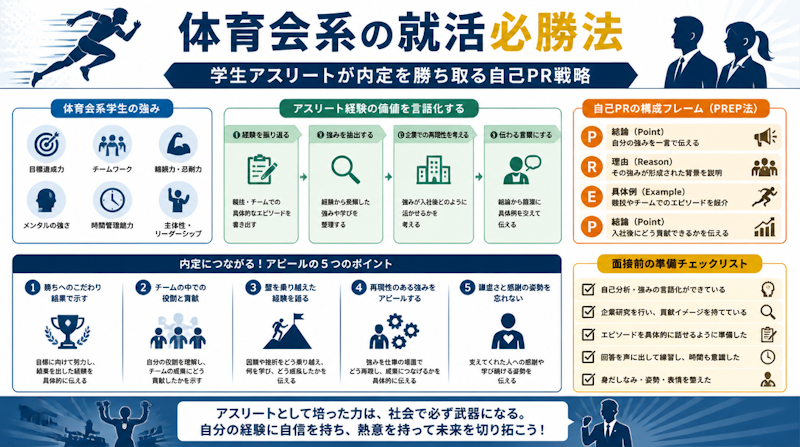
Student athletes often hear that their sports background gives them a competitive edge in the job market. And while that reputation holds some truth, the idea that athletic credentials alone guarantee job offers is outdated. As career advisors consistently point out, what employers truly want is candidates who can translate their sports experience into language that demonstrates clear business value. This guide breaks down a comprehensive, step-by-step strategy for student athletes to craft compelling self-presentations, ace interviews, manage their schedules, and ultimately land the offers they deserve.
Do Student Athletes Really Have an Advantage in the Job Market?
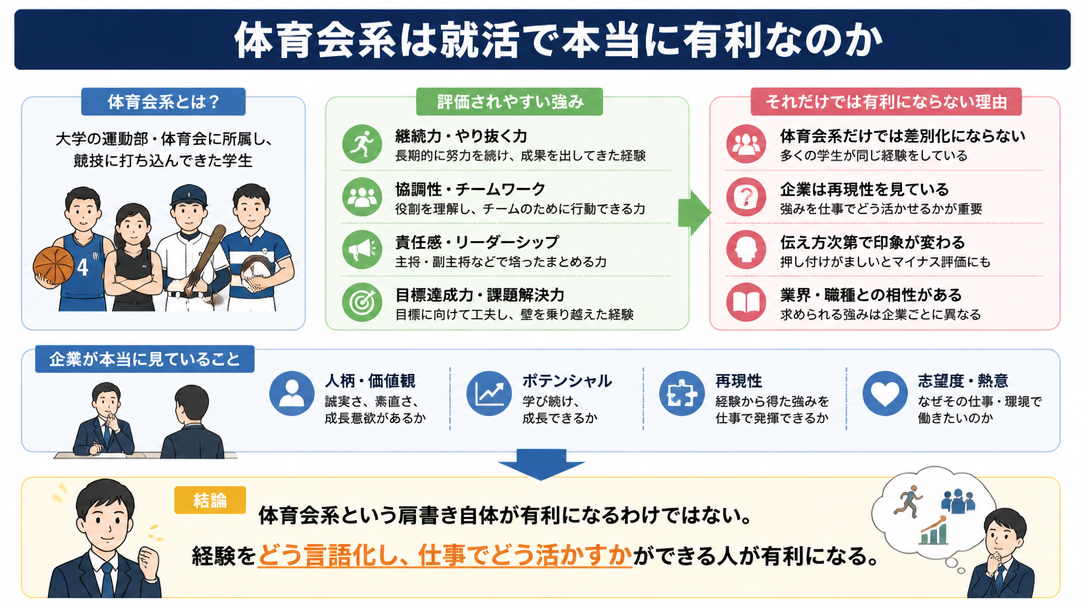
What Employers Actually Expect from Student Athletes
Student athletes attract attention from employers because the qualities developed through competitive sport align closely with what organizations need in the workplace. According to career guidance resources focused on athletic candidates, the three core attributes employers most consistently expect from student athletes are high stress tolerance, disciplined work ethic, and commitment to results. Years of demanding daily training communicate something powerful to hiring managers: this person has already proven they can show up and push through difficulty, day after day.
From the employer's perspective, student athletes are viewed as people who will dig in when work gets hard rather than looking for the exit. Industries such as real estate, advertising, trading companies, financial services, and pharmaceutical sales (particularly field representative roles) are known to actively seek out candidates with athletic backgrounds. The common thread across these sectors is an environment that demands interpersonal resilience, physical stamina, and relentless persistence — qualities that competitive sport develops naturally.
What the Data Actually Shows
A survey conducted among 102 student athletes from the graduating class of 2026 revealed several telling trends about how athletes approach the job search. The findings highlight both the confidence athletes bring to the process and the areas where preparation gaps can emerge.
Survey Item | Result |
|---|---|
Athletes who believe sports experience is an asset in job searching | 97% |
Top desired job type (sales roles) | 66% |
Top desired industry (service sector) | 47% |
Most common job search start period (October–December of junior year) | ~80% |
Top priority when choosing an employer (salary and compensation) | 72% |
The 97% figure is striking — nearly every student athlete surveyed believes their sports background is a genuine asset. The critical question, however, is not whether that asset exists, but how effectively candidates can communicate it to hiring managers in a way that resonates. Raw experience is not the differentiator; the ability to articulate that experience is.
The Specific Strengths Employers Value in Student Athletes
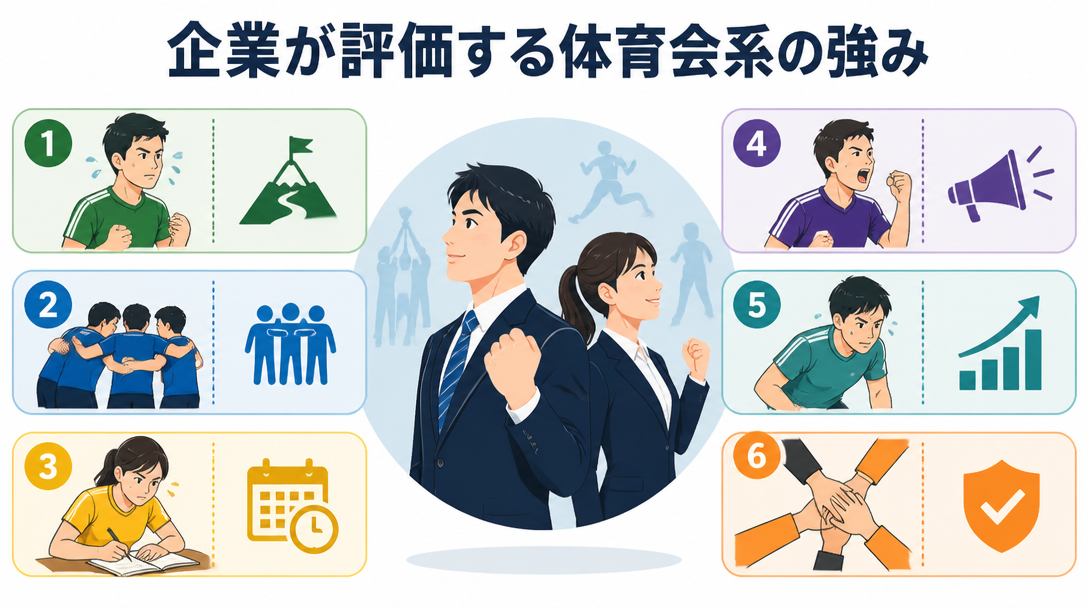
Mental Toughness, Stress Tolerance, and Physical Stamina
Athletes who have endured brutal training regimens and the psychological pressure of high-stakes competition bring something to the workplace that is difficult to teach: the ability to stay functional under sustained stress. In roles where deadlines, quotas, and high-pressure client interactions are routine — sales management, project coordination, account management — this kind of mental durability is a genuine competitive advantage.
Career resources focused on athletic candidates note that mental and physical resilience is consistently ranked as the top quality employers seek in student athletes. On the physical side, roles that demand long hours, frequent travel, or extensive fieldwork benefit directly from candidates who have already conditioned themselves to operate at high output for extended periods.
Teamwork, Collaboration, and Leadership
Competitive team sports require athletes to subordinate individual preferences to collective goals, day in and day out. Navigating personality differences, covering for teammates' weaknesses, and maintaining cohesion under pressure — these are experiences that transfer directly to the dynamics of a professional team or cross-functional project group. The mental model that team sports instills — maximizing individual contribution while optimizing group outcomes — is precisely the mindset that organizations want in their people.
For athletes who have held formal leadership roles — team captain, vice captain, squad leader — there is an additional layer of evidence to present. The key is moving beyond the title and into the story: what specific challenges did the team face, what actions were taken to address them, and what changed as a result? Concrete leadership narratives are far more persuasive than a resume line listing a position held.
Discipline, Professionalism, and the PDCA Mindset
Athletic programs instill behavioral norms that map directly onto professional expectations: punctuality, respect for authority, rule adherence, and clear communication. Student athletes typically arrive at the workplace already equipped with the foundational habits that many onboarding programs spend weeks trying to develop. This is a practical advantage — less time spent on basic professional socialization means faster contribution to actual work.
Perhaps less obvious but equally important is the iterative improvement mindset that structured athletic training develops. The cycle of setting a performance target, executing a training plan, testing it in competition, analyzing what worked and what didn't, and adjusting — this is, in effect, the Plan-Do-Check-Act (PDCA) cycle that business functions like marketing, product development, and operations run on. Athletes who can articulate this mindset explicitly are particularly attractive to employers in analytical and strategic roles.
Common Mistakes Student Athletes Make in the Job Search
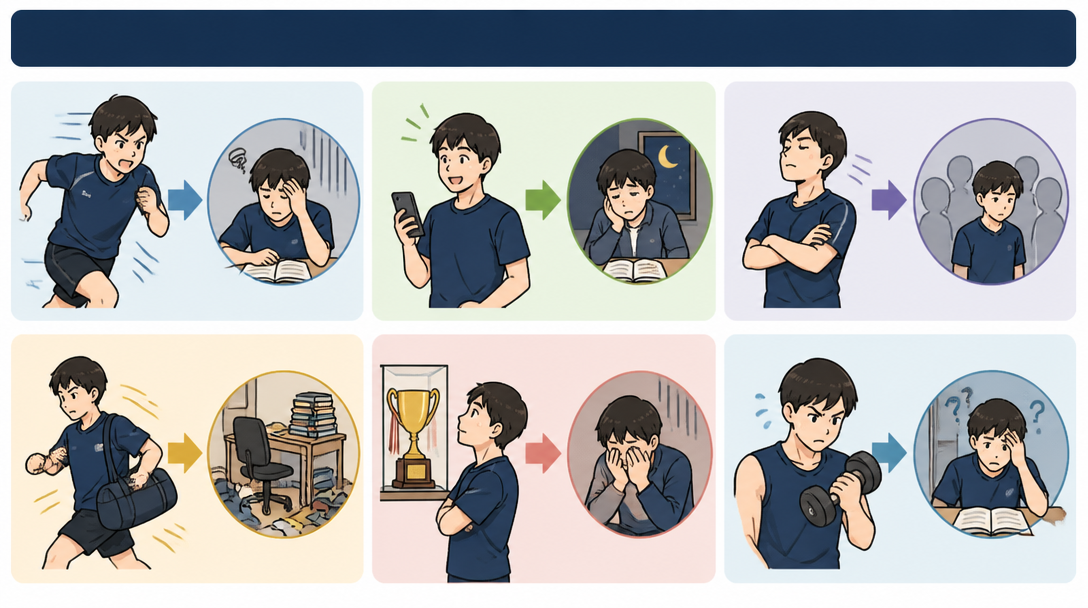
The Complacency Trap: Assuming Athletic Background Is Enough
The most dangerous mindset a student athlete can bring to the job search is assuming that an athletic background will do the work for them. Hiring managers interview dozens — sometimes hundreds — of candidates with sports backgrounds every year. "I played college sports" is a starting point for a conversation, not a conclusion. Candidates who coast on their athletic identity without doing the substantive preparation work are transparent to experienced interviewers.
Career research consistently identifies insufficient industry research and self-analysis as the primary failure mode for student athlete candidates. Even among athletes, there is a wide spectrum of preparation quality, and that gap shows up directly in offer rates. Relying on the reputation of athletic candidates as a category, rather than investing in individual preparation, is a reliable path to rejection.
Failing to Translate Experience into Language
The single most common challenge student athletes face in job searching is converting their sports experience into articulate, business-relevant language. Athletic culture often relies on shared understanding — coaches and teammates know what "we grinded through it" means in context. Hiring managers do not. Descriptions like "we worked hard as a team" or "I pushed through tough times" communicate nothing specific about how the candidate thinks, what they actually did, or what the outcome was.
A useful framework for building structure into experience narratives is the equation: Goal minus Current Reality equals Gap to Address. From that gap, a candidate can describe the specific actions taken to close it and the measurable results achieved. This structure gives hiring managers the concrete detail they need to visualize a candidate contributing in a professional context — which is ultimately what a job interview is designed to assess.
Managing the Overlap Between Competition and Recruiting Seasons
Most student athletes are still actively competing — attending practice, traveling for meets, preparing for championships — during the exact period when recruiting activity peaks in their junior and senior years. Unlike classmates who can dedicate full attention to the job search, athletes are working with a structural time deficit. This makes intentional planning not just helpful but essential. For practical approaches to balancing training, academics, and career preparation simultaneously, the guide on time management for student athletes offers actionable frameworks for making the most of limited hours.
How to Build a Self-Presentation That Actually Lands
Lead with a Clear Statement of Strength
Whether in a written application or a live interview, the most effective self-presentations open with an unambiguous declaration: "My greatest strength is X." This conclusion-first structure respects the reader's or listener's time, signals confidence, and frames everything that follows as supporting evidence for a specific claim.
Career resources for athletic candidates identify ten core strengths that student athletes can draw from for job applications:
- Accountability: Seeing responsibilities through to completion regardless of difficulty
- Concentration: Maintaining high focus under high-pressure conditions
- Growth orientation: Consistently seeking improvement and development
- Physical stamina: Sustaining performance through demanding workloads and environments
- Willingness to take on challenges: Engaging proactively with difficult problems
- Professionalism and respect: Building trust through consistent, respectful conduct
- Teamwork: Collaborating effectively toward shared objectives
- Perseverance: Maintaining effort and direction when progress is slow or obstacles arise
- Strategic thinking: Analyzing situations and designing plans to achieve goals
- Initiative: Identifying issues and acting on them without being prompted
The temptation to list as many of these as possible should be resisted. Presenting ten strengths dilutes all of them. The more effective approach is identifying the one or two attributes that most directly match what the target employer has signaled they value, and then building a focused, evidence-rich narrative around those specific qualities.
Use Numbers and Specifics to Build Credibility
Consider the difference between these two statements: "I have strong persistence" versus "I maintained a six-hour daily training schedule for three years, earned a starting position in a competitive roster, and contributed to a national tournament run that reached the quarterfinals." The second statement gives the hiring manager something to hold onto — a specific picture of what persistence looks like in practice, at what scale, and with what results.
Quantification is not always possible in athletic contexts, but it should be pursued wherever it exists: winning percentage improvements, ranking changes, team size managed, number of hours invested, percentage reductions in errors or losses. The following framework structures a complete, compelling self-presentation narrative:
Step | What to Cover | Example |
|---|---|---|
① Conclusion | State the core strength directly | "My greatest strength is problem-solving under pressure." |
② Context | Describe the situation and team environment | "In my junior year, our team had lost three consecutive regional playoff games." |
③ Problem | Identify the specific issue | "Defensive coordination failures accounted for roughly 80% of goals conceded." |
④ Action | Detail what you personally did | "I proposed a video review process and led twice-weekly improvement sessions focused on defensive positioning." |
⑤ Result | Quantify the outcome | "Goals conceded dropped by 40%, and we qualified for the national tournament as regional runners-up." |
⑥ Application | Connect to the target role | "The same data-driven approach to diagnosing problems and proposing solutions is how I intend to approach sales strategy." |
Customize the Message for Each Employer
The same underlying athletic experience can and should be framed differently depending on the role and organization being targeted. Leading job search platforms advise that matching the specific strength emphasized to the specific needs the employer has signaled is one of the most direct paths to advancing through a selection process. A one-size-fits-all pitch signals that the candidate has not done their homework on the employer.
Target Role / Function | Strengths to Emphasize |
|---|---|
Sales | Perseverance, interpersonal communication, relentless goal pursuit |
Marketing / Strategy | Strategic thinking, data-informed decision-making, team-based problem-solving |
General management track / Leadership roles | Leadership experience, organizational management, developing others |
Technical / Engineering roles | Continuous improvement habits, structured goal-setting, patient problem-solving |
The pressure of a live interview is itself a performance challenge — one where the mental skills developed in competition become directly applicable. Techniques for managing performance anxiety and executing under pressure, drawn from sports psychology and applicable to interview settings, are explored in the article on mental training for athletes.
The Complete Job Search Timeline for Student Athletes
What to Accomplish Before Fall of Junior Year
Because athletic schedules compress available preparation time, student athletes who begin their job search preparation earliest consistently achieve the best outcomes. Career resources for athletic candidates recommend that the following groundwork be laid during the summer and fall of junior year — even if that means fitting preparation into gaps between training sessions and competitions:
- Self-analysis: Clarify core strengths, personal values, and career goals before engaging with employers
- Industry and company research: Narrow initial interest to three to five sectors and begin learning the landscape of each
- Summer internship participation: Internships running June through September are valuable both for exploration and for resume building
- Alumni outreach: Begin contacting former athletes now working in fields of interest; real-world perspective from someone who knows the athletic experience is invaluable
- Draft application materials: A rough draft of a core personal statement allows for revision over time rather than frantic writing under deadline pressure
Navigating the Primary Recruiting Season (March Through June)
When formal recruiting opens — typically in March — the pace of activity accelerates sharply. For student athletes, this period coincides with some of the most demanding points in the competitive calendar, making schedule management the decisive factor. The following timeline provides a framework for planning:
Period | Key Activities | Athlete-Specific Considerations |
|---|---|---|
March | Company applications open; information sessions; written application submissions begin | Narrow target companies to 10–20 to maintain quality over quantity |
April–May | Aptitude tests; online assessments; first-round interviews | Complete standardized test preparation well before this window opens |
June–July | Second-round and final interviews; initial offer notifications | Multiple overlapping selection timelines require careful calendar management |
October 1 | Official offer letters issued (formal offer day) | Understand acceptance deadlines in advance to avoid decision pressure |
For athletes in sports with extended competitive seasons — baseball, soccer, rugby, and similar — the off-season represents the primary window for intensive job search preparation. Alumni visits, industry research, and application material development completed during that window can prevent the crushing time crunch that derails many athletic candidates during peak recruiting season.
Maximizing the Athletic Alumni Network
How to Leverage Athletic Connections Strategically
One of the most underutilized advantages that student athletes possess is a built-in network of alumni who share their athletic background and often feel a genuine sense of connection to those who came after them in the same program. Alumni who played the same sport are more likely to respond to outreach, more willing to speak candidly, and more able to offer industry-specific insight framed in terms the athletic candidate can immediately connect to their own experience.
The following questions tend to generate the most useful information in alumni conversations:
- What do you wish you had known before joining this company or industry?
- Can you give a specific example of how your athletic experience has been useful in your work?
- What did the selection process place the most weight on?
- What is the most important thing to understand about building a career in this field?
- What would you prioritize if you were still a student preparing for this job market?
Conduct and Preparation for Alumni Meetings
Alumni meetings may appear informal, but they carry professional stakes. Information from these conversations sometimes reaches recruiting teams, and the impression left with an alumnus can influence how a candidate's application is perceived internally. The following conduct standards should be treated as non-negotiable:
- Research the company and industry thoroughly before the meeting — arriving with uninformed questions signals disrespect for the contact's time
- Arrive early; lateness in any professional context reflects poorly, and in an athletic network context, it is particularly jarring
- Maintain professional language and tone regardless of how casual the setting feels
- Send a thoughtful thank-you message within 24 hours of the meeting
- Treat everything discussed as confidential — posting content from alumni conversations on social media or review sites is a serious breach of trust
Building a credible personal brand on social media as an athlete can also warm these relationships before they are initiated formally — alumni are more likely to engage positively with candidates who have an established and professional online presence. For guidance on developing that presence effectively, the article on social media branding for athletes provides a practical framework.
Using Job Search Support Services Designed for Athletes
Platforms That Accommodate Athletic Schedules
Beyond general-purpose job search platforms, a range of services cater specifically to student athletes and their unique scheduling constraints. The following overview highlights the primary options and their relative strengths:
Service | Key Features | Best Suited For |
|---|---|---|
Mynavi Athletic Navigator | Dedicated sections for athletic candidates; strong alumni network data | Candidates comparing opportunities across multiple industries |
Rikunabi | Large inventory of major company listings and application portals | Candidates targeting large, established employers |
One Career | Detailed selection process information and successful application essays from past candidates | Candidates targeting trading companies, consulting firms, or international employers |
Athlete Navigation (JOC) | Job placement support operated by the Japanese Olympic Committee | National and international-level elite athletes |
Thinking Beyond the First Job: Long-Term Career Planning
The most effective job searches are not just about landing an offer — they are about setting the right trajectory. Student athletes who approach employer selection with a long-term lens, asking not only "Is this a good fit for who I am right now?" but also "Where does this role lead, and does that align with where I want to go after my athletic career ends?" tend to make decisions they are more satisfied with over time.
Clarifying how athletic skills translate into durable professional capabilities also strengthens self-presentation at every stage of the selection process, because the narrative becomes coherent and forward-looking rather than purely retrospective. For a deeper exploration of how to map athletic experience onto long-term career trajectories — including career transitions after retirement from sport — the article on second career planning for athletes is a useful resource.
Key Takeaways
The following principles summarize the most important elements of an effective job search strategy for student athletes:
- An athletic background creates initial interest from employers, but offers are ultimately earned through the quality of preparation and the ability to translate experience into clear, business-relevant language
- The qualities employers value most — stress tolerance, teamwork, discipline, and iterative improvement thinking — need to be named explicitly and illustrated with concrete evidence, not assumed to be self-evident
- The most effective self-presentations follow a structured narrative: conclusion first, then context, specific problem, personal action taken, measurable result, and connection to the target role
- Because athletic schedules compress preparation time, beginning self-analysis, industry research, and alumni outreach in the summer of junior year is strongly recommended
- Complacency is the primary failure mode for student athlete candidates — thorough, consistent preparation is the only reliable path to the outcomes being sought